
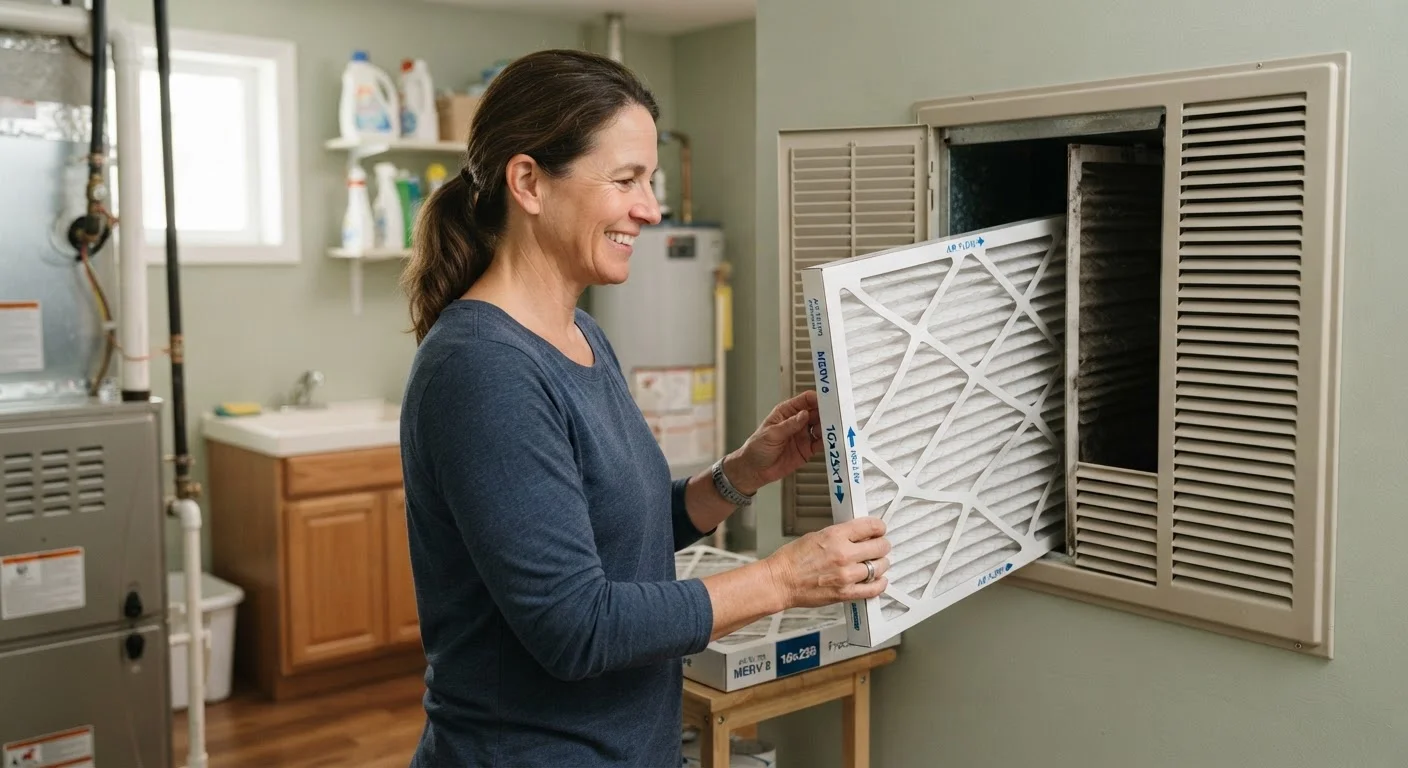
Reading the Size Numbers First
Before worrying about filtration performance, you need the right physical fit. Filter packages show three numbers separated by an "x" — for example, 16x25x1. These are the length, width, and thickness of the filter in inches, in that order.
The slot in your furnace or air handler has a fixed opening. If the filter is even slightly too small, air will bypass it through the gaps. Too large and it simply won't fit. Pull out your current filter and read the size printed on its cardboard frame — that's your exact number. Write it down or snap a photo before you head to the store.
Thickness matters more than people expect. Common options are 1 inch, 2 inches, 4 inches, and 5 inches. Thicker filters hold more material and generally last longer, but your system has to be designed with enough space to accommodate them.
What the MERV Number Actually Measures
Once you have the right size, the MERV rating tells you how well the filter cleans the air passing through it. Think of it as a sieve with increasingly fine mesh — a higher MERV rating means smaller holes that catch tinier particles.
MERV 8–11
Recommended range for most homes
ASHRAE guidelines suggest this range balances particle capture with acceptable airflow for standard residential systems.
1–3 months
Typical residential filter replacement interval
The U.S. Department of Energy notes that replacing filters on schedule is one of the simplest ways to maintain HVAC efficiency.
5–15%
Potential energy savings from regular filter changes
The U.S. Department of Energy estimates that keeping filters clean can meaningfully reduce HVAC energy consumption compared to running a clogged system.
- MERV 1–4: Basic fiberglass filters. Protect the equipment from large debris but do little for air quality.
- MERV 5–8: Catch dust, pollen, mold spores, and pet dander. A solid choice for most homes.
- MERV 9–12: Also trap fine dust and some smoke particles. Good for households with allergy sufferers.
- MERV 13–16: Near-hospital-grade filtration. Require a system specifically designed to handle the restricted airflow.
For the majority of standard residential HVAC systems, a filter in the MERV 8–11 range strikes a practical balance between clean air and adequate airflow.
Check Your System Manual Before Upgrading
If you want to move to a higher MERV filter, look up your system's manual or ask an HVAC technician first. Some equipment lists a maximum recommended MERV. Exceeding it can reduce airflow enough to cause problems over time, even if the filter fits physically.
How Often You Actually Need to Change It
Filter packages often say "lasts up to 3 months," but that estimate assumes an average home with no pets, moderate dust, and regular vacuuming. Your situation may be different.
A useful habit: pull the filter out after the first 30 days in a new home. If it's already grey and visibly clogged, plan on monthly changes. If it still looks fairly clean, you may be fine every two to three months. Factors that speed up clogging include:
- One or more pets that shed
- Anyone in the home with asthma or allergies
- Recent renovation or construction dust
- Running the system nearly around the clock
Mark your calendar or set a phone reminder. A filter that's been in place too long doesn't just reduce air quality — it makes your system strain to pull air through, running up your energy bill in the process.
Filters Are Not One-Size-Fits-All
Even within the same home, different return vents may take different filter sizes if you have a multi-zone or multi-unit system. Always verify the size at each individual slot rather than assuming they're all the same.