
Why These Two Visit Types Exist
When your pet seems perfectly fine, a vet visit might feel unnecessary — but that's exactly when a wellness exam is most valuable. Conversely, when your cat won't stop sneezing or your dog is limping, that's a sick visit situation, and the exam looks completely different.
Vets structure these appointments differently because they serve opposite goals: one is about prevention and baseline monitoring, the other is about diagnosis and treatment. Knowing which type you're booking helps you set the right expectations — and helps your vet spend the appointment time where it matters most.
If you're bringing home a new animal, see our guide to your new pet's first vet visit to understand what that initial appointment typically covers.
What Happens at an Annual Wellness Exam
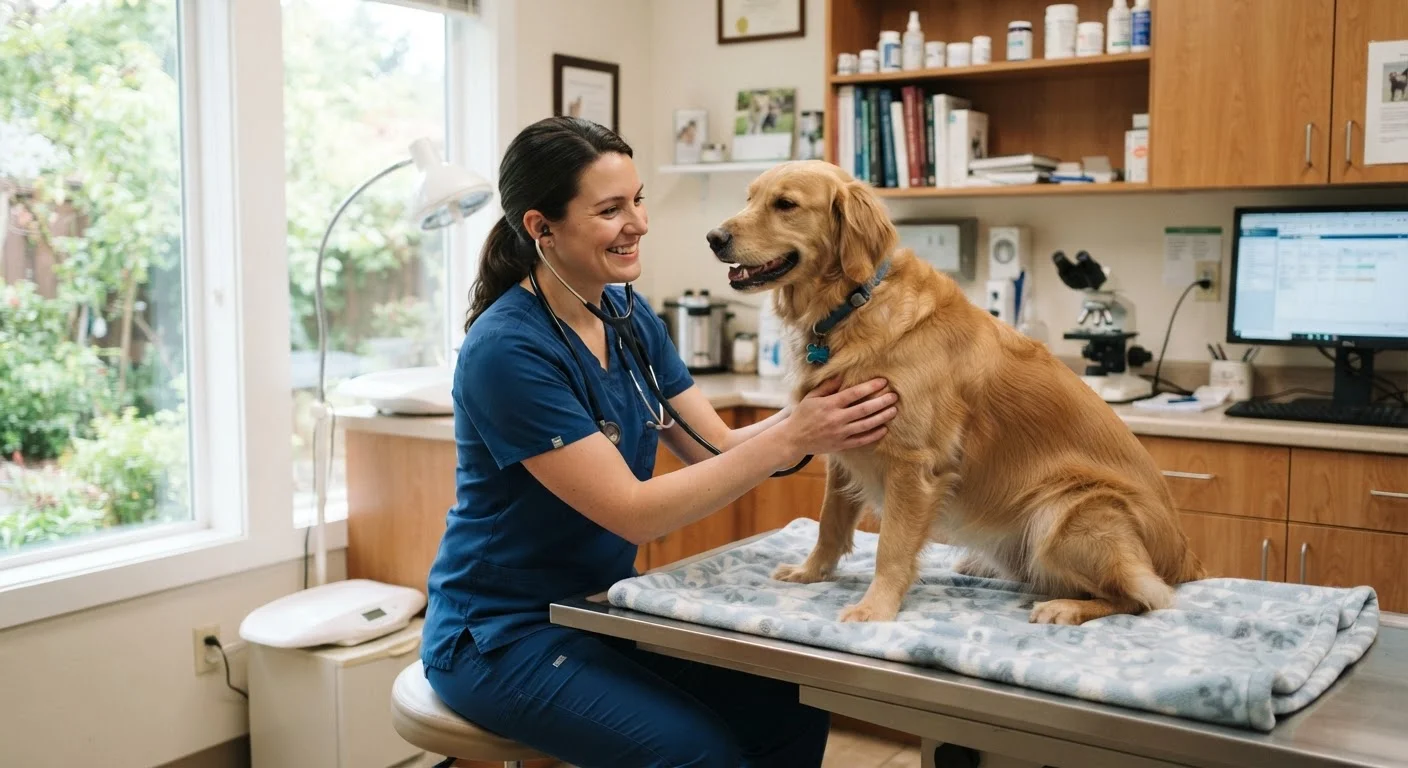
A wellness exam is a scheduled, head-to-tail physical that happens when your pet appears healthy. Think of it as a full systems check. Your vet typically covers:
- Weight and body condition score — trends matter as much as a single number
- Heart and lung auscultation (listening with a stethoscope) — detects murmurs or abnormal breathing
- Dental assessment — oral health is one of the most overlooked areas in pet care
- Skin, coat, eyes, and ears — early signs of allergies, infection, or parasites
- Palpation of the abdomen — checking for organ size or unusual masses
- Vaccine review and updates — see our breakdown of core vs. non-core vaccines to understand which ones your pet actually needs
- Parasite prevention discussion — heartworm, fleas, ticks, and intestinal worms
- Lifestyle and nutrition questions — diet, exercise, behavior changes
Blood and urine screening may be recommended annually for senior pets or breeds prone to certain conditions. These tests can surface kidney, liver, or thyroid issues long before outward symptoms appear.
Bring a Written Summary to Every Wellness Exam
Jot down any behavior changes, new foods, supplements, or unusual incidents from the past year before the appointment. Vets can only act on what they know, and even small changes can be clinically meaningful. A one-page written summary keeps the conversation focused and ensures nothing slips through the cracks during a busy appointment.
What Happens at a Sick Visit
A sick visit — sometimes called a problem-focused exam — begins with a specific concern. Your vet zeroes in on the symptom or system involved rather than reviewing everything at once. The appointment typically includes:
- A targeted physical exam of the affected area or system
- A detailed history of when symptoms started, how they've progressed, and any changes in eating, drinking, or behavior
- Diagnostic tests relevant to the concern — bloodwork, urinalysis, X-rays, or cultures
- A working diagnosis or differential list (a short list of possible causes)
- A treatment plan, which might include medications, a follow-up exam, or a referral to a specialist
Importantly, sick visits are not the place to catch up on overdue vaccines or run a dental check unless it directly relates to the presenting problem. Asking your vet to handle both in a single sick-visit appointment can create scheduling pressure and may mean neither gets the attention it deserves.
Don't Skip the Wellness Exam When a Sick Visit Goes Well
It's tempting to feel like a recent sick visit 'counts' as your pet's annual checkup. In most cases, it doesn't — the sick visit addressed a specific problem, not a comprehensive baseline review. Skipping the scheduled wellness exam means potentially missing unrelated issues that a full exam would have caught. Check with your vet about whether the sick visit can be credited toward a wellness visit, but don't assume it automatically qualifies.
How They Compare Side by Side
The table below summarizes the key differences at a glance.
| Annual Wellness Exam | Sick Visit | |
|---|---|---|
| Purpose | Prevention and early detection | Diagnosis and treatment |
| When to schedule | Pet appears healthy, on a routine cadence | Specific symptom or concern is present |
| Exam scope | Full head-to-tail physical | Targeted to affected system or symptom |
| Vaccines administered | Yes, as due | Only if directly relevant |
| Diagnostic tests | Optional screening (blood, urine) | As needed to reach a diagnosis |
| Cost predictability | More predictable | Varies with diagnostic needs |
| Follow-up typically needed | Next annual exam | Often within days to weeks |
One practical implication: costs differ significantly between visit types. Wellness exams are somewhat predictable — you can anticipate vaccine fees, a physical exam fee, and optional screening costs. Sick visits are harder to budget in advance because diagnostic needs vary. For a plain-language explanation of what drives those differences, see what goes into a vet bill.
When You're Not Sure Which One to Book
If your pet seems slightly off — less energetic than usual, eating a bit less — but has no dramatic symptoms, it's reasonable to call your vet's office and describe what you're seeing. Clinic staff can usually help you determine whether a same-day sick visit is warranted or whether your scheduled wellness exam (if it's coming up soon) is soon enough.
A few guidelines worth keeping in mind:
- Never delay urgent care to wait for a wellness appointment. Difficulty breathing, uncontrolled bleeding, suspected poisoning, or collapse are emergencies requiring immediate attention.
- Don't skip wellness exams when your pet seems healthy — that's precisely when early screening has the most value.
- Ask about appointment types when booking so the clinic can allot the right amount of time and prep the appropriate resources.
For families navigating preventive care concepts across both pets and people, the same logic applies — see how annual physicals differ from preventive wellness visits for a human health parallel.
This article is for general informational purposes only and does not constitute veterinary advice. Always consult a licensed veterinarian for guidance specific to your pet's health needs.