
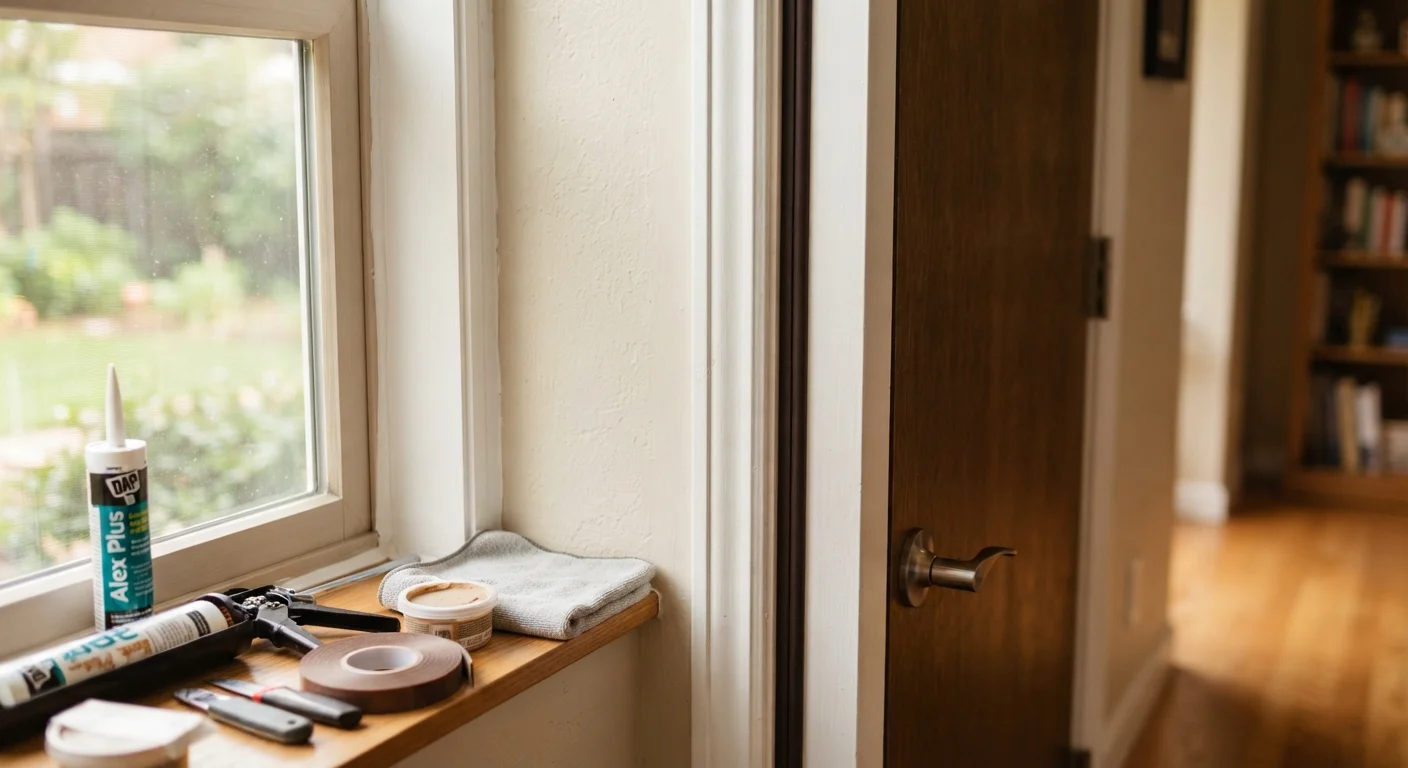
What Each Product Actually Does
Caulk is a flexible compound — usually silicone, latex, or a hybrid of both — that you squeeze into a gap and let cure (harden). Once set, it bonds to the surrounding surfaces and creates an airtight, often waterproof, seal. It's permanent in the sense that removing it later takes some scraping and effort.
Weatherstripping is a compressible material — foam tape, rubber, vinyl, or felt — that attaches to a door or window frame and fills the gap when the unit closes. Because it's designed to be squeezed flat and spring back repeatedly, it handles movement that would quickly crack or peel caulk.
Think of caulk as glue-like and weatherstripping as gasket-like. Both stop air and moisture, but they're solving different mechanical problems.
| Criterion | Caulk | Weatherstripping |
|---|---|---|
| Best application | Fixed, non-moving gaps and joints | Moving parts — doors and operable windows |
| Material type | Silicone, latex, or hybrid compound | Foam, rubber, vinyl, or felt strip |
| Removal | Requires scraping and effort | Peels off or unscrews easily |
| Moisture resistance | High (especially silicone formulas) | Moderate; varies by material type |
| Typical lifespan | 5–10 years with proper prep | 2–5 years depending on use and material |
| DIY difficulty | Easy with practice | Easy; adhesive-backed versions need no tools |
Where Each One Belongs
Use caulk for any gap that doesn't move:
- Around window frames where the frame meets the exterior siding or interior drywall
- Along the bottom of baseboards where air can sneak in from a crawl space
- Around pipes, wires, or vents that pass through walls
- At the joint between a door frame and the surrounding wall — not the door itself
Use weatherstripping for any gap that moves with the opening and closing of a door or window:
- Along the top and sides of exterior doors (the area between the door edge and the stop molding)
- Along the bottom of exterior doors — a door sweep is the most common solution here
- Around operable window sashes (the part that slides or swings open)
Applying caulk around an operable window sash is a common beginner mistake. It either seals the window shut or fails within weeks as the sash moves. If you're doing a full fall checkup, our Fall Home Prep Checklist walks through both tasks together.
A Note on Window Types
Fixed (non-opening) windows should have their frames caulked where they meet the wall, but the glass unit itself should not be caulked unless you are a glazing professional — improper sealing can trap moisture inside the frame assembly. Double-hung or casement windows that open need weatherstripping on the sash, not caulk. When in doubt, check the window manufacturer's maintenance guidance.
How to Know What's Failing
Before buying either product, figure out what's actually leaking. Hold a lit incense stick or a damp hand near the suspected gap on a cold, windy day. Smoke movement or a chill on your skin confirms airflow.
Signs caulk has failed: visible cracks, gaps, or sections that have pulled away from one or both surfaces. Old caulk often shrinks, discolors, or turns brittle.
Signs weatherstripping has failed: a visible gap under or around a closed door even with the door latched, torn or compressed foam that no longer springs back, or felt strips that have worn flat.
Failing seals can also let moisture in over time, not just air. Water intrusion that goes unaddressed tends to escalate — our guide on how small leaks grow explains what to watch for before it becomes a repair bill.
Up to 30%
Heat loss through gaps and cracks
The U.S. Department of Energy estimates that air leaks through gaps, cracks, and openings can account for up to 30% of a home's heating and cooling costs.
$5–$15
Typical cost of a caulk tube
A standard 10-oz tube of exterior-grade caulk generally runs between $5 and $15 at hardware stores, making it one of the most cost-effective home maintenance materials available.
Applying Each One Without Making Mistakes
For caulk: Clean and dry the surface first — adhesion fails on dusty or damp joints. Cut the tube tip at a 45-degree angle, apply a steady bead, and smooth it with a damp finger or caulk tool before it skins over. Remove old caulk completely before applying new; layering over failed caulk shortens the life of the new seal. For bathroom or kitchen joints, be sure to use a product rated for those environments. Our bathroom and kitchen caulk guide covers wet-area specifics in more detail.
For weatherstripping: Measure the door or window perimeter before buying — it's easy to underestimate. Clean the frame surface, peel the adhesive backing, and press firmly along the full length. For foam tape, the door should compress it slightly when fully closed. Door sweeps along the bottom threshold usually require two small screws; most come with a template to mark placement. Test the seal by closing the door and checking for light gaps — adjust if needed.
Neither job requires special tools or professional help for standard exterior doors and windows. For unusual gaps near gas lines, electrical panels, or load-bearing structures, consult a qualified contractor before sealing anything.