
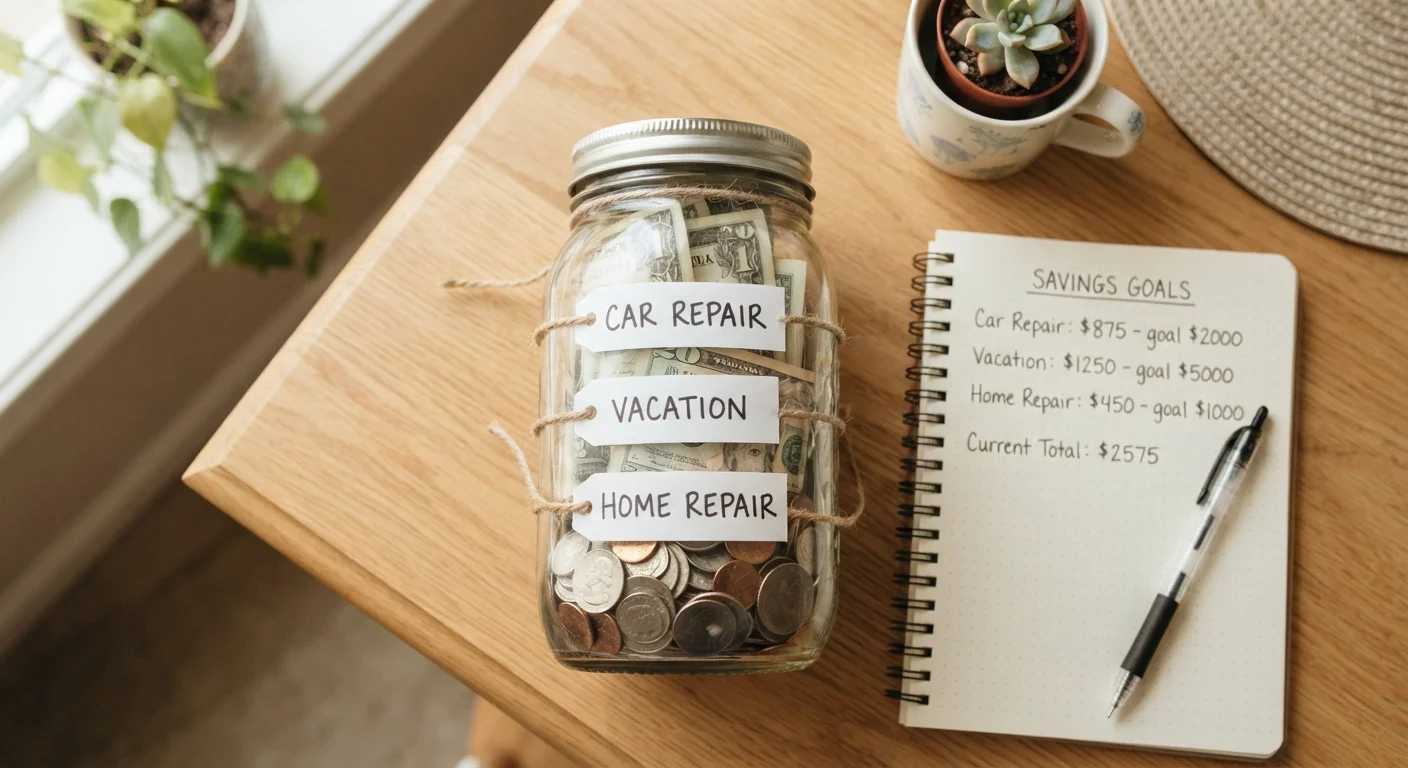
Why Big Expenses Keep Blowing Up Budgets
Many families write a careful monthly budget, stick to it reasonably well, and still finish the month in the red. The culprit usually isn't daily coffee or impulse buys — it's the large, foreseeable expenses that feel like surprises when they land. Car registration, back-to-school shopping, holiday gifts, annual insurance premiums, and home maintenance don't appear on a monthly budget because they don't happen every month. But they happen every year, like clockwork.
This structural gap is one of the primary reasons budgets fall apart. As explored in why monthly budgets keep falling apart, the problem is often not willpower — it's that the budget wasn't built to absorb irregular costs. Sinking funds fix exactly that.
Planned vs. Unexpected: A Key Distinction
Sinking funds work for expenses that are predictable in nature — even if the exact timing or amount varies slightly year to year. Car repairs, home maintenance, and seasonal costs all qualify. Truly unpredictable events, like a job loss or sudden medical crisis, belong in a separate emergency fund rather than a sinking fund.
How a Sinking Fund Works in Practice
The math behind a sinking fund is straightforward. Identify a future expense, estimate its cost, determine when you'll need the money, and divide the total by the number of months you have to save.
For example: if you expect to spend $600 on holiday gifts in December and it's currently June, you have six months. Saving $100 per month gets you there without touching your regular budget or going into debt. The same logic applies to car repairs, property taxes, veterinary care, or a home appliance replacement.
~$3,000
Average annual car maintenance and repair cost per vehicle
According to AAA estimates, vehicle ownership costs — including maintenance, tires, and repairs — run several thousand dollars annually for a typical American driver.
1–2%
Annual home maintenance as share of home value
A widely cited guideline in personal finance suggests homeowners budget between 1% and 2% of their home's value each year for maintenance and repairs, though actual costs vary considerably.
Once you calculate your monthly contribution, treat it like any other fixed bill — move the money out of your checking account on payday. Automating the transfer removes the decision from your hands and makes saving the default behavior rather than an afterthought.
Sinking Funds vs. Emergency Funds: Understanding the Difference
It's common to confuse sinking funds with emergency funds, but they serve distinct roles. An emergency fund — covered in depth in what an emergency fund is and why every family needs one — is a safety net for costs you cannot predict: a layoff, a medical emergency, or a flooded basement. You hope never to need it.
A sinking fund, by contrast, is for expenses you fully expect. You know the car will eventually need new tires. You know the kids will start school in September. Because sinking funds are planned, they don't deplete your emergency reserve — they prevent you from needing to tap it in the first place.
Keep Sinking Funds Separate From Your Emergency Reserve
Mixing sinking fund money with your emergency fund creates confusion about how much is truly available for genuine emergencies. Even if it's just a different labeled bucket within one bank account, keeping them visually and mentally separate makes both more effective.
If you're building an emergency fund on a tight budget, sinking funds can actually help by reducing the number of "emergencies" that drain that reserve.
Setting Up Your First Sinking Fund
Begin with one category that reliably stresses your budget. Common starting points for homeowners include home maintenance (a general rule of thumb suggests setting aside roughly 1% of the home's value annually for upkeep, though actual needs vary), vehicle expenses, or annual insurance premiums. You don't need a special account right away — a clearly labeled savings bucket or a separate savings account works fine.
- Name the expense: Be specific. "Car" is vague; "tires and registration" is actionable.
- Estimate the cost: Use past bills, estimates, or conservative guesses.
- Set your timeline: When will you need this money?
- Divide and automate: Divide the total by months remaining and set up an automatic transfer.
Over time, you can layer in additional funds for different categories. Many families find that maintaining three to five sinking funds simultaneously becomes second nature — similar to the small daily habits that quietly reduce monthly overspending, it's about building consistent, low-effort systems rather than heroic one-time efforts.
This article is for general informational and educational purposes only and does not constitute personalized financial advice. For guidance specific to your financial situation, consult a qualified financial professional.