
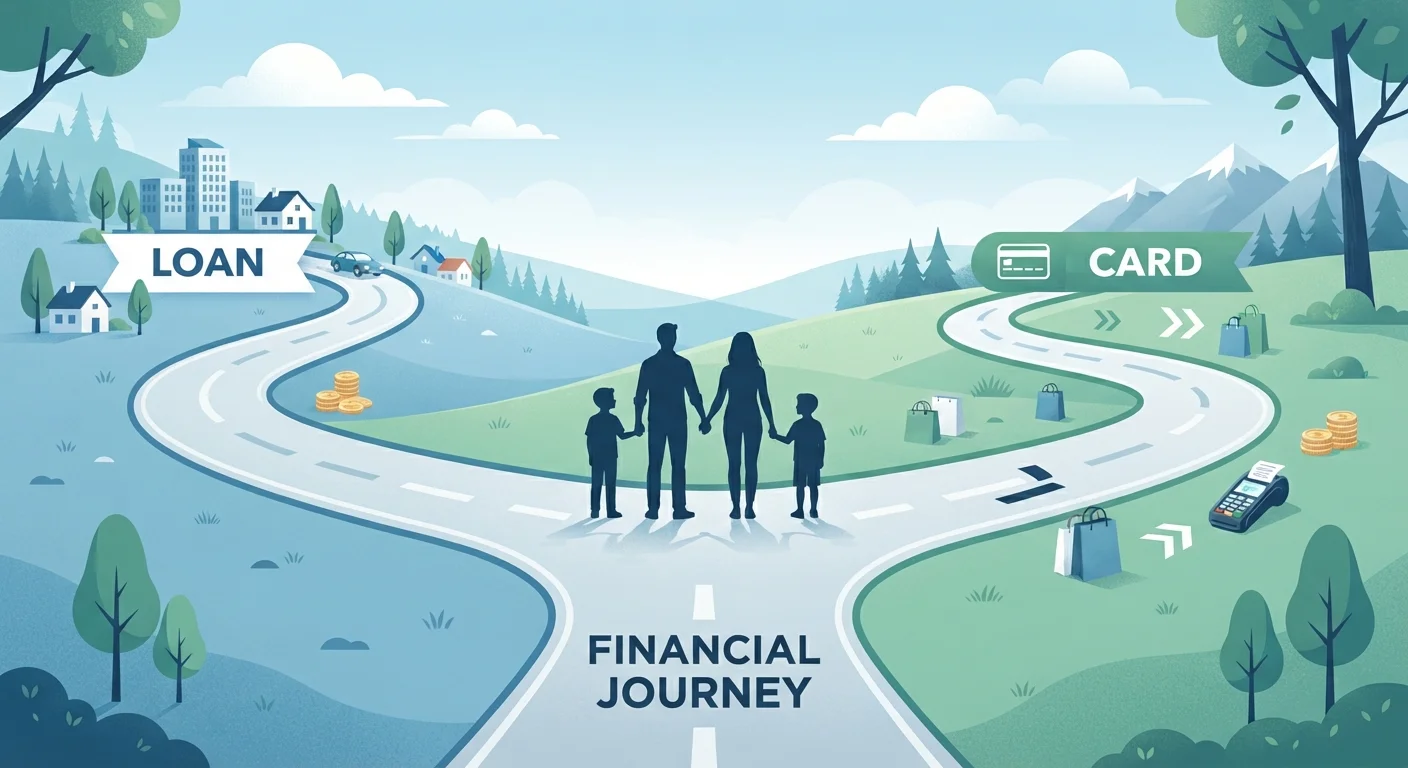
How Each Tool Works
When juggling multiple high-interest debts, two options come up frequently: debt consolidation loans and balance transfer credit cards. Both aim to simplify your debt — but they work through very different mechanisms.
A debt consolidation loan is a personal loan used to pay off several existing debts at once, leaving you with a single monthly payment at a (ideally lower) fixed interest rate. Loan terms typically range from two to seven years, and the rate you receive depends heavily on your credit profile.
A balance transfer card lets you move existing credit card balances onto a new card, usually one offering a APR of 0% for an introductory period — commonly 12 to 21 months. After that window closes, the card's standard APR applies, which can be significantly higher. Most cards also charge a balance transfer fee, typically 3%–5% of the amount moved.
Understanding these mechanics is the first step. As our guide on good debt vs. bad debt explains, not all debt functions the same way — and how you manage it matters just as much as which tool you use.
Key Differences at a Glance
Comparing these two options across the criteria that matter most to families helps clarify which might fit your situation.
| Debt Consolidation Loan | Balance Transfer Card | |
|---|---|---|
| Interest structure | Fixed rate for the loan term | 0% intro APR, then variable high rate |
| Repayment timeline | 2–7 years, set at origination | Flexible, but promo window ends in 12–21 months |
| Typical fees | Origination fee (1%–8%) | Balance transfer fee (3%–5%) |
| Credit score generally needed | Fair to good (varies by lender) | Good to excellent for best offers |
| Best debt size | Larger balances, longer payoff | Smaller balances, short payoff horizon |
| Payment predictability | Fixed monthly payment | Minimum payment varies monthly |
| Risk if not paid off | Ongoing fixed interest accrues | Rate jumps sharply after promo period |
One underappreciated difference: balance transfer cards leave your minimum payment flexible — which sounds appealing but can actually slow your payoff. Our article on why minimum payments keep you in debt longer explains exactly why making only the minimum each month often works against you.
When a Debt Consolidation Loan May Make More Sense
A consolidation loan tends to be a stronger fit when:
- Your total balance is large enough that paying it off within 21 months isn't realistic.
- You want a fixed monthly payment that fits neatly into a household budget.
- Your debt spans multiple types — not just credit cards — such as medical bills or personal loans.
- You prefer the certainty of a defined payoff date.
Calculate Your Total Cost Before Committing
Before accepting a consolidation loan, add up the total interest you'll pay over the loan term and compare it to what you're currently paying across all debts. Factor in any origination fees as well. This simple calculation reveals whether the loan genuinely saves money — or just simplifies your payments without reducing your overall cost.
That said, loan approval and rates depend on your credit score and income. A lower credit score may result in an interest rate that offers little benefit over your current debts — so it's worth calculating the total cost before proceeding. For broader debt organization strategies, see our beginner's roadmap to tackling multiple debts.
When a Balance Transfer Card May Make More Sense
A balance transfer card can be a cost-effective approach when:
- Your balance is manageable enough to pay off entirely before the promotional APR expires.
- You have a good-to-excellent credit score, which is typically required to qualify for the best introductory offers.
- You can commit to not adding new charges to the card during the promo period.
Watch Out for the Rate Cliff
Many families transfer a balance intending to pay it off during the promotional period, but underestimate how long it will take. If even a portion of the balance remains when the introductory period ends, the remaining amount will accrue interest at the card's standard APR — which can be 25% or higher. Always calculate the monthly payment needed to clear the balance before the promo window closes.
It's also worth comparing this approach with structured payoff methods. Our comparison of the debt avalanche vs. debt snowball can help you decide how to attack the balance once it's transferred.
What Both Options Have in Common — and What They Don't Fix
Both tools share an important trait: they reorganize debt but do not reduce the principal you owe. Transfer fees, origination fees, and new interest charges can add to your total if you're not careful.
Neither option addresses the spending habits or budget gaps that may have contributed to the debt in the first place. Pairing either approach with a household budget — see our home budgeting hub for practical frameworks — dramatically improves the odds of success.
~$7,000
Average U.S. household credit card balance
According to Federal Reserve data, the average revolving credit card balance carried by U.S. families has remained in this range in recent years.
20%+
Average credit card interest rate
The Federal Reserve has reported that average credit card interest rates have exceeded 20% APR, making high-rate debt costly to carry long-term.
Finally, be aware that some widely held beliefs about consolidation can mislead families. Our piece on common household debt myths addresses the idea that consolidation always saves money — a claim that depends entirely on your rates, fees, and repayment behavior.
This article is for general informational and educational purposes only and does not constitute personalized financial, tax, or legal advice. Consult a qualified, licensed financial adviser before making decisions about debt management in your specific situation.