
Why Standard Policies Leave Gaps
Most homeowners assume their policy acts as a broad safety net — that if something damages their home, they're covered. Unfortunately, that assumption can be costly. Standard homeowners insurance and auto insurance policies are built around a defined list of covered perils (events the insurer agrees to pay for), and anything not on that list is excluded.
Before you can protect your household properly, you need to know which hazards fall outside your existing coverage. As we explain in our guide to reading policy documents, the exclusions section is where these limitations are spelled out — and it's worth reading carefully.
| Flood covered by standard home insurance? | No — requires a separate flood policy (FEMA / NFIP program guidelines) |
| Earthquake covered by standard home insurance? | No — requires an endorsement or standalone policy (Insurance Information Institute) |
| Does comprehensive auto cover flood? | Yes — but only if you carry comprehensive coverage (Standard auto policy terms) |
| NFIP waiting period before coverage begins | Typically 30 days (FEMA NFIP guidelines) |
| Earthquake deductible structure | Often a percentage of insured value, not a flat dollar amount (California Earthquake Authority (illustrative example)) |
| Mold and pest damage coverage | Almost always excluded as a maintenance issue (Standard homeowners policy exclusions) |
This article is for general informational and educational purposes only. It does not constitute personalized insurance, financial, or legal advice. Coverage terms, exclusions, and availability vary by insurer and state. Always review your actual policy documents and consult a licensed insurance professional for guidance specific to your situation.
Common Perils Standard Home Insurance Won't Cover
Flood Damage
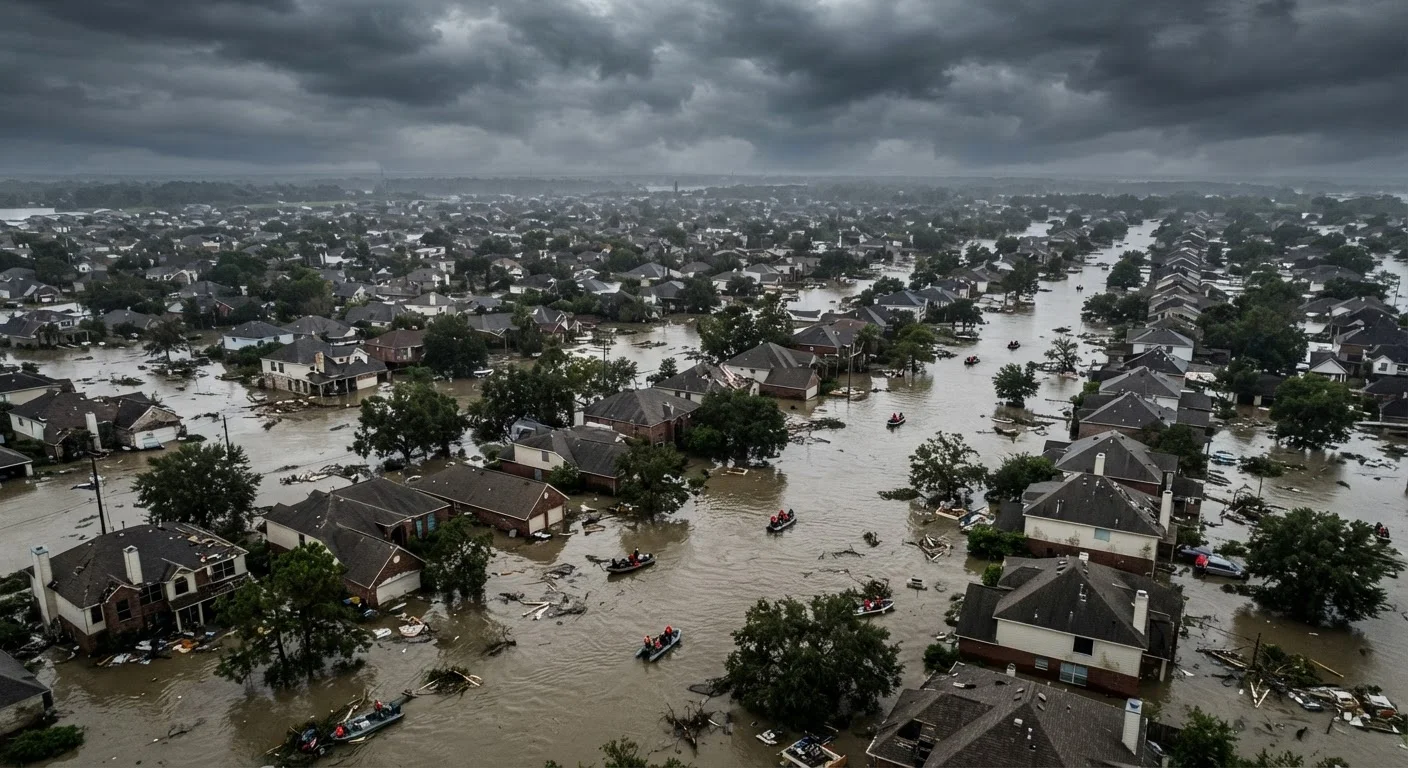
Standard homeowners insurance does not cover flooding — not from river overflow, heavy rainfall, storm surge, or overland runoff. This is one of the most widespread coverage misconceptions families hold. Separate flood insurance is available through the federal NFIP, administered by FEMA, or through some private insurers. NFIP policies typically carry a 30-day waiting period before coverage begins, so purchasing after a storm warning is generally too late.
Earthquake Damage
Earthquake damage is excluded from virtually all standard homeowners policies. A standalone earthquake policy or an endorsement (an add-on to your existing policy) is required. Deductibles for earthquake coverage are often expressed as a percentage of your home's insured value — not a flat dollar figure — which can mean a very large out-of-pocket cost.
Sewer Backup and Water Seepage
Water damage from a sudden burst pipe is usually covered, but water backing up through a sewer or drain — or seeping up through the foundation — is typically excluded. Many insurers offer a water backup endorsement for an additional premium that addresses this specific gap.
Sinkholes and Earth Movement
Ground movement of any kind — including sinkholes, mudslides, and landslides — is generally excluded from standard policies. A few states with known sinkhole risk have specific regulatory requirements, but coverage is not automatic anywhere.
Mold, Pests, and Neglect
Damage from mold, termites, rodents, or other pests is almost always excluded because insurers classify these as maintenance issues rather than sudden, unexpected events. Consistent home upkeep is your primary defense; our home maintenance hub covers practical strategies for protecting your property year-round.
Named Peril
A specific event or cause of loss that a policy explicitly lists as covered. Only losses caused by named perils qualify for a claim under that policy.
Exclusion
A condition, event, or type of loss that a policy explicitly does not cover. Exclusions are listed in their own section of the policy document and override general coverage language.
Endorsement
An amendment attached to an existing insurance policy that modifies its terms — commonly used to add coverage for a peril the base policy excludes. Also called a rider.
Comprehensive Coverage
An optional auto insurance coverage that pays for vehicle damage from events other than a collision — such as flood, hail, fire, theft, or falling objects.
Special Flood Hazard Area (SFHA)
A geographic zone designated by FEMA as having significant flood risk. Properties in an SFHA with federally backed mortgages are generally required to carry flood insurance.
Water Backup Endorsement
An optional add-on to a homeowners policy that covers damage from water backing up through sewers, drains, or a sump pump — events excluded from most standard policies.
Gaps in Auto Insurance Policies
Standard auto policies have their own notable exclusions. Comprehensive coverage — which is optional, not required by most states — is what pays for non-collision events like flood, hail, falling trees, or theft. If you carry only liability coverage (and possibly collision), you have no protection against those perils.
Even comprehensive coverage has limits. Aftermarket equipment, custom parts, and personal belongings left in the vehicle are frequently sub-limited or excluded entirely. Understanding how those ceilings work is essential — our article on coverage limits and sub-limits explains how policy caps can affect what you actually receive after a loss.
Using Your Vehicle for Work? Check Your Policy
Personal auto insurance typically excludes losses that occur while a vehicle is being used for commercial purposes — including rideshare or delivery driving. If you use your vehicle for any income-generating activity, ask your insurer whether a rideshare endorsement or separate commercial policy is needed to maintain protection during those periods.
How to Identify and Close Your Coverage Gaps
The most reliable way to find gaps is to read your policy's Exclusions section carefully, alongside your Declarations page. If a term is unclear, ask your insurer or agent for a plain-language explanation — they are there to help you understand what you're paying for.
- List the natural hazards most common in your area: flood zones, seismic activity, wildfire risk, or severe storms.
- Check whether your address falls in a FEMA-designated Special Flood Hazard Area using the agency's free Flood Map Service Center.
- Ask your insurer which endorsements or separate policies are available to address specific gaps you've identified.
- When evaluating options, compare not just premiums but also deductibles, exclusions, and coverage limits — a framework detailed in our guide to comparing insurance policies.
It's also worth testing your assumptions against reality. Our article on home insurance myths corrects several widespread beliefs that routinely leave families underprotected. Coverage needs evolve — an annual review of your policies, and a check-in after major life events, is a sound practice for any household.