
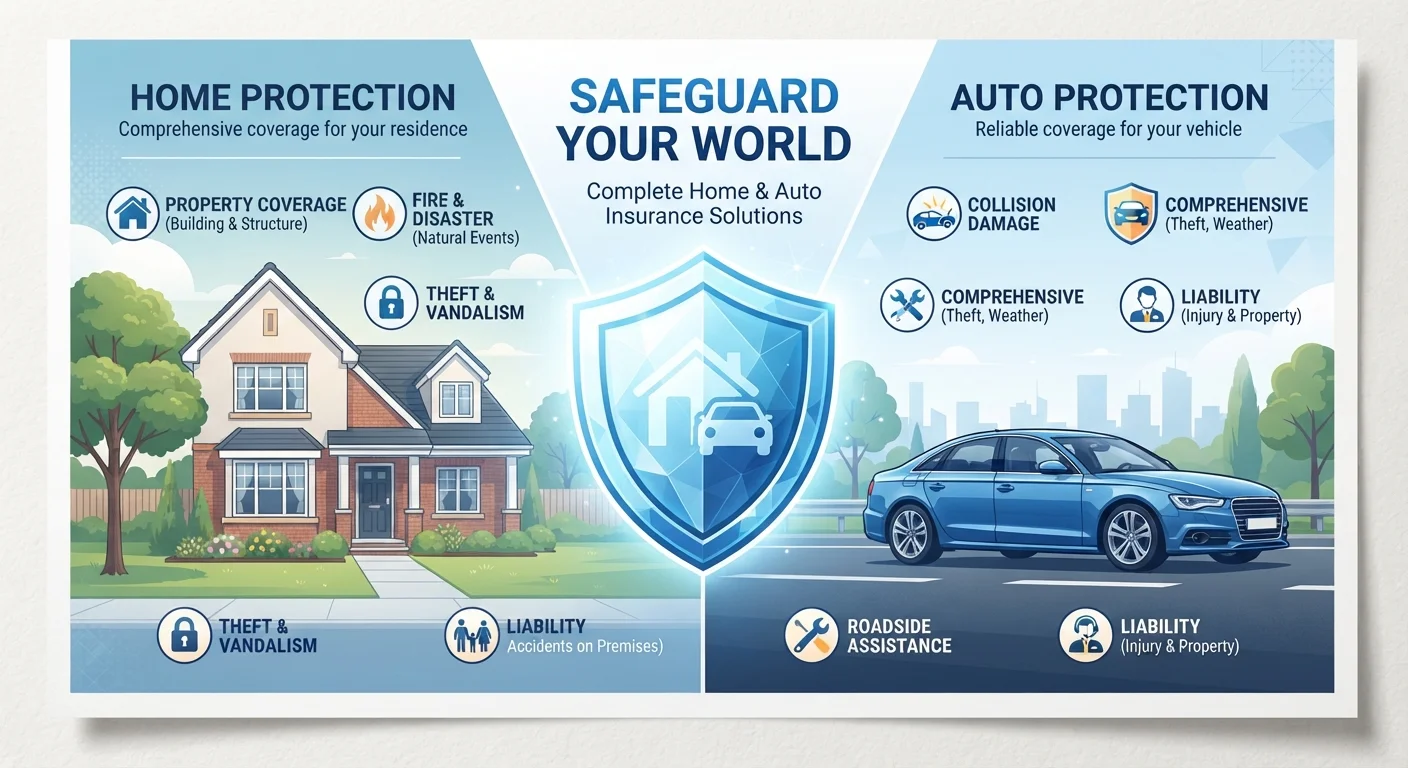
How Liability Coverage Works in a Homeowners Policy
The liability section of a homeowners policy is designed to protect you financially if someone is accidentally injured on your property — or if you or a household member accidentally damage someone else's property. It covers two broad areas: bodily injury to others and property damage caused to others.
For example, if a guest slips on your icy front steps and breaks an arm, your homeowners liability coverage may help pay their medical expenses and, if they sue, their legal costs. Standard policies typically include a baseline liability limit — often $100,000 — though many insurance professionals suggest considering higher amounts given the cost of medical care and litigation.
Homeowners policies also usually include a smaller sub-coverage called medical payments to others (sometimes called "med pay"). This pays modest amounts for a guest's minor injuries regardless of who was at fault, without the need for a lawsuit. It is separate from the main liability limit.
Liability Terms Can Be Confusing
Words like "limit," "exclusion," and "endorsement" carry specific meanings in insurance policies. If you encounter unfamiliar terminology in your policy documents, our home and auto insurance glossary explains the most common terms in plain language.
To learn what else a homeowners policy covers beyond liability, see our first-time policyholder guide.
How Liability Coverage Works in an Auto Policy
Auto liability coverage serves a similar purpose — it pays for harm you cause to others — but it applies specifically to situations involving a vehicle you're operating. In most US states, carrying a minimum level of auto liability coverage is a legal requirement before you can register and drive a car.
Auto liability is typically broken into two parts:
- Bodily injury liability: Pays for medical expenses, lost wages, and legal costs if you injure another person in an accident you caused.
- Property damage liability: Pays to repair or replace another person's vehicle or other property you damaged in the accident.
Policies express these as split limits — for instance, 50/100/50 means $50,000 per injured person, $100,000 per accident total for injuries, and $50,000 for property damage. State minimums are often much lower than what financial advisers consider adequate coverage. For a full breakdown of coverage types on an auto policy, see Auto Insurance Coverage Types, Decoded.
~49 states
States requiring auto liability insurance
Nearly every US state mandates that drivers carry minimum auto liability coverage, though the required minimums vary widely by state.
$100,000
Typical baseline homeowners liability limit
Many standard homeowners policies start with a $100,000 personal liability limit, though higher limits are widely available and often advisable.
Where Liability Coverage Ends — And What Fills the Gap
Every liability policy has boundaries. Understanding them helps you avoid surprises after an incident occurs.
Common exclusions in homeowners liability
- Intentional acts (you deliberately damage someone's property)
- Business activities conducted from your home
- Auto accidents — even if they occur in your driveway
- Injuries to household residents (covered persons under the policy)
Common exclusions in auto liability
- Damage to your own vehicle (that's what collision coverage is for)
- Your own medical bills (addressed by PIP or med pay coverage)
- Intentional acts
- Using the vehicle for commercial purposes, such as rideshare driving, without an appropriate endorsement
When the damages from a serious accident exceed your policy's liability limit, the difference is your personal financial responsibility. One way families protect themselves against this risk is by purchasing a personal umbrella policy, which provides an additional layer of liability protection — typically in increments of $1 million — above and beyond both home and auto policy limits.
Consider Reviewing Your Liability Limits
State minimums for auto liability and default limits on homeowners policies may not be sufficient for your financial situation. Reviewing your current limits with a licensed insurance agent — especially if you own significant assets — is a reasonable step. A personal umbrella policy can provide broader protection at a relatively modest additional cost.
This article provides general insurance information for educational purposes and is not personalized insurance, financial, or legal advice. Coverage terms, limits, and exclusions vary by insurer and by state. Always read your actual policy documents carefully, and consult a licensed insurance agent or adviser to evaluate coverage options for your specific situation.