
Where This Phrase Actually Shows Up
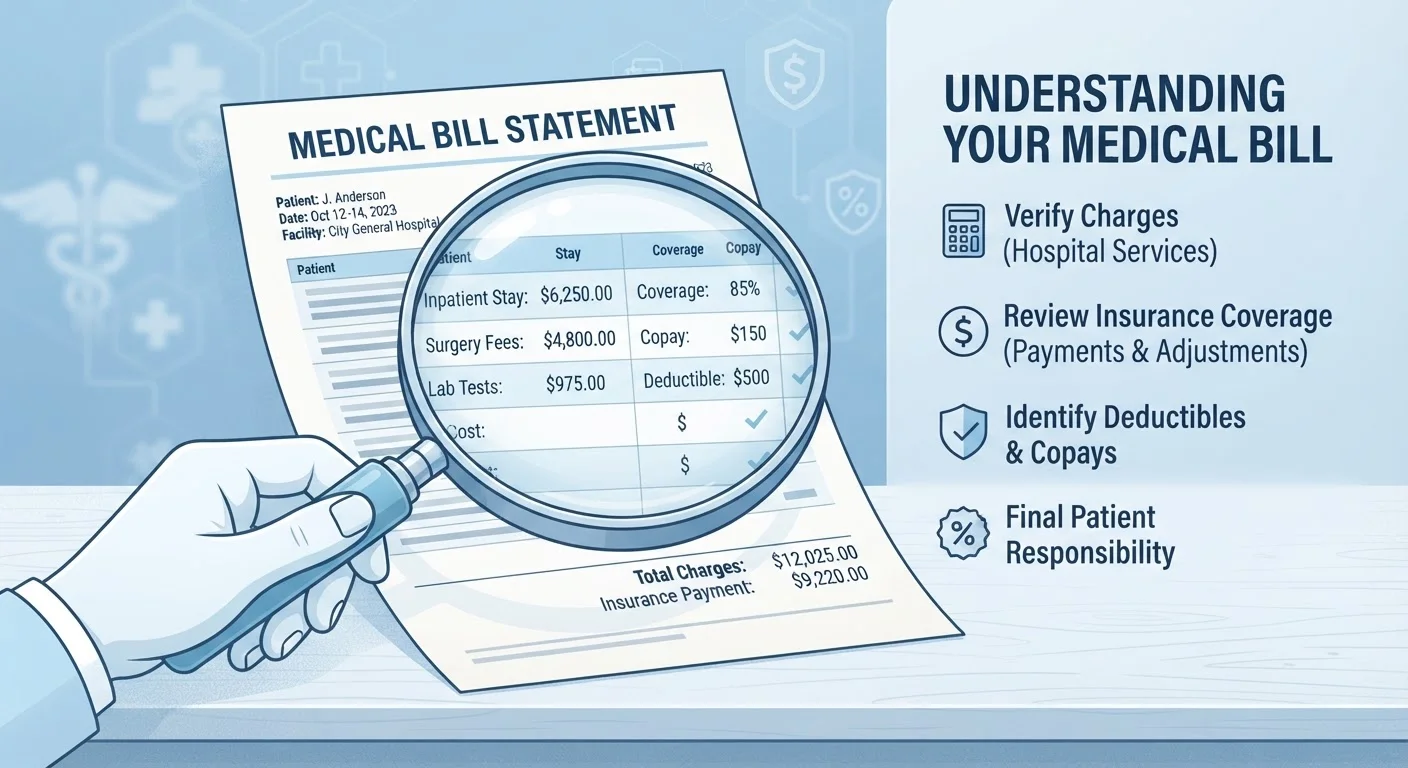
You are most likely to encounter "reasonable and customary" on an Explanation of Benefits (EOB) — the statement your insurer sends after a claim is processed. A line item may show the provider's billed charge, then a lower "allowed amount," with the difference described as exceeding the reasonable and customary (UCR) limit.
Health insurance is the most common context, but the concept also appears in dental plans, vision coverage, and occasionally in liability settlements. Wherever it shows up, the underlying logic is the same: the insurer sets a price ceiling for each type of service, and it will pay its share only up to that ceiling.
For a broader look at the terms you'll find throughout a policy document, see the Insurance Jargon Decoded glossary, which covers UCR alongside dozens of other common phrases.
UCR Is Not the Same Across All Plans
Two people with health insurance from different companies can receive the same procedure from the same provider and face entirely different UCR determinations. There is no industry-wide standard rate. This is why comparing plans goes beyond just the monthly premium — coverage mechanics like UCR limits matter too. See what to compare beyond the premium for a broader framework.
How Insurers Calculate the UCR Benchmark
There is no government-mandated formula for UCR. Each insurer builds its own benchmark using a combination of:
- Historical claims data — what providers in a given ZIP code or metro area typically charge for the same service.
- Third-party databases — resources like the FAIR Health database compile anonymized billing records to produce regional price ranges.
- Percentile thresholds — a plan might define UCR as the 80th percentile of charges for a procedure in a region, meaning 20% of providers charge above the limit.
Because insurers rarely publish their exact methodology, it can be difficult to predict in advance whether a specific provider's fee will exceed the UCR ceiling. This opacity is one reason UCR gaps catch many policyholders off guard.
Varies by zip code
UCR benchmark for identical procedures
Because UCR limits are tied to regional pricing data, the same service can have meaningfully different allowed amounts depending on where you live — even within the same insurer's plan.
~1 in 5
Privately insured patients who received a surprise bill
Research from the Kaiser Family Foundation found that roughly one in five privately insured adults reported receiving an unexpected medical bill from an out-of-network provider, often linked to UCR gaps.
The Out-of-Network Problem
UCR limits matter most when you see an out-of-network provider. In-network providers have signed contracts accepting negotiated rates, so the billed charge and the allowed amount are already aligned. Out-of-network providers have no such agreement — they can bill whatever they choose.
Here is how the math can play out:
- A specialist bills $800 for a consultation.
- Your insurer's UCR benchmark for that service in your area is $500.
- Your plan covers 70% of the allowed amount out-of-network: $350.
- You owe the remaining 30% of the UCR ($150) plus the $300 gap between the UCR and the billed charge — a total of $450 out of pocket.
This gap is sometimes called "balance billing." Some states have enacted laws limiting balance billing in certain situations, but protections vary widely. Always verify current rules in your state.
Check Network Status Before Every Appointment
Even if you have visited a provider before, their network status can change at the start of a new plan year. Call your insurer directly to confirm a provider is still in-network before scheduling — especially for specialists, labs, or imaging centers.
What You Can Do as a Policyholder
Understanding UCR does not eliminate the risk of coverage gaps, but it does help you plan. A few practical steps:
- Confirm in-network status before appointments. Call your insurer or use its online provider directory — not just the provider's website — since directories can be outdated.
- Ask for a cost estimate. For non-emergency procedures, request a written estimate from the provider and ask your insurer what the UCR limit is for that service code (the CPT code).
- Use your plan's appeals process. If a claim is paid below what you expected due to a UCR determination, you have the right to appeal. Your insurer must explain how it calculated the UCR upon request.
- Read your Explanation of Benefits carefully. The EOB will itemize allowed amounts, insurer payments, and your responsibility. Comparing these figures can reveal whether a UCR limit triggered a shortfall.
UCR is just one of several policy mechanics families often misread. The article on common policy misunderstandings explores related gaps — including the confusion between actual cash value and replacement cost — that frequently result in unexpected out-of-pocket costs.
For a fuller picture of how different sections of a policy document work together, the anatomy of an insurance policy guide breaks down each clause in plain language.
This article is for general informational purposes only and does not constitute personalized insurance, financial, or legal advice. Coverage terms, UCR calculations, and applicable state laws vary by insurer and location. Consult a licensed insurance professional and review your actual policy documents before making coverage decisions.