
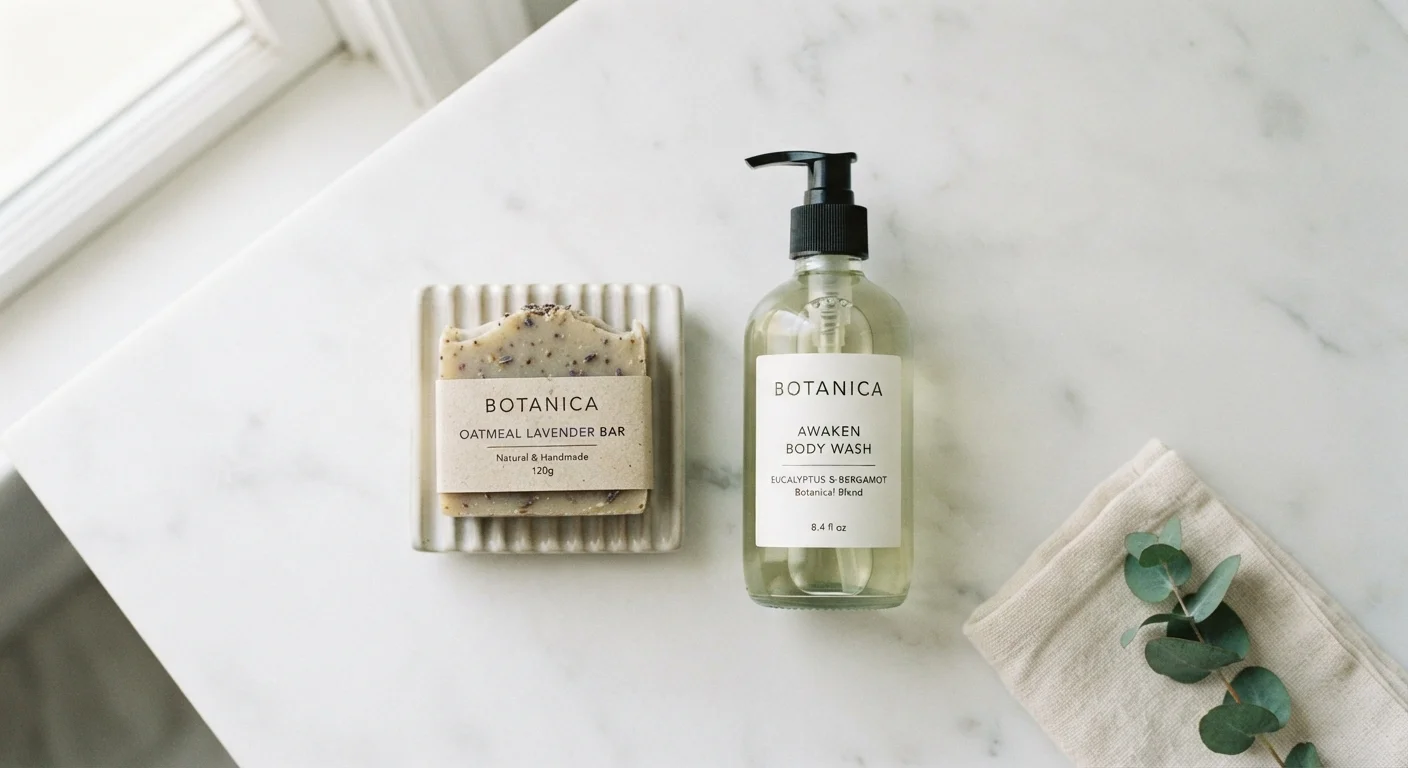
How Well Does Each One Actually Clean?
Here's the reassuring truth for busy parents: both bar soap and body wash are genuinely effective cleansers. Both work by using surfactants — ingredients that attract oil and water simultaneously — to lift dirt, sweat, and everyday grime from your skin and rinse it away. Neither has a meaningful cleansing edge over the other for the average healthy adult.
One common concern about bar soap is bacterial transfer — the idea that germs linger on the surface of a shared bar. Research suggests that while bacteria can sit on a wet bar of soap, the act of lathering and rinsing removes them effectively and does not lead to infection under typical household conditions. That said, if sharing feels uncomfortable, individual bars or a pump-style body wash are easy workarounds.
For children or family members with eczema-prone or very sensitive skin, the formulation matters more than the format. Fragrance-free, gentle options exist in both categories. When in doubt about a skin condition, a dermatologist or healthcare provider can offer guidance tailored to the individual.
| Criterion | Bar Soap | Body Wash |
|---|---|---|
| Cleansing effectiveness | Very effective | Very effective |
| Average cost per use | Lower | Higher |
| Moisturizing ingredients | Varies by formula | Often included |
| Packaging waste | Minimal (cardboard) | More (plastic bottle) |
| Ease of use for kids | Can be slippery | Pump bottle is easy |
| Shelf life / longevity | Long when kept dry | Moderate |
| Travel friendliness | Easy, no liquid rules | Subject to TSA limits |
Cost Per Use: Running the Numbers
The sticker price on a bottle of body wash can look similar to a bar of soap, but the real comparison is cost per use — how much you spend each time you shower.
A standard bar of soap (roughly 4 oz) can last an average adult around 3–4 weeks with daily use. A comparable 16 oz bottle of body wash may last a similar period but carries a noticeably higher retail price per ounce in most stores. Studies examining personal care spending generally find that bar soap delivers a lower per-wash cost than liquid body wash.
~$0.04
Estimated cost per bar soap use
General personal care cost analyses suggest bar soap averages just a few cents per wash for daily adult use.
~$0.10–$0.20
Estimated cost per body wash use
Body wash typically costs two to five times more per use than bar soap at comparable retail price points, depending on brand and usage habits.
One caveat: body wash usage varies widely. It's easy to squeeze out more than needed, which shortens the bottle's lifespan and nudges costs up. A simple tip — use a quarter-sized amount per wash — can stretch a bottle considerably further.
Skin Feel, Ingredients, and Everyday Practicality
Body wash formulas frequently include humectants (ingredients like glycerin that draw moisture into the skin) and emollients (oils or butters that smooth the skin surface). For people who tend toward dry skin, this built-in conditioning can feel noticeably more comfortable, especially during winter months.
Traditional bar soaps have historically had a higher pH than skin's natural surface, which some people find drying. However, many modern bars — sometimes labeled as syndet bars (short for synthetic detergent bars) — are formulated at a skin-friendlier, lower pH and include added moisturizers. Reading the ingredient list is more useful than assuming all bar soaps are alike.
On the practical side, bar soap requires a soap dish that drains properly to prevent a soggy mess; body wash needs shelf or ledge space in the shower. For households with young children, a pump bottle can be easier for small hands to operate independently, which may tip the scales toward body wash for some families.
A Note on Sensitive and Special Skin Types
Children, individuals with eczema, psoriasis, or other skin conditions may respond differently to cleansers than healthy adult skin. Fragrance is one of the most common irritants in both bar soap and body wash. If a household member has a diagnosed skin condition or experiences recurring irritation, a board-certified dermatologist or pediatrician can recommend formulations suited to their specific needs. General guidance in articles like this one is not a substitute for personalized professional advice.
This article is for general informational purposes only and does not constitute medical or dermatological advice. If you have specific skin concerns, consult a qualified healthcare provider.