
Why Exercise Needs Change With Age
Children aren't small adults - their bodies, brains, and coordination are all developing, which means the type and amount of physical activity that benefits them shifts considerably from infancy through adolescence. Understanding these shifts helps parents set realistic expectations without pressure.
Physical activity supports a wide range of health outcomes in children: cardiovascular fitness, bone strength, healthy weight, better sleep, and even improved mood and focus. The connection between movement and mental wellbeing is well-established in pediatric research, making daily activity a valuable habit to nurture early.
80%
Adolescents not meeting activity guidelines
The CDC estimates that about 80% of adolescents do not meet the recommended 60 minutes of daily physical activity.
60 min
Daily activity recommended for ages 6-17
CDC guidelines call for at least 60 minutes of moderate-to-vigorous physical activity daily for school-age children and teens.
3x/week
Muscle- and bone-strengthening frequency
CDC guidelines specify that muscle- and bone-strengthening activities should be included at least three days per week within the 60-minute daily total.
Toddlers and Preschoolers (Ages 1-5): Movement All Day
For the youngest children, the goal isn't a structured workout - it's consistent active play throughout the day. The CDC advises that preschool-age children (3-5 years) be physically active throughout the day to support growth and development. Toddlers (ages 1-2) benefit from at least 180 minutes of physical activity daily, spread across waking hours.
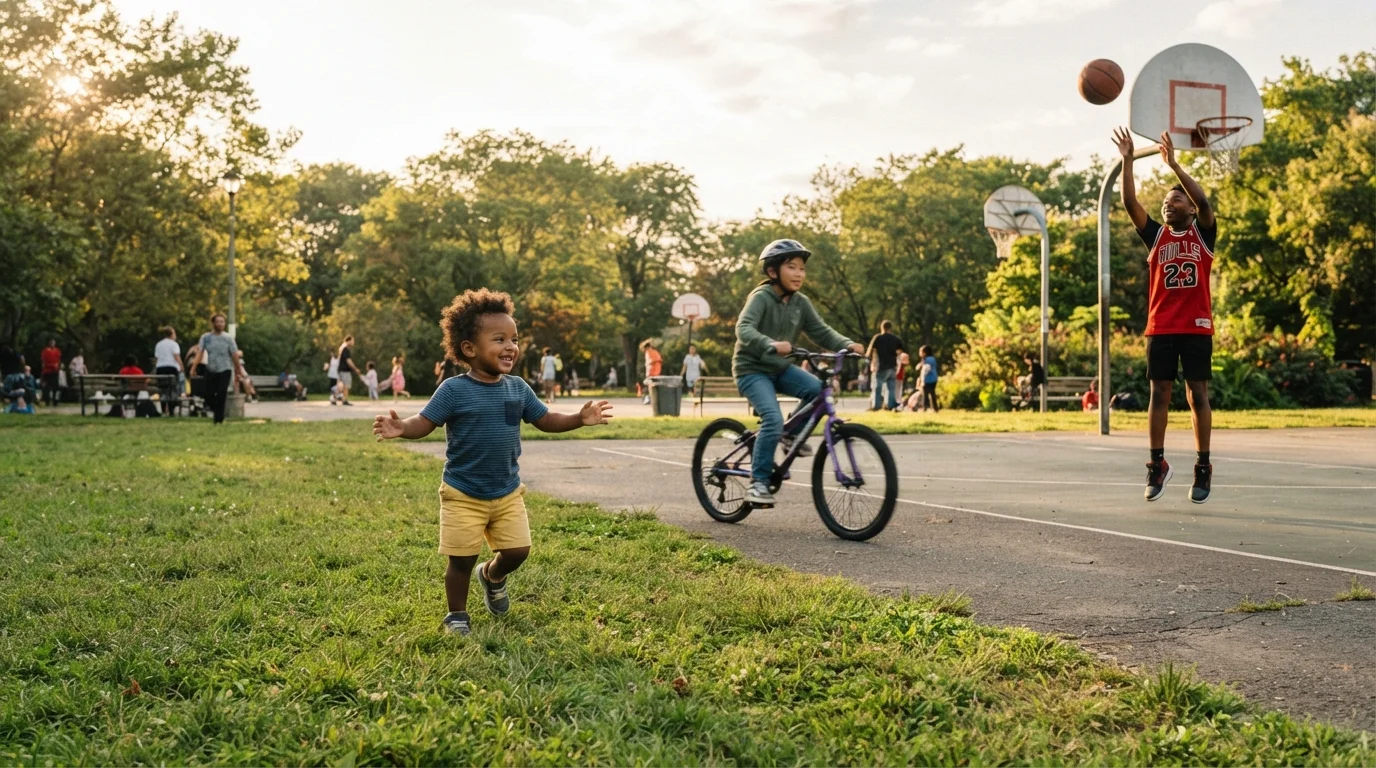
What this looks like in practice is simple: chasing bubbles in the backyard, toddling to the park, dancing to music, or climbing safely on playground equipment. Fine motor play - stacking blocks, drawing - is valuable too, but gross motor movement (using large muscle groups) is the priority at this stage.
Parents don't need special equipment or programs. Limiting prolonged sitting and screen time matters as much as adding activity. According to AAP guidance, children under 18-24 months should avoid screen media other than video chatting, and even older preschoolers benefit from limits on sedentary screen time.
Make Active Play Easy to Find
Keep a basket of balls, jump ropes, and sidewalk chalk near the door so that going outside and moving feels like the default option. Young children are naturally drawn to movement when the environment invites it. Reducing barriers matters more than structured routines at this age.
School-Age Children (Ages 6-12): Building the 60-Minute Habit
Once children start school, the CDC recommendation becomes more specific: at least 60 minutes of moderate-to-vigorous physical activity each day. This should include aerobic activity most days, plus muscle-strengthening and bone-strengthening activities (like gymnastics, jumping, or push-ups) at least three days per week.
Recess, PE class, after-school sports, and active commutes all contribute to this total. A child who walks to school, has an active recess, and kicks a ball around after homework may well meet the guideline without a formal exercise program.
Pairing good movement habits with other healthy routines amplifies the benefits. Children who are well-rested tend to be more physically active, and activity itself supports better sleep - a positive cycle worth encouraging. Nutrition plays a role too; the nutritional needs of growing children are closely linked to energy for activity.
Tweens and Teens (Ages 13-17): Motivation Becomes the Challenge
Adolescents face a well-documented activity drop. Busy schedules, increased screen time, social pressures, and changing interests can all reduce physical activity just as bodies are going through significant growth. Yet the 60-minute daily recommendation remains the same through age 17.
Teens who find activities they genuinely enjoy are far more likely to stay active. This might be team sports, but it could equally be hiking, martial arts, swimming, yoga, or recreational cycling. The key is autonomy - letting a teenager have a real say in what they do makes the habit more sustainable.
When Activity Levels Drop Sharply
A noticeable, sustained drop in a teen's physical activity - especially if paired with low energy, mood changes, or withdrawal from activities they previously enjoyed - can sometimes signal something beyond a busy schedule. If you're concerned, it's worth a conversation with your child's pediatrician to rule out underlying physical or emotional health factors.
It's also worth recognizing that physical activity supports teen mental health, focus, and sleep - benefits that can resonate with teens themselves when framed honestly rather than prescriptively.
Practical Tips for Every Stage
Building activity into daily life doesn't require a gym membership or an elaborate plan. A few practical approaches work well across age groups:
- Make movement social. Active play with peers or family is intrinsically motivating at every age.
- Reduce sedentary stretches. Breaking up long sitting periods - for homework or screens - with movement breaks counts.
- Follow the child's lead. Children who choose their activities participate more consistently and with greater enjoyment.
- Connect habits early. Starting age-appropriate healthy routines in early childhood makes it easier to sustain them later.
“The best physical activity for a child is one they will actually do. Joy and intrinsic motivation are the most powerful long-term predictors of an active life.”
— American Academy of Pediatrics, U.S. pediatric professional organization, guidance on physical activity and play
This article is for general informational and educational purposes only and does not constitute medical advice. Always consult your child's pediatrician or a qualified healthcare professional before making changes to their physical activity routine, particularly if your child has a health condition, injury, or developmental concern.