
Why Starting Early Actually Matters
Personal care routines aren't just about cleanliness — they're an early form of self-respect that kids learn to practice every day. When children develop habits like handwashing, toothbrushing, and sun protection while they're young, those behaviors become second nature rather than a daily battle. Research consistently shows that habits formed in childhood tend to persist into adult life, which means the investment you make now pays dividends for decades.
The good news: you don't need expensive products or elaborate systems. The most effective personal care routines for kids rely on consistency, age-appropriate expectations, and a little bit of patience. Pair that with the daily habits that support kids' mental health, and you're building a really strong foundation. Below, we've broken down the key habits to introduce at each stage — from toddlerhood through the preteen years.
This article is for general informational purposes only and is not a substitute for advice from your child's pediatrician or a qualified healthcare professional.
Keep It Positive and Pressure-Free
Children respond much better to encouragement than correction when it comes to personal care. Praise effort and consistency rather than perfect technique — a two-year-old who happily opens their mouth for toothbrushing is doing great, even if the job isn't thorough yet. If a particular step causes repeated distress, troubleshoot with your pediatrician rather than pushing through and creating lasting negative associations.
Age-by-Age Personal Care Habits to Build
Toddlers (Ages 1–3): Laying the Groundwork
At this stage, you're doing most of the work — and that's completely normal. The goal isn't independence; it's familiarity. Introduce toothbrushing twice daily using a small, soft brush and a rice-grain-sized amount of fluoride toothpaste (as recommended by the American Dental Association for children under 3). Make it playful: a song, a timer, or a fun cup can ease resistance.
Handwashing is another cornerstone habit to begin now. Help your toddler wash hands before meals, after outdoor play, and after using the bathroom. You're modeling the motions — scrubbing for about 20 seconds — so they learn the mechanics gradually.
Gentle moisturizing after baths helps protect young skin, especially in dry climates or during winter months. Keep products simple and fragrance-free where possible, since toddler skin can be sensitive.
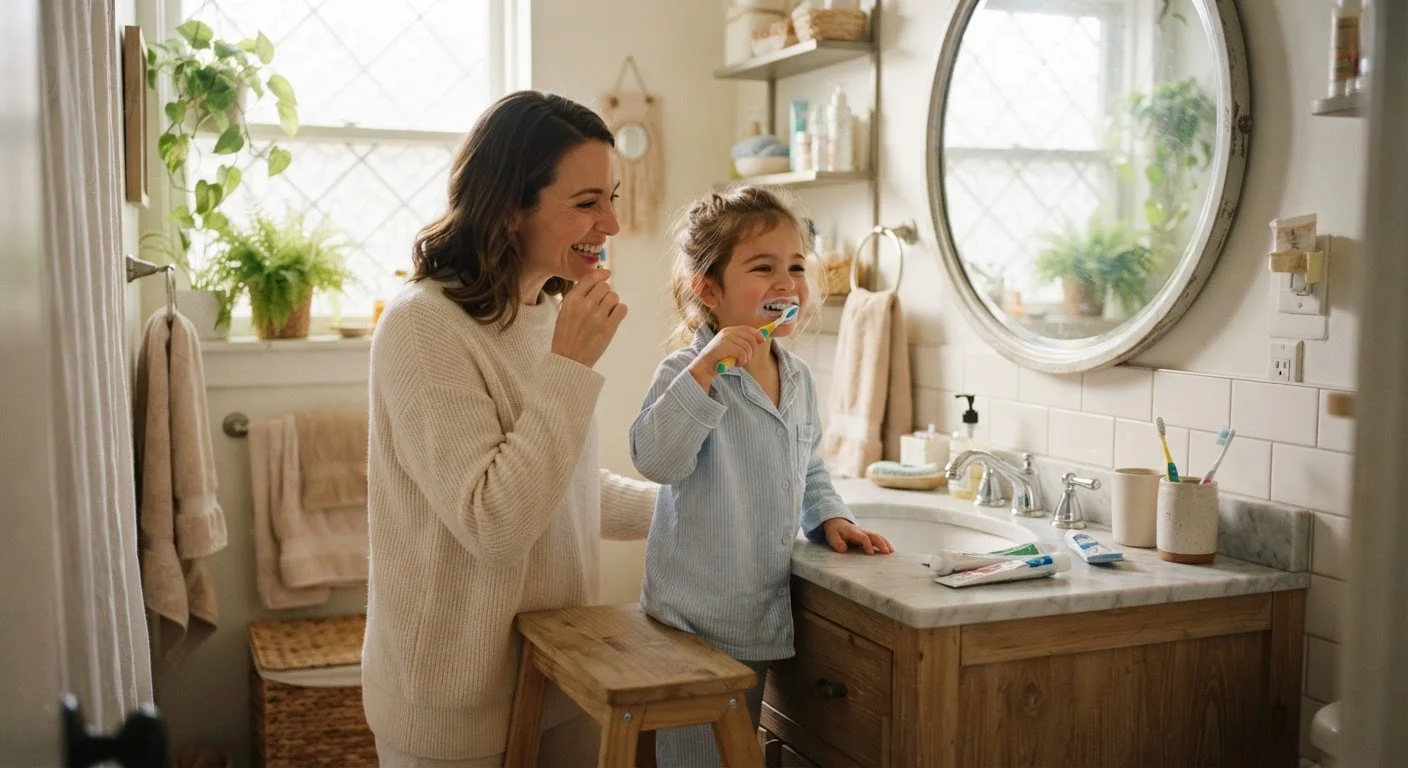
Toothbrushing twice daily with a rice-grain of fluoride toothpaste builds the habit early.
Preschoolers (Ages 3–5): Adding Independence
Preschoolers are eager to do things themselves — use that energy! Let them hold the toothbrush and try on their own, then follow up with a second pass to ensure thorough cleaning. This "you try, I'll finish" method balances autonomy with effectiveness.
This is also a great age to introduce the basics of sun protection. Apply broad-spectrum sunscreen (SPF 30 or higher is a commonly cited general guideline) before outdoor activities, and let them watch you do it on yourself too. Children learn powerfully through observation.
Nail trimming, basic hair detangling, and washing faces with water become approachable at this stage. Keep sessions short, calm, and positive — ending on a high note sets a healthy emotional tone around personal care. For guidance on discussing body-related topics with young kids, talking to kids about their bodies in age-appropriate ways offers a helpful framework.
The 'you try, I'll finish' approach to toothbrushing balances a preschooler's independence with thoroughness.
Early School-Age (Ages 5–8): Building Real Ownership
By kindergarten, most children can manage their core routine with reminders but less direct assistance. Handwashing, toothbrushing, and face washing should feel routine rather than negotiable. Now is a good time to upgrade to a pea-sized amount of fluoride toothpaste and introduce flossing with parental help — a habit dentists consistently recommend starting once teeth begin touching.
Hair washing becomes a more independent activity during this window. Show kids how to apply a small amount of shampoo, lather, and rinse thoroughly. This is also when many children become more aware of body odor; a gentle, age-appropriate deodorant or antiperspirant may become relevant depending on the individual child's development — check in with your pediatrician if you're unsure about timing.
Sun protection should remain a non-negotiable before outdoor time. Making it part of the morning routine — right alongside teeth and face — helps normalize it as just another everyday step.
Introducing flossing when teeth begin touching gives kids a head start on lifelong dental health.
Tweens (Ages 9–12): Managing Personal Changes
Puberty brings new personal care considerations, and kids this age benefit from calm, non-shaming conversations about what's changing and why. Body odor becomes more pronounced, so deodorant use becomes part of the daily routine for many tweens. Showering or bathing daily (or at least regularly) also takes on more importance.
Skincare enters the picture for many kids around this age. A simple routine — gentle face wash, fragrance-free moisturizer, and daily SPF — is all most tweens need. Resist the urge to overcomplicate it; more products don't mean better skin, and some heavily marketed "tween" lines contain ingredients that aren't appropriate for young skin. When in doubt, a pediatrician or dermatologist can offer guidance specific to your child's skin type.
Hair care needs may diversify significantly at this stage depending on hair texture and type. Encouraging kids to learn about their own hair — what it needs, how to care for it — builds confidence and self-knowledge. For more on overall wellness at this life stage, explore the Child Wellness hub.
A simple face wash, moisturizer, and SPF routine is all most tweens genuinely need.
Nail and Hand Care: Underrated at Every Age
Nail care tends to fly under the radar, but it's an important part of hygiene at every childhood stage. Short, clean nails reduce the spread of germs and prevent scratching injuries. Trim nails regularly (every one to two weeks is a common general guideline), cutting straight across to minimize ingrown nails, and use the opportunity to check for any redness or swelling around the nail bed.
For older kids and tweens, teaching basic nail hygiene — no biting, cleaning under nails after outdoor play, moisturizing cuticles in dry weather — sets them up for healthy habits that extend well into adulthood. For a more detailed look at nail care that applies across the whole family, nail care basics for healthy hands and feet is a practical read.
Regular nail trimming and simple cleaning habits prevent germ spread and keep young hands healthy.
Every Child Develops at Their Own Pace
The age ranges used here are general guidelines, not rigid milestones. Some children will be ready to take on certain tasks earlier; others may need more time and support. If your child has sensory sensitivities, developmental differences, or specific health conditions, their care routine may look different — and that's completely okay. Your pediatrician is always the right first stop for personalized guidance. You can also use your annual checkup prep checklist to come ready with questions.
Making Routines Stick (Without the Power Struggle)
The secret to a routine that actually works isn't rigid discipline — it's predictability. Kids thrive when they know what comes next, so anchoring care habits to existing transitions (after waking up, before dinner, before bed) removes a lot of the friction. Visual charts with simple pictures work especially well for younger children who can't read yet.
Budget-wise, most of what's listed here is genuinely affordable. Fluoride toothpaste, a soft-bristled brush, a basic moisturizer with SPF, and a gentle shampoo cover the bulk of what kids need through most of childhood. For tips on getting more mileage out of those everyday staples, see how to stretch personal care products further without cutting corners on hygiene.
Finally, always loop in your child's pediatrician when you have questions about specific skin conditions, dental concerns, or care needs that feel outside the norm. Your annual pediatric checkup is a great opportunity to ask about age-appropriate routines tailored to your child. Routines don't have to be perfect — they just have to be practiced.