
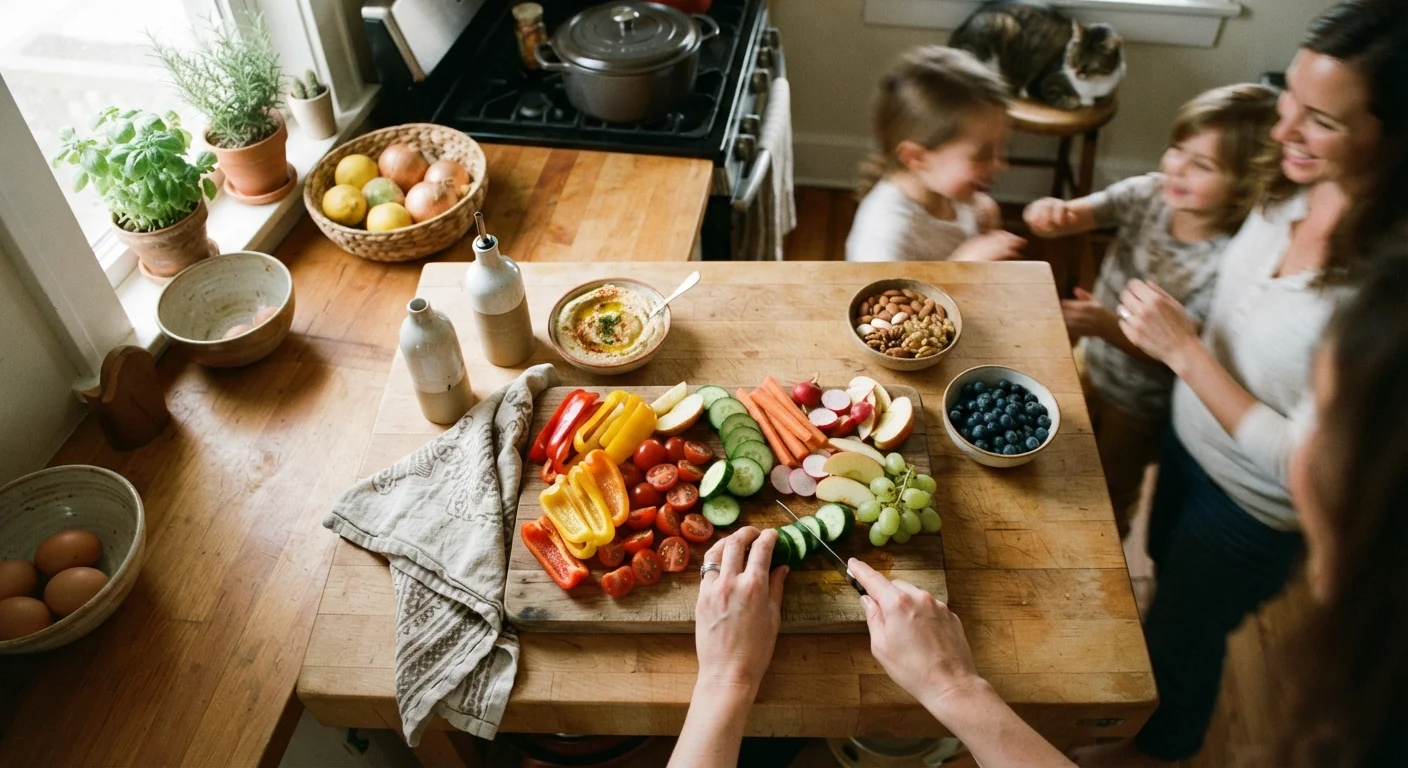
Why Snacking Strategy Matters for Families
Snacking often gets a bad reputation, but the reality is more nuanced. For children especially, whose stomachs are smaller and energy needs are high, snacks serve a genuine nutritional purpose. The challenge isn't snacking itself — it's how families snack. Highly processed options high in added sugar and low in fiber can create energy spikes followed by crashes, leaving kids irritable and adults reaching for more food sooner than expected.
A more helpful frame: think of snacks as mini-meals that bridge the gap between main meals, rather than treats to be rationed or rewards for good behavior. Research consistently links the quality of between-meal eating — not just the meals themselves — to overall diet quality in children. For a deeper look at separating evidence from noise, see common nutrition myths for kids.
This article is for general informational and educational purposes only. It is not a substitute for personalized nutrition or medical advice. Always consult a qualified healthcare professional for guidance specific to your child's or family's needs.
Core Practices for a Healthier Snack Culture
These evidence-informed approaches can help shift your family's snacking habits in a practical, sustainable direction.
Pair every snack with at least two food groups for better satiety.
Snacks built around a single food — crackers alone, fruit alone — digest quickly and offer limited staying power. Combining a carbohydrate with protein or healthy fat slows digestion and keeps blood sugar more stable, reducing the likelihood of overeating at the next meal.
Make nutritious options the easiest choice by positioning them at eye level.
Accessibility drives behavior, particularly for children. When the first thing visible in the fridge or on the counter is a ready-to-grab healthy option, it requires no extra decision-making or preparation — which matters enormously on busy weeknights.
Establish consistent snack times rather than allowing continuous grazing.
Eating in response to boredom, screen time, or habit rather than hunger can lead to overconsumption over time. Scheduled snack windows help children tune into genuine hunger signals and ensure snacks don't displace appetite for nutritious meals.
Involve children in choosing and preparing their snacks.
Children who participate in food selection and simple preparation tend to show greater willingness to try and eat those foods. This builds positive associations with nutritious eating and develops basic food literacy that supports lifelong habits.
Keep portions reasonable without making snack time feel restrictive.
Large unstructured snack portions can undermine meal appetite, especially in younger children. At the same time, overly rigid restriction can backfire, increasing preoccupation with food. Predictable, reasonably sized snack servings strike a balance that supports both nutrition and a healthy relationship with eating.
Quick Wins You Can Start This Week
You don't need a full pantry overhaul to improve your family's snacking habits. A few targeted changes can produce noticeable results quickly. For more ideas on stocking your kitchen affordably, visit our guide on building a well-stocked family pantry.
Small environmental changes — what's on the counter, what's pre-cut in the fridge — often matter more than willpower alone when life gets busy.
Keeping It Affordable Without Sacrificing Quality
One of the most common barriers families cite is cost. Whole, minimally processed snack foods can seem pricier upfront, but smart shopping habits close that gap significantly. Eggs, canned beans, peanut butter, oats, seasonal produce, and plain yogurt consistently rank among the most cost-effective nutrient-dense options available.
A Note on Special Dietary Needs
Some children have food allergies, intolerances, or conditions (such as diabetes) that require individualized snack planning. The general guidance in this article is appropriate for most healthy children and adults, but families managing specific health conditions should work with a registered dietitian or their child's pediatrician to tailor snack choices. The Child Wellness hub has additional resources on nutrition for growing kids.
Buying in bulk when prices are lower, portioning snacks at home rather than purchasing pre-portioned packaging, and rotating with what's on sale are all strategies that reduce spending without reducing quality. Our related guide on eating nutritiously on a tighter budget goes deeper on this topic.
~27%
Of daily calories from snacks in children
Research published in nutrition journals estimates that snacks account for roughly a quarter or more of daily caloric intake in school-age children in the United States.
2–3x
Cost difference: packaged vs. home-portioned snacks
Consumer food cost analyses generally show that pre-portioned snack packaging can cost two to three times more per serving than buying the same food in bulk and portioning at home.