
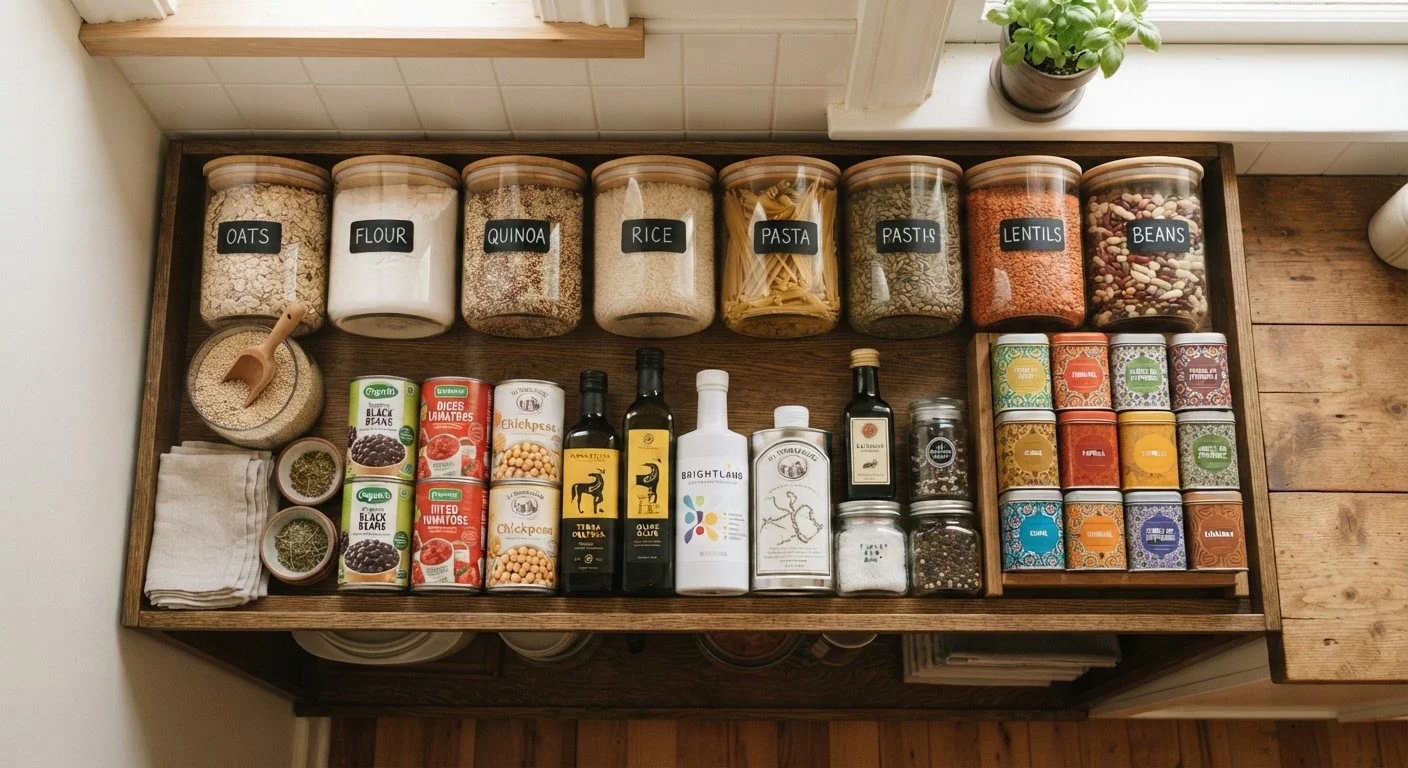
Why Your Pantry Sets the Tone for Family Meals
On a hectic Tuesday evening, what you reach for is almost entirely determined by what's already in your kitchen. A thoughtfully stocked pantry removes the friction between a long day and a nutritious dinner — no last-minute grocery runs, no defaulting to takeout. It also makes weekly meal planning far less stressful, because you're building menus around ingredients you already have.
This checklist is designed for families of any size who want to cook healthier meals more consistently without overhauling their budget or spending hours in the kitchen. Use it to audit what you already own, identify gaps, and build toward a pantry that works hard for you every week. If you're newer to thinking about food groups and nutritional balance, our beginner's guide to building a balanced plate is a helpful companion to this checklist.
Permanent marker and masking tape
Label open containers and jars with the contents and purchase date to support rotation and reduce waste.
Airtight food storage containers
Transfer dried grains, legumes, and flours into sealed containers to extend shelf life and deter pests.
A simple pantry inventory notepad or app
Track what you have on hand so you can build grocery lists efficiently and avoid duplicate purchases.
Measuring cups and spoons
Accurate measuring helps when following recipes that use pantry staples in specific proportions.
Your Family Pantry Stocking Checklist
Work through each category below at your own pace. The goal isn't to buy everything at once — add a few items each shopping trip until your pantry feels complete. Prioritize the must items first; they form the backbone of hundreds of healthy meals.
Whole Grains & Starches
Legumes & Plant Proteins
Canned & Jarred Vegetables
Healthy Fats & Oils
Spices, Herbs & Flavor Builders
Baking & Cooking Essentials
Watch Sodium in Canned Goods
Many canned beans, tomatoes, and broths contain significant added sodium. Look for labels marked 'low sodium' or 'no salt added,' and rinse canned beans before use — this can reduce their sodium content noticeably. Families managing blood pressure or other conditions where sodium is a concern should consult their healthcare provider for personalized guidance.
For families navigating a tight grocery budget, focus first on dried legumes, oats, canned tomatoes, and a neutral cooking oil — these four categories alone can anchor a week of nutritious meals. For more strategies, see our guide on stretching your grocery budget without cutting nutrition.
Getting the Most Out of These Staples
Stocking the pantry is step one; using it well is what delivers results. A few habits make the difference:
- Rotate stock regularly. Place newer items behind older ones so nothing expires unused.
- Read labels on canned and packaged goods. Look for low-sodium canned beans and tomatoes, and check for added sugars in packaged foods like pasta sauces and nut butters.
- Lean on frozen produce. When fresh vegetables are expensive or going unused, frozen options are a smart alternative. Our article on fresh, frozen, or canned produce breaks down the nutritional tradeoffs clearly.
- Let spices do the heavy lifting. The same can of chickpeas becomes a curry, a roasted side dish, or a soup depending on which spices you reach for — variety without extra cost.
Pantry Staples Don't Replace Fresh Foods
A well-stocked pantry supports healthy cooking but works best alongside fresh and frozen produce, dairy or dairy alternatives, and proteins. Pantry items are the supporting cast, not the whole show. Aim to pair these staples with whatever fresh or frozen vegetables and proteins fit your family's budget each week. Nutritional needs vary by age and health status — speak with a registered dietitian if you have specific concerns about your family's diet.
Families exploring more plant-forward eating will find this pantry particularly well-suited to that shift. Our overview of plant-based eating for families can help you understand what to watch nutritionally as you add more meatless meals. And if snacking is a challenge at home, building healthier snack habits is worth exploring alongside this checklist.
This article is for general informational and educational purposes only and is not a substitute for advice from a qualified registered dietitian or healthcare professional. Nutritional needs vary by individual; consult a professional for guidance tailored to your family's specific health circumstances.