
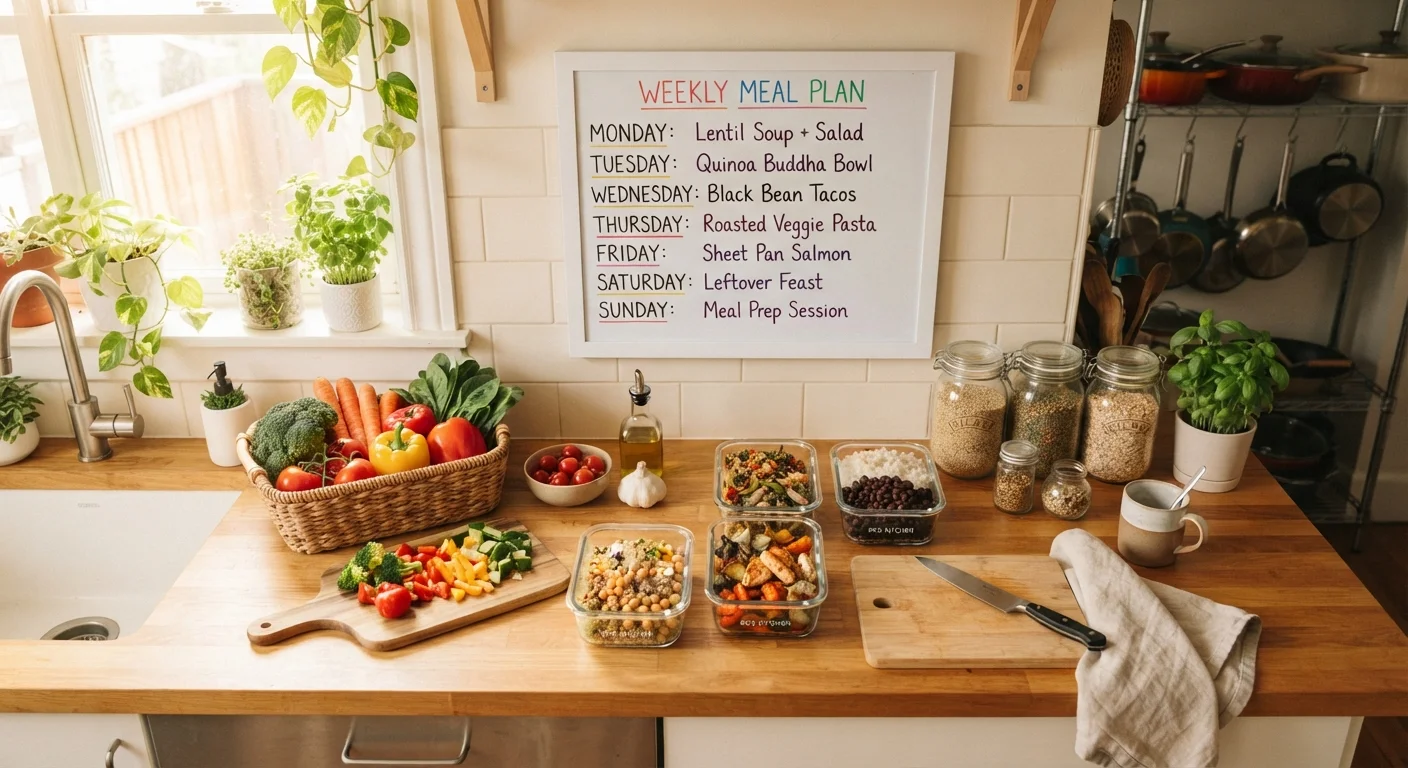
Why a Weekly Meal Plan Makes a Real Difference
Meal planning is one of those habits that sounds mundane until you try it consistently. Research from public health and nutrition fields consistently links home cooking with healthier dietary patterns — more vegetables, less sodium, and more fiber — compared with frequent reliance on restaurant or convenience meals. For families, that translates to meaningful nutritional gains over time, not just savings at the checkout.
Beyond nutrition, planning removes decision fatigue. When you already know what is for dinner, you sidestep the exhausted scramble that often ends in less nutritious choices. It also makes grocery shopping faster, since a focused list replaces wandering the aisles hoping something inspires you.
Planning does not require perfection. Even a loose three-to-four night plan gives your week more structure than none at all. For families also thinking about the financial side, practical grocery saving strategies pair naturally with a meal planning habit — because when you know what you need, you shop with purpose.
Involve the Whole Family in Planning
Asking each family member to suggest one meal per week dramatically increases the chance everyone eats what is served. Even young children can choose between two options you present. When people feel some ownership over the menu, dinner-table resistance tends to drop. Research on shared family meals also suggests that the ritual of eating together supports children's wellbeing beyond just nutrition — see our piece on eating together as a family for more context.
If getting kids to eat well at dinner feels like its own challenge, our article on vegetables kids will actually eat explores how preparation methods can shift the outcome at the table.
How to Build Your Weekly Plan: Step by Step
What you will need
Weekly meal plan template (paper or digital)
Provides a structured grid to map out breakfast, lunch, and dinner for each day of the week.
Airtight storage containers (various sizes)
Keep batch-cooked grains, proteins, and chopped vegetables fresh for three to five days in the refrigerator.
Slow cooker or Instant Pot
Allows hands-off cooking of soups, beans, and stews while you handle other tasks.
Sheet pans (two recommended)
Enable large-batch roasting of vegetables and proteins at the same time, reducing oven trips.
Freezer-safe bags or containers
Store extra batch-cooked meals for weeks when time is especially tight.
Audit your pantry and note what needs using
Before opening a grocery app or writing a single meal idea, spend ten minutes looking through your refrigerator, freezer, and pantry. Note ingredients that are close to their use-by date or that have been sitting unused for a while. Building meals around what you already own cuts waste and keeps costs down. See our pantry staples guide for a checklist of items worth keeping on hand.
Choose a realistic number of home-cooked dinners
Most busy households cannot realistically cook from scratch seven nights a week. Decide honestly how many evenings you have capacity for — often four to five is sustainable. Plan the remaining nights around simple assembly meals (wraps, grain bowls), leftovers, or a planned takeout night. A realistic plan you actually follow beats an ambitious one you abandon by Wednesday.
Map meals to your week's schedule
Look at your family's weekly calendar before assigning specific meals to specific days. Reserve slower-cooking recipes (casseroles, slow-cooker soups) for days when someone will be home earlier. Assign your quickest meals — stir-fries, pasta, or sheet-pan dinners — to your busiest evenings. This single habit prevents the 6 p.m. panic that leads to expensive last-minute food decisions.
Write a focused grocery list organized by store section
Translate your meal plan into a grocery list grouped by category: produce, proteins, dairy, grains, canned goods, and frozen items. A categorized list keeps your store trip efficient and reduces impulse buys. Cross-reference with your pantry audit from Step 1 to avoid buying things you already have. For practical strategies on keeping the total bill in check, our guide on building a grocery budget walks through realistic approaches.
Batch cook two or three foundational ingredients
Set aside one to two hours on a weekend day to cook in volume. Useful batch items include a large pot of whole grains (brown rice, farro, or quinoa), a tray of roasted mixed vegetables, a pot of beans or lentils, and a simple protein such as baked chicken or hard-boiled eggs. These components mix and match across multiple meals — grain bowls, salads, wraps, and soups — without repeating the same dish every night.
Review and adjust the plan mid-week
Check in briefly on Wednesday or Thursday evening. Has anything changed — an unexpected evening out, produce that is ripening faster than expected, a child who stayed home sick? Swap meals between days or use perishables in a quick soup or stir-fry before they go bad. This brief check-in prevents waste and keeps the plan working for your family rather than against it.
Once your routine is established — typically after two or three weeks — the whole planning process compresses to around 20 to 30 minutes. What feels effortful at first becomes a reliable weekly rhythm. For families curious about shifting toward more plant-forward meals, our overview of plant-based eating for families is a useful companion. And if food spending is also a priority in your household budget, stretching your grocery budget without cutting nutrition covers strategies that work alongside a weekly plan.
Food Safety Comes First When Batch Cooking
Cooked food stored in the refrigerator should generally be consumed within three to four days, according to established food safety guidance. If you batch cook on Sunday, plan to use or freeze those items by Wednesday or Thursday. When in doubt, trust your senses — and when not sure, throw it out. Do not risk foodborne illness to avoid waste.
This article is for general informational purposes only and does not constitute medical or dietary advice. For guidance on specific nutritional needs, food allergies, or health conditions — including those affecting children — please consult a qualified healthcare professional or registered dietitian.