
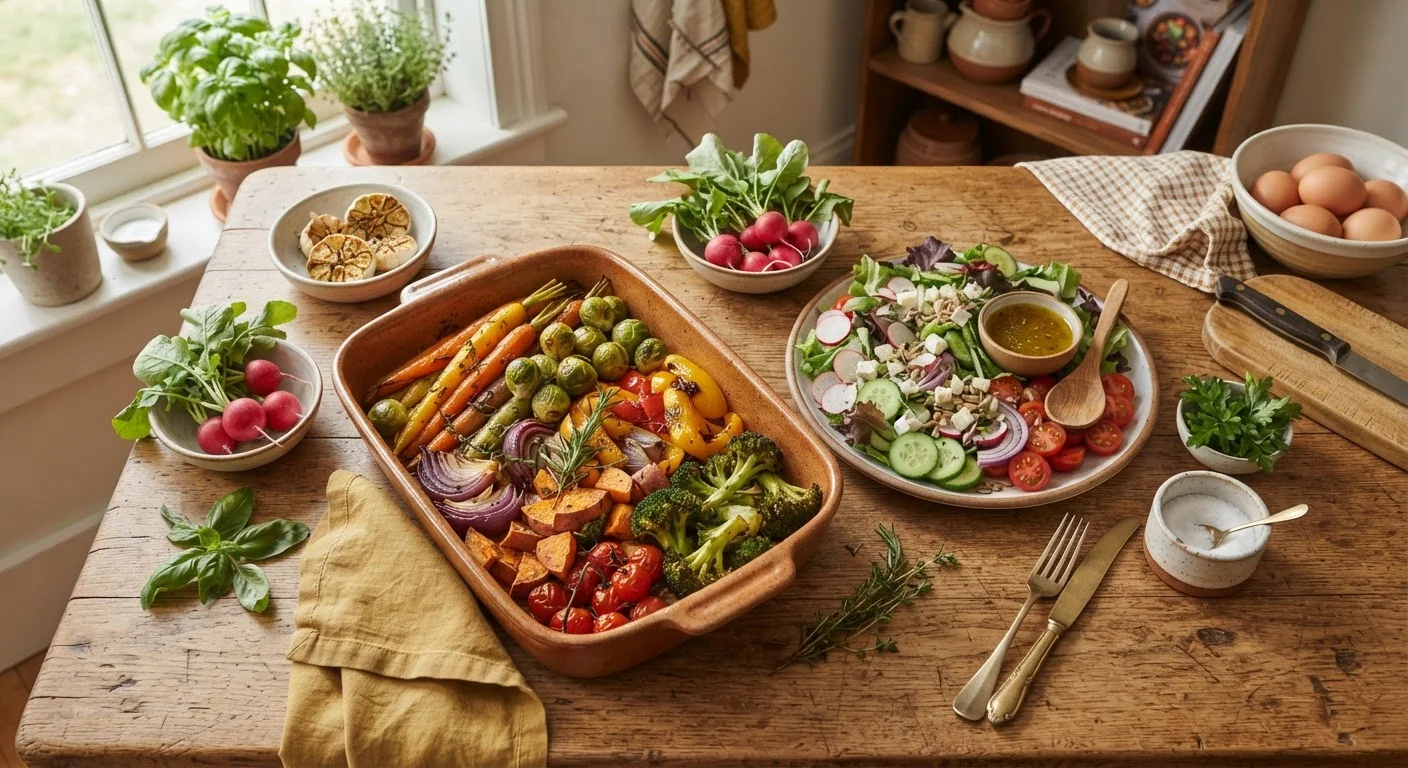
Why Vegetables Are a Battleground at Dinner
If your child pushes broccoli to the edge of the plate every single night, you are not alone — and it is not a parenting failure. Children, especially young ones, have more taste buds than adults and are biologically more sensitive to bitter compounds found in many vegetables. Research published in nutrition and pediatric journals consistently shows that this sensitivity is real and varies from child to child.
The good news is that preparation makes an enormous difference. A vegetable that is boiled into a soft, sulfur-smelling mush is a very different food — in taste, smell, and texture — than the same vegetable roasted until its natural sugars caramelize. Understanding this is the first step toward turning mealtime conflict into something calmer.
If you want to explore the deeper developmental reasons behind picky eating, our guide to toddler food refusal covers the science in practical terms. And if you're concerned that some common ideas about kids' nutrition are steering you wrong, it's worth reading about persistent myths about kids and healthy eating.
Let Kids Participate in Prep
Giving children a small role in preparing vegetables — washing, tearing, or arranging them on a tray — has been associated with greater willingness to try the food at the table. Even a two-year-old can rinse peas or snap the ends off green beans. The goal is familiarity, not culinary skill. Keep tasks age-appropriate and focus on the process rather than the outcome.
Below are vegetables that tend to work well with children — along with the preparation approaches most likely to get them eaten.
Carrots — raw with dip, or roasted with a touch of honey
Raw carrots with a simple dip like hummus or a mild ranch dressing are a reliable starting point for many families. The crunch factor works in your favor — many children who reject soft textures will happily eat something crunchy. Roasting carrots at a high temperature (around 400°F) concentrates their natural sweetness, making them noticeably less bitter. A very light drizzle of honey before roasting can help bridge the gap for resistant eaters, though it's worth keeping added sweeteners minimal over time.
Roasting concentrates natural sweetness and reduces the bitterness that makes children hesitant.
Peas — frozen straight from the bag, or lightly warmed
Frozen peas eaten cold or at room temperature are a surprisingly popular choice with toddlers and young children. They are small, easy to pick up, and mildly sweet. Unlike many vegetables, peas do not need complex preparation to be palatable. They are also one of the more affordable options in the produce aisle. Avoid overcooking them — a mushy, grey pea loses both its appeal and a portion of its nutrients.
Frozen peas eaten cool require zero cooking and are naturally sweet enough for most young children.
Broccoli — roasted until the edges crisp
Steamed broccoli has a strong sulfur smell that triggers rejection in many children. Roasting at high heat changes the chemistry: the edges get slightly crispy, the smell mellows, and the flavor becomes nuttier. Some families call these "broccoli chips" to reframe the food for their kids — not as a trick, but as an honest description of what a roasted floret actually is. Cutting florets smaller before roasting increases the crispy surface area, which tends to go over well.
Roasting transforms broccoli's sharp smell into something nuttier that children find far more approachable.
Corn — on the cob or cut fresh, minimally prepared
Corn is one of the few vegetables that most children accept readily, partly because of its sweetness and partly because eating it off the cob is interactive. It is worth noting that corn is starchier than many vegetables, but it still provides fiber and several B vitamins. Keeping preparation simple — steamed, grilled, or microwaved — preserves its sweetness. Corn can also serve as a gateway: pairing it with a less-familiar vegetable on the same plate can normalize the other food over time.
Corn's natural sweetness and hands-on eating experience make it one of the most accepted vegetables among children.
Sweet potatoes — baked, mashed, or as oven wedges
Sweet potatoes are naturally sweet, vibrant in color, and versatile enough to appear at any meal. Baked whole, they require almost no preparation. As oven wedges with a light coating of olive oil and a pinch of salt, they resemble a form children already enjoy. They are a reliable source of vitamin A and potassium. For children who are working toward a more plant-forward diet, sweet potatoes are an accessible entry point.
Sweet potatoes require minimal prep and deliver real nutrition in a form most children already find appealing.
Cucumber — sliced thin, served cold with light seasoning
Cucumbers have very mild flavor, high water content, and satisfying crunch — qualities that reduce sensory overwhelm for texture-sensitive children. Served cold and sliced thin, they work well as a side or snack. A light sprinkle of salt or a small dish of dip alongside increases the likelihood they get eaten. Because cucumbers require no cooking, they are one of the simplest vegetables to get onto the plate consistently, which matters: repeated exposure over time is one of the strongest predictors of eventual acceptance.
Repeated, low-pressure exposure to the same vegetable is one of the most reliable paths to acceptance.
Building on What Works
No single strategy works for every child, and that is worth remembering when progress feels slow. What the evidence does support is consistency without pressure: keeping vegetables present at meals, eating them yourself, and offering the same food across multiple occasions without turning it into a confrontation.
Repeated Exposure Takes Time
Research in pediatric nutrition suggests a child may need to encounter a new food anywhere from 8 to 15 times before accepting it — sometimes more. This does not mean forcing the food, but rather keeping it present without pressure. Small portions alongside familiar foods, served consistently, give the best chance of eventual acceptance without creating negative associations with mealtimes.
If cost is a barrier, know that frozen and canned vegetables are nutritionally sound options — our article on fresh, frozen, or canned produce breaks down what the research actually shows. Incorporating more plant foods into your family's routine also pairs naturally with weekly meal planning, which can reduce waste and save time on busy evenings.
Eating together as a family — whenever schedules allow — also reinforces healthy eating norms in ways that have genuine research support. See what the evidence says in our piece on shared family mealtimes.
This article is for general informational purposes only and does not constitute medical or nutritional advice. If you have specific concerns about your child's diet or growth, please consult a qualified healthcare professional or registered dietitian.