
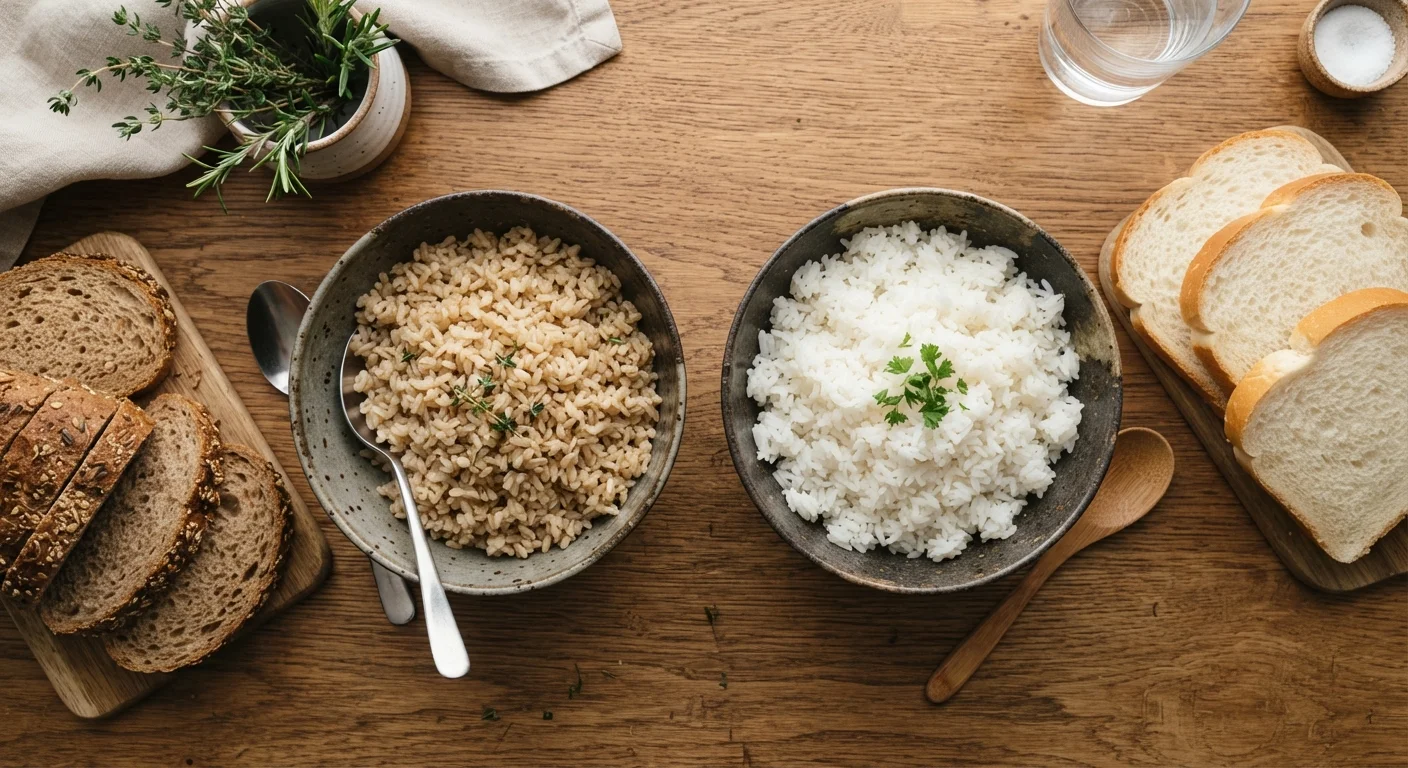
What Makes a Grain 'Whole' or 'Refined'?
Every grain — whether wheat, rice, oat, or corn — starts with the same three-part structure: the bran (the fibrous outer shell), the germ (the nutrient-dense core), and the endosperm (the starchy middle layer). A whole grain keeps all three parts intact. A refined grain has been milled to remove the bran and germ, leaving only the endosperm.
That milling process makes refined grains lighter in color, softer in texture, and longer-lasting on store shelves. It also removes the majority of the fiber, B vitamins (thiamin, riboflavin, niacin, folate), iron, and beneficial plant compounds that sit in the bran and germ.
Many refined grain products — like white bread and white rice — are labeled enriched, meaning manufacturers add some B vitamins and iron back after milling. This partial restoration is meaningful, but fiber, which plays a key role in digestive health and satiety, is almost never added back.
| Criterion | Whole Grains | Refined Grains |
|---|---|---|
| Grain layers retained | Bran, germ, and endosperm | Endosperm only |
| Fiber content | Significantly higher | Mostly removed |
| Vitamins & minerals | Naturally rich (B vitamins, iron, magnesium, E) | Partially restored via enrichment |
| Digestion speed | Slower, more gradual | Faster |
| Texture & taste | Chewier, nuttier flavor | Softer, milder flavor |
| Shelf life | Shorter (oils in germ can go stale) | Longer |
| Common examples | Brown rice, oats, whole wheat bread, quinoa | White rice, white bread, regular pasta |
What This Means for Your Family's Nutrition
The practical difference shows up at the dinner table in a few key ways.
Fiber and Fullness
Whole grains deliver significantly more fiber per serving. Fiber slows digestion, which helps family members feel satisfied longer after a meal and supports steady energy rather than a quick spike followed by a slump. The Dietary Guidelines for Americans recommend that at least half of all grains consumed be whole grains — guidance that applies to children and adults alike.
~3g
Fiber per serving in brown vs. white rice
A half-cup serving of cooked brown rice provides roughly 1.6g of fiber compared to about 0.3g in the same portion of white rice, according to USDA FoodData Central.
5%
US adults meeting whole grain recommendations
Research published in the journal Nutrients has found that the vast majority of American adults fall short of the recommended daily whole grain intake.
50%
Recommended share of daily grains as whole grains
The Dietary Guidelines for Americans recommend that at least half of all grain servings come from whole grain sources for both children and adults.
Vitamins and Minerals
The germ layer is rich in vitamin E, magnesium, and healthy fats — none of which are restored during enrichment. Choosing whole grains more often means your family is getting a broader range of naturally occurring micronutrients with every meal.
Blood Sugar Response
Because refined grains are digested more quickly, they can cause a faster rise in blood sugar. Whole grains, with their intact fiber, tend to produce a more gradual response. For most healthy people this distinction is one piece of a larger dietary picture, but it's worth understanding. Always speak with a healthcare provider about specific dietary needs for your family.
To sharpen your ability to spot whole grain content on packaging, our guide to reading a nutrition label walks through exactly what to look for on the ingredients list and nutrition facts panel.
Making the Switch Without Upsetting the Table
Transitioning a family toward more whole grains doesn't have to be dramatic or expensive. Small, gradual swaps tend to stick better than wholesale overhauls.
- Start with oats. Plain rolled oats are among the most affordable whole grain options available, and they adapt easily to sweet or savory preparations.
- Try a 50/50 blend. Mix whole wheat pasta or brown rice with the white version your family already enjoys. The texture difference is subtle, and palatability stays high.
- Read the label carefully. Terms like "multigrain" or "wheat bread" don't automatically mean whole grain. Look for "whole wheat" or "whole grain" as the first ingredient. Our nutrition label walkthrough explains how to decode those ingredient lists quickly.
- Lean on plant-forward meals. Dishes built around whole grains, legumes, and vegetables can be both filling and budget-friendly. Our article on plant-based eating for families explores this approach in more depth.
A Note on Children and Fiber
Increasing whole grains — and therefore fiber — too quickly can cause temporary digestive discomfort, particularly in young children. Nutritionists generally suggest introducing higher-fiber foods gradually and ensuring adequate water intake alongside them. If your child has digestive concerns or a health condition affecting their diet, check with your pediatrician or a registered dietitian before making significant changes.
This article is for general informational and educational purposes only and is not a substitute for professional medical or dietary advice. Consult a qualified healthcare provider or registered dietitian for guidance specific to your family's health needs.