
Why the Label Exists — and What It Actually Covers
The Nutrition Facts panel is required on most packaged foods sold in the United States by the Food and Drug Administration (FDA). Its purpose is straightforward: give consumers consistent, science-based information so they can compare foods and make informed choices. The format was last significantly updated in 2020 to reflect current dietary research, including a new dedicated line for added sugars.
The panel does not tell you whether a food is "good" or "bad" — that framing is rarely helpful. Instead, it gives you raw data you can weigh against your family's specific needs and habits. Think of it as a map rather than a verdict. If you want a bigger-picture approach to putting these numbers to use, our guide to building a balanced plate is a natural companion to this walkthrough.
What you will need
Step-by-Step: Reading the Panel From Top to Bottom
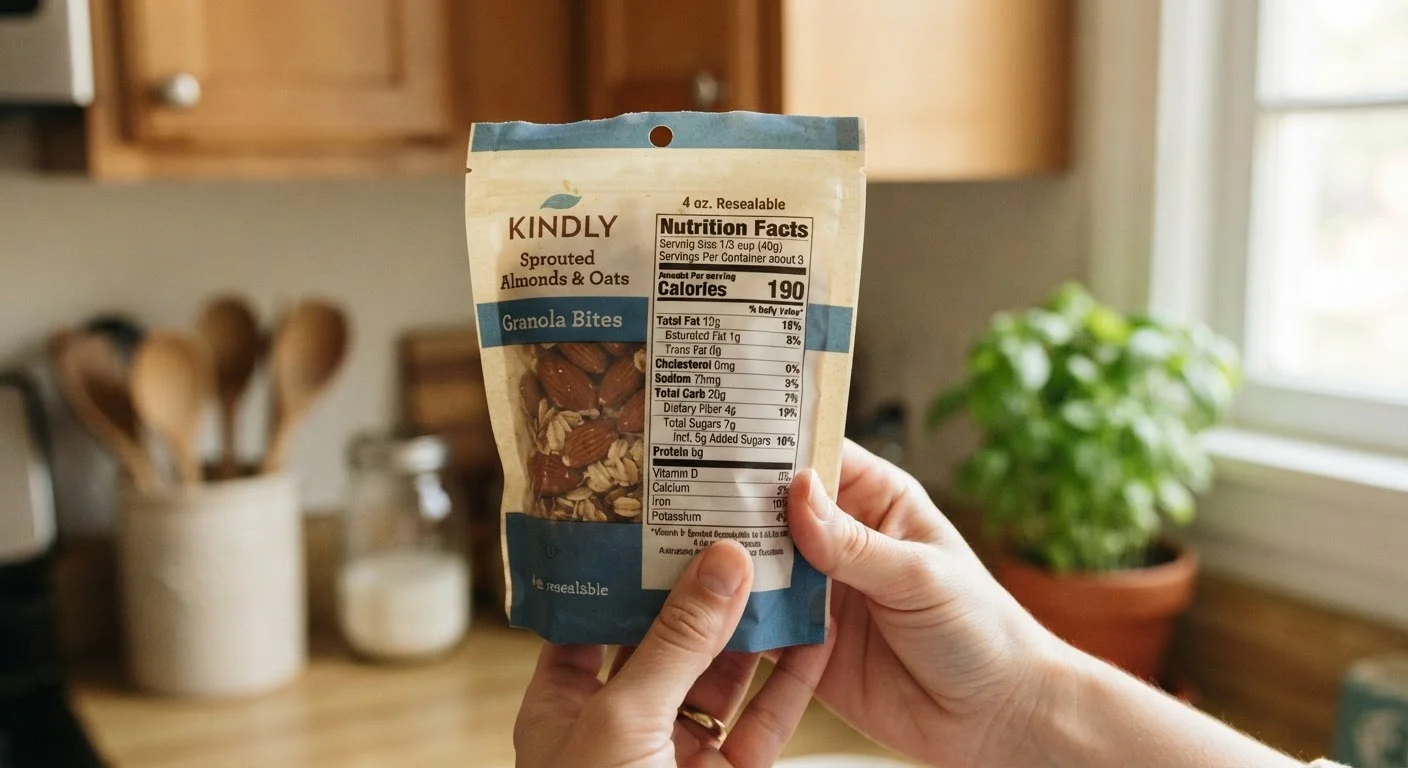
The Nutrition Facts label follows a standardized top-to-bottom order. Moving through it in sequence keeps the numbers in context and prevents common misreads.
Check the Serving Size First
The serving size appears at the very top of the panel in large, bold text. Every single number that follows — calories, fat, sodium, everything — is based on this amount. Serving sizes are standardized by the FDA to reflect amounts people typically eat, not necessarily recommended portions.
Before reading anything else, compare the listed serving size to how much you or your family member would actually consume. If the label says one serving is three crackers but you eat twelve, multiply every nutrient by four.
Note the Calories
Calories measure the total energy in one serving. The updated label displays this number prominently. Calories are not inherently harmful — your body needs them — but knowing the count helps you understand a food's energy density relative to its nutritional contribution.
A food with 400 calories per serving is not automatically problematic if it also delivers significant protein, fiber, and micronutrients. Context matters.
Understand % Daily Value (%DV)
The right-hand column shows a percentage next to most nutrients. This is the % Daily Value — how much that nutrient in one serving contributes to a standard 2,000-calorie daily diet. It is a reference tool, not a personal prescription.
- 5% DV or less is generally considered low for a nutrient.
- 20% DV or more is generally considered high.
Use these benchmarks to quickly compare similar products or to identify foods that are notably high or low in a particular nutrient.
Identify Nutrients to Limit
Current US dietary guidelines suggest most people benefit from limiting:
- Saturated fat — linked in research to cardiovascular risk when consumed in excess.
- Sodium — a significant contributor to high blood pressure in some people.
- Added sugars — listed separately from total sugars since the 2020 label update, making it easier to spot sugars added during processing versus those naturally present in fruit or dairy.
Aim for a low %DV in these categories, especially if cardiovascular health or weight management is a family priority.
Identify Nutrients to Seek More Of
The lower section of the panel lists nutrients most Americans do not get enough of. A higher %DV in these is generally a positive sign:
- Dietary fiber — supports digestive health and helps with satiety.
- Vitamin D, calcium, iron, and potassium — highlighted because deficiencies in these are common in the US population.
When comparing two similar products, choosing the one with higher %DV for these nutrients is a simple, practical upgrade.
Scan the Ingredient List
The ingredient list is separate from the Nutrition Facts panel but equally informative. Ingredients are listed in descending order by weight — whatever appears first makes up the largest proportion of the product.
If whole grain, a protein source, or a vegetable appears first, that's a meaningful signal. If sugar or a refined grain leads the list, that's useful to know too. For grains specifically, look for the word "whole" before the grain name — our whole grains vs. refined grains guide explains why that distinction matters at the dinner table.
Putting It Together: A Few Practical Checks
You rarely need to analyze every line every time. With a bit of practice, a quick scan covers the essentials in under a minute. Here are the checks most dietitians suggest families focus on:
- Serving size vs. what you actually eat. If a bag lists two servings and your child finishes it, double every number.
- Sodium. Packaged foods are a leading source of dietary sodium for most US families. A %DV above 20% for sodium in a single serving is worth noting, especially if cardiovascular health is a concern. For more on why this matters, see our overview of blood pressure and the numbers worth tracking.
- Added sugars. The American Heart Association's general public guidance suggests limiting added sugars; the label's dedicated line makes that comparison easy. Our added sugar reference guide shows where it hides in common family foods.
- Fiber. A %DV of 10% or more per serving signals a meaningfully fiber-rich food — useful when choosing between bread or cereal options.
Make It a Quick Grocery Store Habit
You don't need to analyze every product every shopping trip. Pick one category per trip — cereals one week, canned soups the next — and compare two or three labels side by side. Over time, you'll build a reliable intuition for what a reasonable sodium level or a genuinely fiber-rich option looks like, without adding significant time to your shop.
Labels on the front of a package — phrases like "natural," "multigrain," or "made with whole grain" — are marketing claims, not regulated nutritional guarantees. The Nutrition Facts panel and the ingredient list on the back are the reliable sources. For a parallel look at how this plays out in pet food marketing, our article on what "natural" and "organic" actually mean on labels illustrates just how loosely those terms can be applied.
This article is for general informational and educational purposes only. It is not medical or dietary advice. For guidance tailored to your family's health needs, consult a qualified healthcare provider or registered dietitian.