
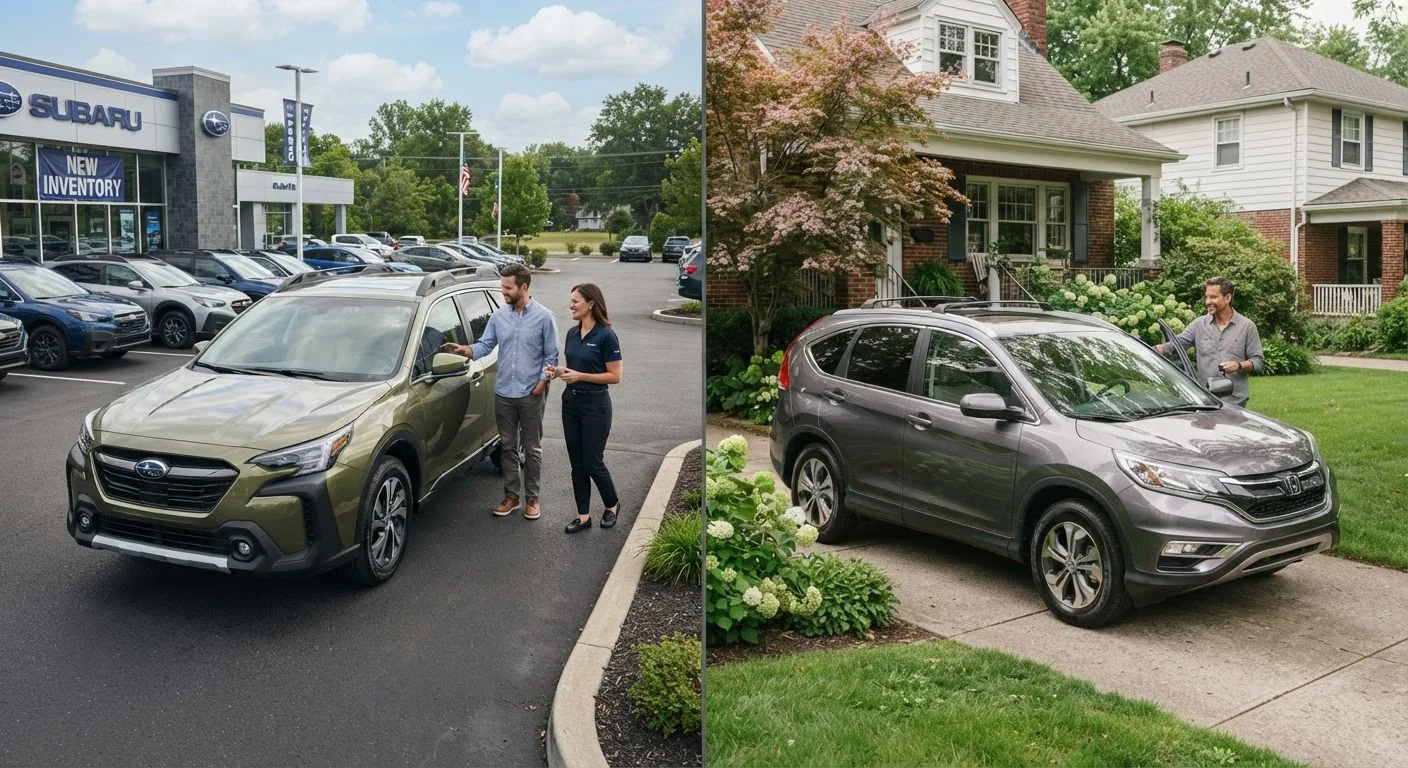
The Core Trade-Off: Price vs. Predictability
For first-time car owners, the used vs. new question usually comes down to one thing: how much financial risk are you comfortable with? A new car gives you predictability — you know the full history (there isn't one), and a manufacturer's warranty typically covers major repairs for several years. A used car gives you a lower entry price, but you're inheriting someone else's maintenance record and wear.
Neither choice is universally smarter. What matters is how each fits your budget and your tolerance for the unexpected. Before you settle on a number, take time to understand the full costs of owning a vehicle — fuel, insurance, registration, and maintenance all stack on top of any car payment.
| Criterion | New Car | Used Car |
|---|---|---|
| Purchase Price | Higher | Lower |
| Depreciation Risk | High in first 2–3 years | Previous owner absorbed it |
| Warranty Coverage | Full manufacturer warranty | Limited or none (CPO varies) |
| Repair Uncertainty | Low initially | Moderate to higher |
| Financing Rates | Often lower | Often higher |
| Insurance Cost | Typically higher | Typically lower |
| Vehicle History | None — brand new | Varies; request a report |
| Latest Safety Features | Standard | Depends on model year |
What New Cars Actually Cost You
The sticker price on a new car is just the beginning. Dealership fees, sales tax, and first-year registration can add thousands before you drive off the lot. Many buyers also don't account for how quickly a new car loses value. Depreciation — the reduction in a vehicle's worth over time — is steepest in the first two to three years. A car that costs $35,000 new may be worth closer to $24,000–$26,000 by year three, depending on the model and market conditions.
On the upside, new cars typically come with manufacturer warranties (often 3 years/36,000 miles for bumper-to-bumper coverage and 5 years/60,000 miles for the powertrain — though this varies by manufacturer). They also tend to have the latest safety technology, which may lower your insurance premiums. Financing rates on new vehicles are sometimes lower than on used ones, especially through manufacturer-backed lenders, though this depends on your credit and market conditions.
~20%
Average first-year new car depreciation
Industry estimates suggest a new vehicle can lose roughly 20% of its value within the first year of ownership.
3 yrs / 36k mi
Typical new car bumper-to-bumper warranty
Many manufacturers offer a 3-year/36,000-mile bumper-to-bumper warranty, though terms vary significantly by brand.
~$0.10/mi
Estimated average maintenance cost per mile
Older, higher-mileage vehicles generally cost more per mile to maintain than newer ones, though this varies widely by make and condition.
What Used Cars Actually Cost You
A used car's lower purchase price is its biggest selling point — but that lower number can be deceptive if the vehicle needs significant work. A car with 60,000–80,000 miles may be approaching the point where tires, brakes, or a timing belt need replacement. If you're not budgeting for those, a bargain can turn expensive quickly.
That said, someone else has already absorbed the worst of the depreciation hit. You're buying into a more stable portion of the vehicle's value curve. To reduce risk, consider a certified pre-owned (CPO) vehicle — these have passed a manufacturer-approved inspection and typically come with a limited warranty. They cost more than non-certified used cars but less than new. Be aware that CPO programs vary widely by manufacturer, so read the terms carefully.
Also worth knowing: used car loan interest rates are often higher than new car rates, which can offset some of the purchase price savings. Run the full numbers, not just the monthly payment. For a broader look at expenses that catch buyers off guard, see our piece on hidden ownership costs new car buyers often miss.
What 'Certified Pre-Owned' Actually Means
A certified pre-owned (CPO) vehicle has passed a multi-point inspection carried out by or on behalf of the original manufacturer. CPO programs typically include a limited warranty extension and may offer roadside assistance. However, the specific coverage, vehicle age limits, and mileage caps differ significantly from one manufacturer's program to another. Always read the actual CPO documentation rather than relying on the general label.
How to Make the Call for Your Household
Start with your realistic monthly budget — not the maximum you could stretch to, but what you can comfortably sustain. Then factor in insurance (which is generally higher for newer vehicles), registration, and a maintenance reserve. If a new car payment leaves no room for any of those, a used vehicle is likely the more stable choice.
Ask yourself how long you plan to keep the car. If you're likely to sell or trade in within three to four years, buying new means selling during the steepest part of the depreciation curve, which usually isn't financially efficient. If you'll keep it for eight or more years, the per-year cost of buying new becomes much easier to justify.
For families weighing whether one vehicle is even enough, our guide to owning one car vs. two breaks down those logistics. And if you want to understand the full arc of car ownership from purchase through trade-in, the complete family guide to auto ownership is a useful next read.
This article provides general educational information about vehicle purchasing decisions and is not financial or legal advice. Costs, financing terms, and warranty details vary by manufacturer, dealer, and individual circumstances. Consult a licensed financial adviser or automotive professional for guidance specific to your situation.