
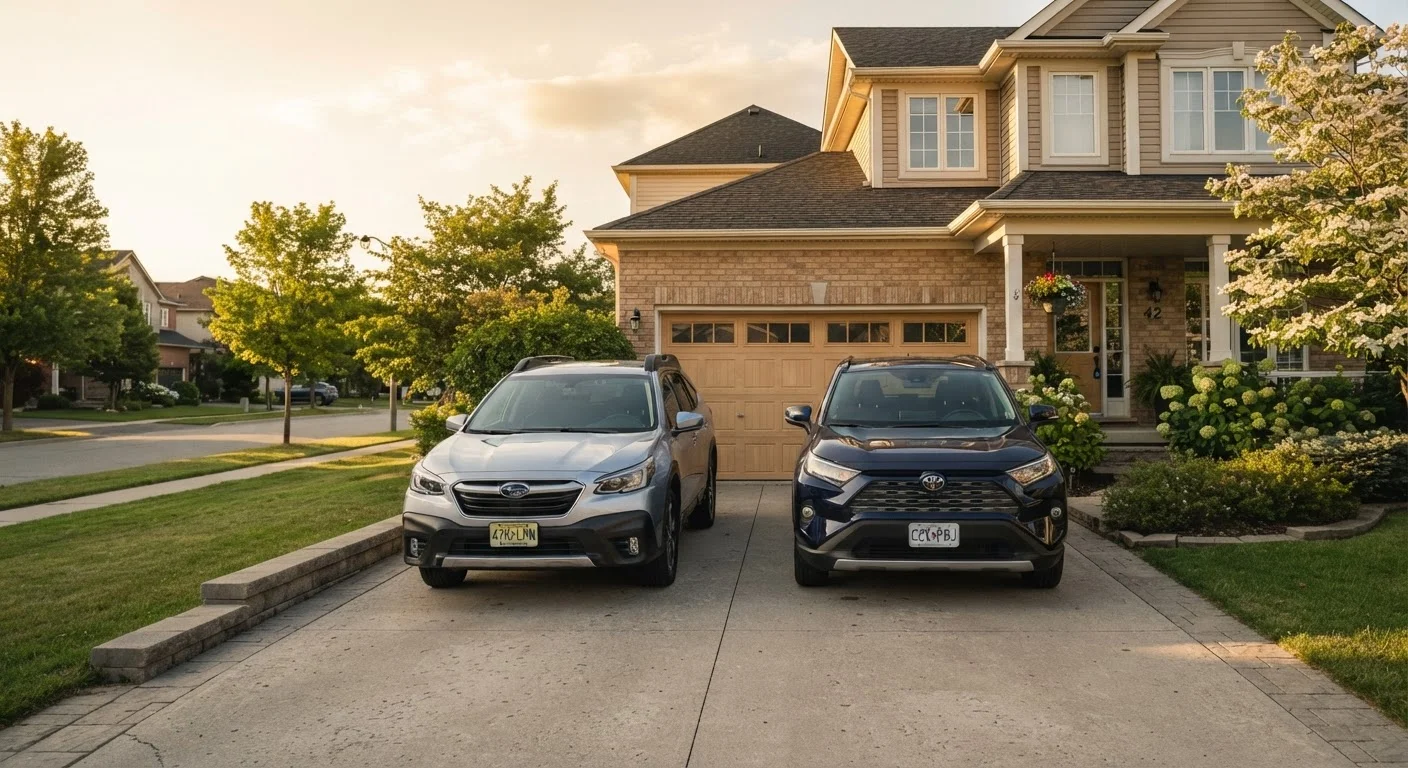
The True Annual Cost of a Second Vehicle
Most families think about the sticker price of a car, but the ongoing costs are what really add up. When you add a second vehicle to your household, you're taking on a second set of every recurring expense — not just a one-time payment.
Here's a rough breakdown of what a second car typically costs per year, beyond any loan payment:
- Insurance: Adding a second vehicle to a policy commonly runs $800–$2,000 per year depending on the driver's record, age, and coverage level.
- Registration and fees: Varies by state, but typically $100–$500 annually.
- Fuel: At average US driving distances, expect $1,500–$3,000 per year.
- Routine maintenance (oil changes, tires, brakes): $500–$1,200 per year on a reliable vehicle.
- Unexpected repairs: Even well-maintained cars need unplanned work. A realistic buffer is $500–$1,500 annually.
That's potentially $4,000–$8,000 per year before any loan or lease payment. See our annual car ownership cost breakdown for a more detailed look at how these line items stack up over a full year.
$12,182
Average annual cost to own and operate a vehicle
According to AAA's annual Your Driving Costs study, the average American spends over $12,000 per year per vehicle when all costs are included.
57%
US households that own two or more vehicles
Data from the US Census Bureau's American Community Survey indicates that a majority of US households own at least two vehicles, though this varies significantly by region.
Pros and Cons of Owning Two Cars
The case for a second car is often framed around convenience and independence — but the case against it is largely financial. Here's how both sides stack up.
Scheduling independence for both adults
Each person can come and go without coordinating around the other's needs, which reduces daily friction — especially in households where work hours vary.
Reduces reliance on ridesharing or transit
In areas with limited public transportation, a second car provides a reliable fallback rather than depending on services that may be unavailable or expensive at peak times.
Backup vehicle if one car breaks down
A mechanical failure doesn't strand the whole household if there's a second vehicle available, which matters most for families with young children or demanding work schedules.
Can match vehicle type to each use case
One vehicle might be a fuel-efficient commuter car while the other is a larger family hauler — each serving its purpose more efficiently than a single compromise vehicle.
Significantly higher annual household expenses
Insurance, registration, fuel, and maintenance on a second car can add $4,000–$8,000 or more per year, even before any loan or lease payment is counted.
Requires additional parking space
Not every home has room for two vehicles, and urban families may face monthly parking fees that add hundreds of dollars to the total annual cost. Where you store each car can also affect wear and insurance — see the impact of parking location on your vehicle.
Doubles maintenance and administrative overhead
Oil changes, tire rotations, inspections, registration renewals — every task exists twice, which takes more time and mental energy to track and manage.
Ties up money that could build savings or reduce debt
The annual cost of a second car, if redirected, could meaningfully contribute to an emergency fund, retirement savings, or paying down a mortgage faster.
Scheduling Reality: When One Car Creates Friction
The biggest logistical challenge for single-car families is schedule overlap. If one partner leaves for work at 7 a.m. and the other needs the car at 8 a.m. for a school run, that works. If both need to be somewhere at 7:30 a.m. in opposite directions, it doesn't.
Before deciding, map out a typical week honestly:
- List every trip each adult makes independently during a typical week.
- Identify which of those overlap in time or location.
- Check whether public transit, biking, or ridesharing could cover any of those trips.
Many families find that true scheduling conflicts happen only a few times per week — and that those gaps can be bridged more cheaply than owning a second vehicle full-time.
Consider the Middle-Ground Options
Some families reduce the pressure of a single car without committing to full ownership of a second one. Occasional car rentals, employer ride programs, or app-based ridesharing for the handful of weekly conflicts can cost far less than maintaining a second vehicle year-round. If you're considering leasing as a lower-commitment path to a second car, the comparison of leasing vs. financing explains how each approach actually works before you sign anything.
If your household budget is already stretched, this decision intersects directly with broader spending priorities. The guide to building a household budget together can help couples work through competing financial priorities honestly.
Factors That Tip the Decision Either Way
There's no formula that works for every family, but a few factors tend to have the most weight:
- Public transit availability
- Families in walkable cities or near reliable bus/rail lines can often manage comfortably with one car. Suburban or rural households almost always need two if both adults work outside the home.
- Job flexibility
- Remote work, flexible hours, or jobs near home reduce the pressure on a single vehicle significantly.
- Number of drivers vs. vehicles
- A teen driver in the household changes the math quickly — not just for convenience but for insurance costs.
- Vehicle reliability
- A one-car household that depends entirely on that vehicle takes on real risk if it breaks down. Having a mechanical buffer matters, especially with young children.
For a complete look at what vehicle ownership involves from start to finish, the auto ownership guide for families covers financing, insurance, upkeep, and trade-in in plain language.
This article is for general informational purposes only and does not constitute financial or legal advice. Consult a qualified financial adviser for guidance specific to your situation.