
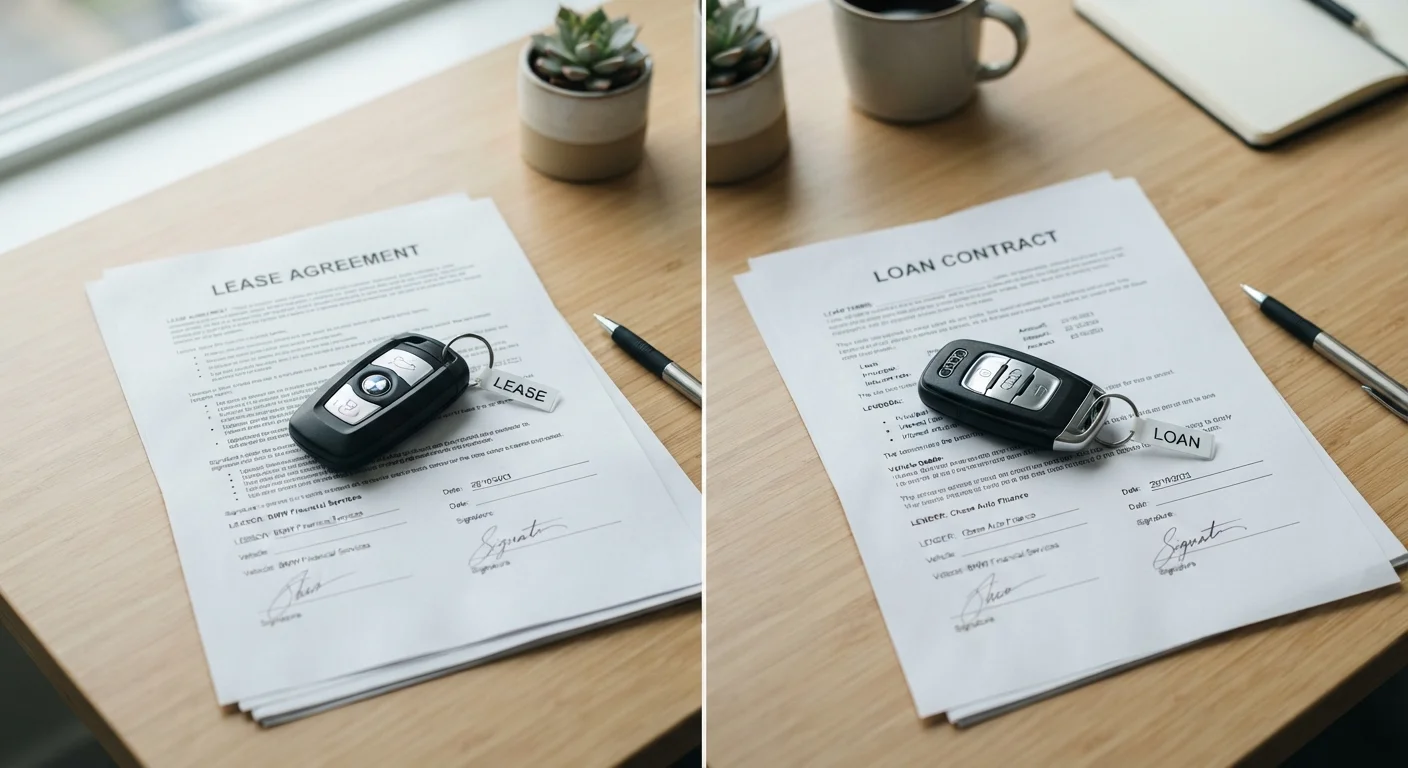
How Leasing Actually Works
When you lease a car, you're entering a rental-style agreement with a dealership or leasing company. You pay to use the vehicle for a fixed term — usually 24 to 39 months — and then return it when the contract ends.
Your monthly payment is calculated based on the vehicle's capitalized cost (the agreed price), its projected residual value (what it's expected to be worth at lease end), and a money factor (the leasing equivalent of an interest rate). Essentially, you're paying for the depreciation the car experiences during your lease term, plus fees and financing charges.
A few important restrictions come with leasing:
- Mileage limits: Most leases cap annual mileage at 10,000–15,000 miles. Exceeding the limit triggers per-mile overage fees, which add up quickly.
- Wear and tear standards: You're expected to return the car in good condition. Significant scratches, dents, or interior damage beyond normal use can result in end-of-lease charges.
- No ownership: At the end of the term, the car goes back. Some leases offer a buyout option, but that's a separate transaction.
For families considering how a lease fits into overall household expenses, see our home budgeting guide for help thinking through recurring vehicle costs alongside other obligations.
How Financing a Car Actually Works
When you finance a vehicle, you take out an auto loan — either through a bank, credit union, or dealership financing — to cover the purchase price. You make fixed monthly payments over a set loan term (commonly 36 to 72 months) until the balance is paid off. At that point, you own the car free and clear.
Your monthly payment depends on the loan amount (vehicle price minus any down payment), the interest rate (also called the APR, or annual percentage rate), and the loan term length. A longer term lowers your monthly payment but means you pay more interest overall.
| Criterion | Car Leasing | Car Financing |
|---|---|---|
| Ownership at end | Return the vehicle | You own the car |
| Monthly payment | Generally lower | Generally higher |
| Mileage limits | Yes — overage fees apply | No limits |
| Customization | Not permitted | Allowed |
| Early exit cost | Typically high | Depends on loan balance |
| Equity built | None | Yes, over time |
| Typical term length | 24–39 months | 36–72 months |
One important concept: equity. As you pay down the loan, you build ownership stake in the vehicle. If you sell or trade in the car before the loan is done, any sale proceeds above the remaining loan balance are yours to keep. However, if you owe more than the car is worth — called being underwater or upside-down on the loan — you'd need to cover that gap out of pocket.
Families often underestimate how loan terms affect total cost. Our article on what families often get wrong about car loan terms breaks down these details clearly.
Key Differences That Affect Everyday Families
Beyond the basic mechanics, a few practical differences stand out for households making this decision:
36–39%
Share of new vehicles that are leased in the U.S.
According to Experian's automotive data, roughly a third of new vehicle transactions in recent years have been leases rather than purchases.
~$0
Equity built through leasing
Unlike loan payments, lease payments do not reduce a principal balance or build any ownership stake in the vehicle.
10–15¢
Typical per-mile overage charge
Exceeding a lease's mileage cap typically costs between 10 and 25 cents per extra mile depending on the lease contract terms.
Insurance requirements: Leased vehicles typically require higher insurance coverage levels than lenders mandate for financed cars. This can mean a higher monthly insurance premium — a cost worth factoring into your comparison.
Early exit costs: Breaking a lease early is generally expensive, often involving an early termination fee plus remaining payments. Selling a financed car early is more straightforward, assuming you're not underwater on the loan.
Total cost over time: Because lease payments don't build toward ownership, someone who continuously leases may pay more over a decade than someone who finances and holds onto a paid-off vehicle. See our full breakdown of the true cost of owning a car for a wider view of what vehicle expenses actually look like long term.
For families weighing whether they need one vehicle or two, our comparison on one car vs. two can help put the full picture in perspective.
This article is for general informational purposes only and does not constitute financial or legal advice. Consult a licensed financial professional before making vehicle financing decisions based on your specific circumstances.