
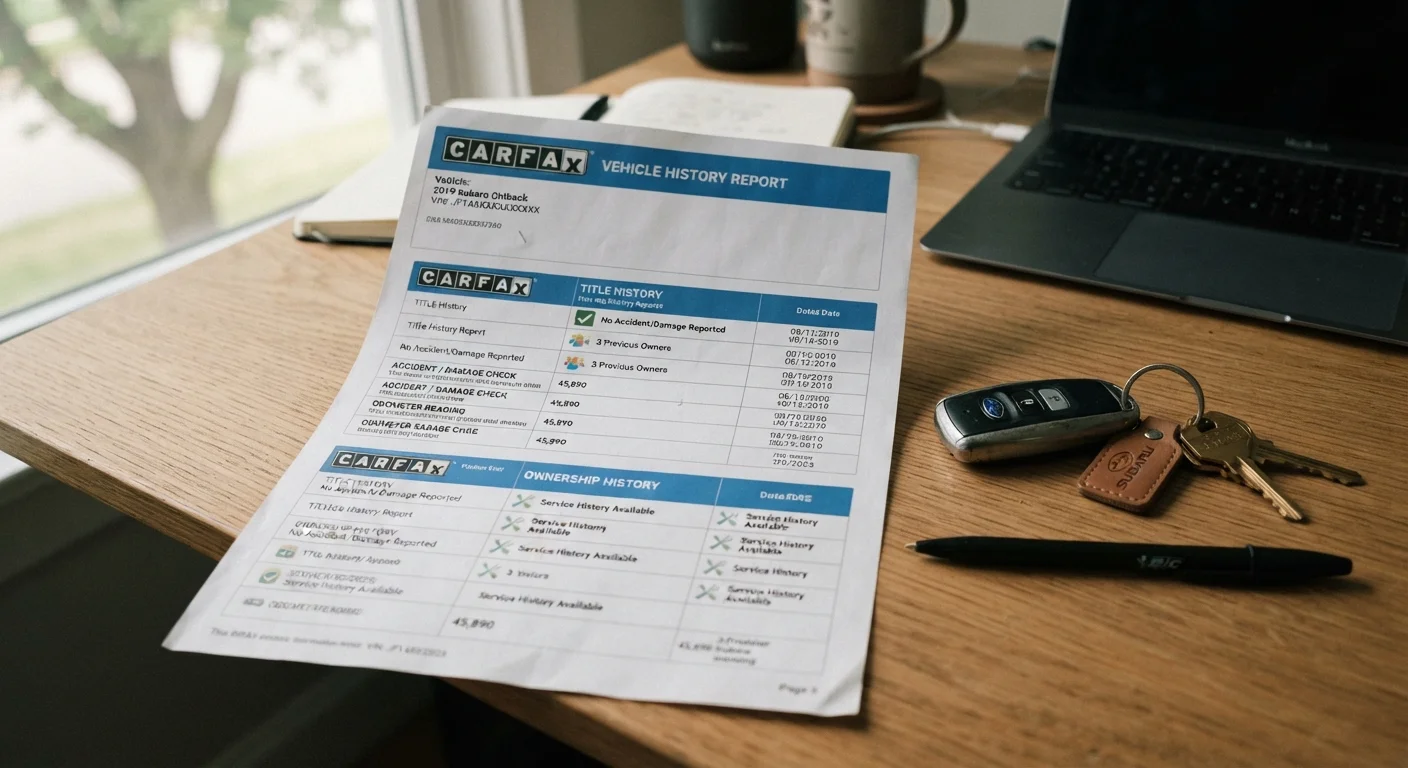
What a Vehicle History Report Actually Contains
When you pull a vehicle history report — using the car's VIN (Vehicle Identification Number, a unique 17-character code assigned to every vehicle) — you get a compiled summary of public records, insurance claims, and data submitted by dealerships, auctions, and repair shops. The report is not a complete X-ray of the car, but it's one of the most useful tools you have before spending money.
Most reports are organized into several sections: title history, odometer readings, accident and damage records, ownership history, and sometimes service records. Each section tells you something different, and knowing what to look for in each one is the point of this guide.
This article is part of our broader complete family guide to auto ownership, which walks through the full lifecycle of buying and keeping a vehicle.
What you will need
How to Read Each Section of the Report
Follow these steps when you sit down with a vehicle history report. Work through them in order — some findings in one section will change how you interpret another.
Check the Title History First
The title is the legal document that establishes ownership of the vehicle. Look for any of these title designations, which are serious warning signs:
- Salvage title: The car was declared a total loss by an insurance company — meaning repair costs exceeded a certain percentage of the car's value. Salvage vehicles can be repaired and retitled, but they typically have lower resale value and may be harder to insure.
- Rebuilt or reconstructed title: The car was previously salvaged but has since been repaired and passed inspection. This isn't automatically disqualifying, but it warrants extra scrutiny.
- Lemon law buyback: The manufacturer repurchased the vehicle due to repeated defects. This indicates a history of serious mechanical problems.
- Flood or hail damage branding: Water damage is particularly difficult to fully repair and can cause long-term electrical and corrosion issues.
A clean title means none of these events are recorded — but it's still just the starting point.
Review the Odometer Readings Over Time
The report will typically show a series of odometer readings logged at inspections, auctions, or dealer check-ins. You're looking for two things:
- Consistent forward progress: Mileage should increase steadily over time. A reading that's lower than a previous one is a sign of odometer rollback — which is illegal and a serious red flag.
- Reasonable annual mileage: The average driver puts on roughly 12,000–15,000 miles per year. A car with unusually high mileage for its age may have been used as a fleet or rental vehicle, while an unusually low reading could mean long periods of sitting — which has its own maintenance implications.
Dig Into the Accident and Damage Records
This section often worries buyers the most, but a single minor accident doesn't disqualify a car. What matters is the details:
- Where was the damage? Minor front or rear damage is typically easier to repair than structural or frame damage. Frame damage affects how a car absorbs impact in a future collision — a safety concern worth weighing seriously.
- Was the airbag deployed? Airbag deployment signals a significant impact. Check that airbags were properly replaced.
- Who reported it? Insurance-reported accidents tend to involve more substantial damage than those only logged by a body shop.
Multiple accidents — even minor ones — suggest a pattern worth discussing with a mechanic before buying.
Look at the Number of Previous Owners
One or two previous owners over a car's life is fairly typical. Patterns to watch for:
- Many owners in a short period: If four people owned the car in three years, something may have prompted each of them to sell. That warrants a conversation.
- Fleet or rental use: These cars often have high mileage and may have been serviced on strict schedules — which can actually be a positive — but they were also driven by many different people with varying habits.
- Long single ownership: A car kept by one owner for many years often (though not always) indicates consistent care.
Scan the Service and Maintenance Records
Not all reports include service history, but when they do, it's valuable. Look for:
- Regular oil changes logged at reasonable intervals
- Routine maintenance items like brake service, tire rotations, and fluid changes
- Any major repairs noted, such as transmission or engine work
Consistent, documented maintenance is a positive sign. A complete absence of service records isn't necessarily a dealbreaker — many owners use independent shops that don't report to databases — but it does mean you have less visibility into how the car was treated.
What the Report Won't Tell You
A history report only captures events that were officially reported. A fender-bender that was paid for out of pocket, unreported flood damage, or a slow oil leak that was never taken to a shop — none of those will appear. That's why a report is a starting point, not a finish line.
Pair the Report With a Physical Inspection
A vehicle history report and an in-person inspection are two different tools that complement each other. The report tells you what was officially recorded in the past; an inspection tells you what the car looks and feels like right now. Neither one alone gives you the full picture. Budget time and, if possible, a small fee for an independent mechanic's opinion before finalizing any purchase.
Always follow up a history report with a hands-on inspection. Our pre-purchase inspection checklist walks you through exactly what to look for on the vehicle itself. A qualified mechanic can catch things no paper record will show.
Also keep in mind that once you own the car, your insurance coverage becomes the next layer of protection. If you're still working through what kind of coverage makes sense, see our guide on car insurance basics every vehicle owner should understand.
Title Brands Can Affect Insurance and Resale
If a vehicle carries a salvage, rebuilt, or flood title, some insurers may decline to offer comprehensive or collision coverage on it — or may limit the payout in a claim. Before buying a branded-title vehicle, check with a licensed insurance agent to understand how coverage may differ. Resale value is also typically lower for these vehicles, which affects your long-term cost of ownership.