
Why a Monthly Maintenance Schedule Matters
Most home repairs get expensive when small problems go unnoticed for too long. A cracked caulk line lets moisture in; a clogged dryer vent becomes a fire hazard; an unchecked water heater fails at the worst time. Working through maintenance in manageable monthly doses keeps those surprises from piling up.
This reference organizes the most common upkeep tasks by season and month. Use it as a starting point — your specific climate, home age, and systems may shift timing slightly. If you're in your first year of homeownership, see our guide for first-year homeowners for a broader look at what to expect.
Month-by-Month Task Reference
Winter (January – February)
- January: Check insulation in the attic; look for frost or moisture that signals heat loss. Test smoke and carbon monoxide detectors. Inspect weatherstripping on exterior doors.
- February: Schedule a professional furnace tune-up if you skipped fall. Check for ice dams on the roof edge after heavy snow. Pour water down floor drains to refill traps that may have evaporated.
Early Spring (March – April)
- March: Walk the exterior after the last freeze — look for cracked foundation, damaged siding, or lifted shingles. Test your sump pump by pouring water into the pit.
- April: Clean gutters of winter debris. Schedule an HVAC tune-up before cooling season. Check window and door screens for tears. Reseal driveway cracks before summer heat sets them.
Late Spring – Summer (May – August)
- May: Run the AC for 15 minutes before hot weather arrives to confirm it works. Replace the HVAC air filter. Flush your water heater to remove sediment buildup.
- June: Inspect the deck or patio for loose boards, protruding nails, or rot. Clean the dryer vent — lint accumulation is a leading cause of house fires.
- July: Check outdoor faucets and irrigation lines for leaks. Trim tree branches that hang over the roof.
- August: Test the garage door's auto-reverse safety feature. Recaulk around tubs, showers, and sinks if sealant is cracking or pulling away.
Fall (September – November)
- September: Have the chimney cleaned and inspected by a certified sweep before you use it. Check the roof for missing or curling shingles. See our fall prep checklist for a fuller walkthrough.
- October: Drain and store garden hoses; shut off exterior faucets at the interior valve. Clean gutters after leaves fall. Schedule a furnace inspection.
- November: Reverse ceiling fans to push warm air down. Stock emergency supplies — flashlights, batteries, a manual can opener — before winter storms.
December
- Test all GFCI (ground fault circuit interrupter) outlets — the outlets with test/reset buttons near water sources. Check that attic vents are clear. Review your home insurance policy for gaps before year-end.
Staying Organized Year-Round
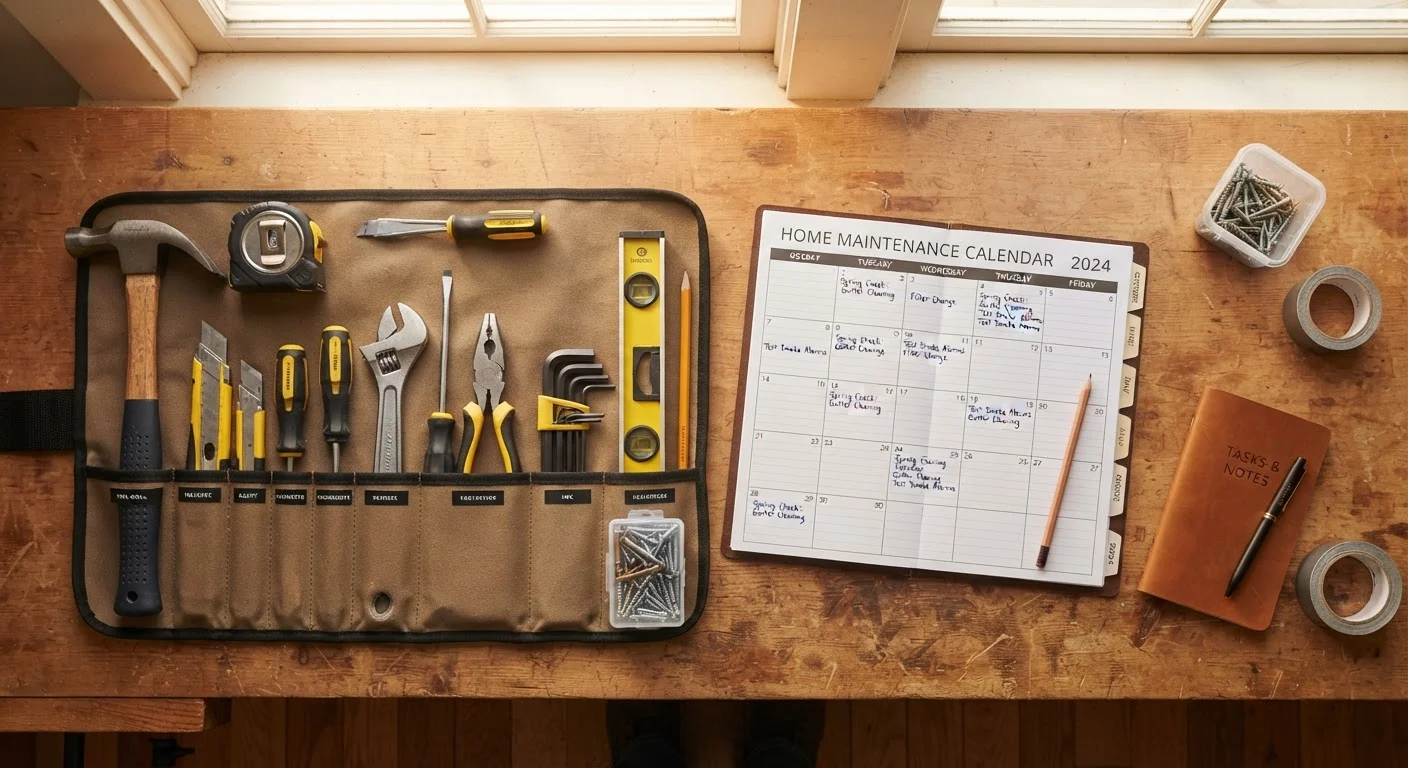
A written log makes this schedule far more useful. When you record what was done and when, you avoid duplicate work, catch patterns (like a filter that clogs faster than expected), and have documentation if you sell the home. Our home maintenance log guide explains exactly what to record and why it pays off.
Some tasks on this list — particularly anything involving the electrical panel, gas lines, roof repairs, or structural work — should be handled by a licensed professional. Not sure where to draw the line? Our DIY vs. pro framework gives you a clear way to think it through. And if you want to work maintenance costs into your household spending plan, the home budgeting hub is a good next stop.
There are also maintenance items that don't make most beginner checklists — sump pump testing, pressure relief valves, and similar hidden tasks. Check our article on overlooked maintenance jobs to round out your routine.