
What to Expect From the Claims Process
Filing an insurance claim for the first time can feel unfamiliar, but the process follows a predictable sequence. Whether the claim involves your home or your vehicle, the core steps are similar: secure the situation, document the damage, notify your insurer, work with an adjuster, and resolve the settlement. If you are still building your foundational knowledge, our guide on home and auto insurance for first-time policyholders explains how both policy types work before you need to use them.
Understanding your policy coverage in advance — including your deductible and any exclusions — makes every stage smoother. If you have not read your policy carefully yet, our policy review walkthrough is a practical starting point.
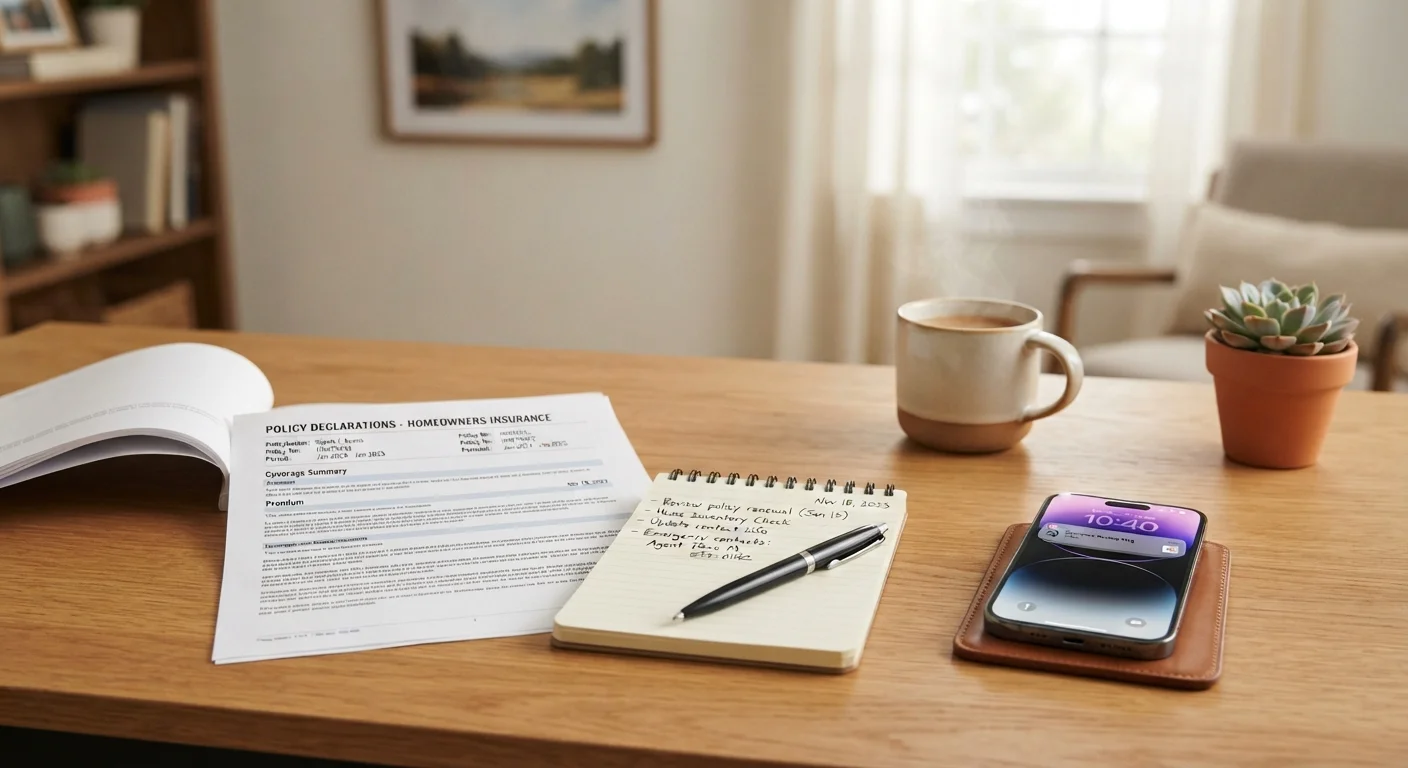
What you will need
Below are the tools you will find useful throughout the process:
Insurance Policy Documents
Confirms your coverage types, deductible amounts, and claim notification requirements.
Smartphone or Camera
Used to photograph and video-record damage thoroughly before any cleanup or repairs begin.
Dedicated Notebook or Digital Document
Tracks dates, names, and details of every conversation and communication with your insurer.
Repair Estimates from Licensed Contractors
Provides independent cost documentation to compare against the insurer's assessment.
Step-by-Step: Filing Your Claim
Follow these steps in order after experiencing property damage or an auto incident. The goal is to protect your safety, preserve evidence, and give your insurer everything they need to process your claim fairly and efficiently.
Ensure Safety and Prevent Further Damage
Before anything else, make sure everyone involved is safe. For an auto accident, move vehicles out of traffic if it is safe to do so and call 911 if there are injuries. For home damage — such as a burst pipe or storm damage — shut off utilities if there is a risk of flooding or electrical hazard, and call emergency services if needed.
Once immediate safety is addressed, take reasonable steps to prevent additional damage: cover a broken window, place buckets under an active leak, or tarp a damaged section of roof. Keep all receipts for any emergency materials you purchase, as these costs may be reimbursable.
Document Everything Before Cleanup
Thorough documentation is one of the most important steps in a successful claim. Using your phone or camera, photograph and video-record all visible damage from multiple angles. For home damage, capture wide shots of the affected room as well as close-ups of specific damage. For auto damage, photograph all four sides of each vehicle involved, along with close-ups of impact points.
Write down — or record a voice memo describing — exactly what happened, when it happened, and the sequence of events. Note weather conditions, road conditions, or any other relevant context. This contemporaneous record can be valuable if questions arise later.
Review Your Policy Before Contacting Your Insurer
Take a few minutes to look at your declarations page — the summary sheet at the front of your policy — before you call your insurer. Confirm which types of coverage you have, your deductible for the relevant coverage type, and whether the event you experienced is likely covered. If you are unfamiliar with policy language, our beginner's guide to reading a policy can help you navigate the key sections quickly.
Understanding your deductible before you call is especially important. Your deductible is the amount you pay out of pocket before your insurer pays the remainder. If your deductible is $1,000 and the estimated damage is $1,200, you may decide the claim is not worth filing.
File Your Claim Promptly
Contact your insurer as soon as reasonably possible after the incident. Most policies require timely notice, and waiting too long can complicate — or in some cases jeopardize — your claim. You can typically file by phone, through your insurer's website, or via a mobile app.
When you file, you will be asked for your policy number, the date and location of the loss, a description of what happened, and an estimate of the damage. You do not need a final repair estimate at this stage — a general description is sufficient to open the claim. You will be assigned a claim number; write this down and reference it in all future communications.
Work With the Insurance Adjuster
After you file, your insurer will assign a claims adjuster — a trained professional whose role is to investigate the claim, assess the damage, and determine the appropriate payout under your policy. The adjuster may visit in person, or for smaller claims, may conduct a virtual or photo-based review.
Be present during any in-person inspection if at all possible. Walk the adjuster through all damage you have documented, and point out anything that might not be immediately visible. You are entitled to ask questions about the process and request a written copy of the adjuster's findings.
Review the Settlement Offer and Complete Repairs
Once the adjuster's assessment is complete, your insurer will issue a settlement offer — the amount they will pay toward the covered loss, minus your deductible. Review this offer carefully against your own documentation and any contractor estimates you have gathered. Do not feel pressured to accept immediately if the figures do not align with the actual cost of repairs.
If you accept the offer, the insurer will issue payment — either directly to you, to the repair shop, or in some cases jointly to you and a mortgage lender if your home is involved. For home claims, be aware that your lender may need to endorse the check. Once repairs are complete, keep all invoices and receipts as part of your permanent records for this claim.
Don't Start Permanent Repairs Too Soon
Making permanent repairs before your insurer's adjuster has inspected the damage can jeopardize your claim. Take steps to prevent further damage — such as covering a broken window or placing a tarp over a damaged roof — but preserve the scene as much as possible. Document everything before any work begins.
For more detail on why certain claims get denied — and how to avoid common mistakes — see our article on home insurance claim denials.
Build a Home Inventory Before You Need It
A home inventory — a documented list of your belongings with photos or video — can significantly speed up a personal property claim. Walk through each room and record serial numbers, approximate values, and purchase dates for major items. Store a copy of the inventory somewhere outside your home, such as a secure cloud account.
Keeping Records and Following Up
Throughout the claims process, maintain a written log of every interaction: the date and time of each call, the name of the representative you spoke with, and a brief summary of what was discussed. Save all emails and written correspondence. This record becomes important if there is ever a dispute about what was agreed or communicated.
Claims timelines vary by insurer and by the complexity of the damage. Straightforward auto claims may resolve in days; large home damage claims can take weeks or longer, especially if repairs require licensed contractors or inspections. If your claim seems stalled, ask your adjuster for a status update and a realistic timeline in writing.
Think Before Filing Every Claim
Filing a claim can affect your premium at renewal, and some insurers may non-renew policies with multiple claims in a short period. If the repair cost is only slightly above your deductible, it may be more cost-effective to pay out of pocket. This is general information — consult your agent to understand how a specific claim might affect your policy.
For ongoing guidance on managing your vehicle coverage, the Auto Ownership hub covers practical topics from policy management to understanding your coverage options.
This article is for general informational and educational purposes only and does not constitute personalized insurance, financial, or legal advice. Coverage terms, exclusions, deductibles, and claim outcomes vary by policy and provider. Always read your actual policy documents and consult a licensed insurance agent or adviser regarding your specific situation.