
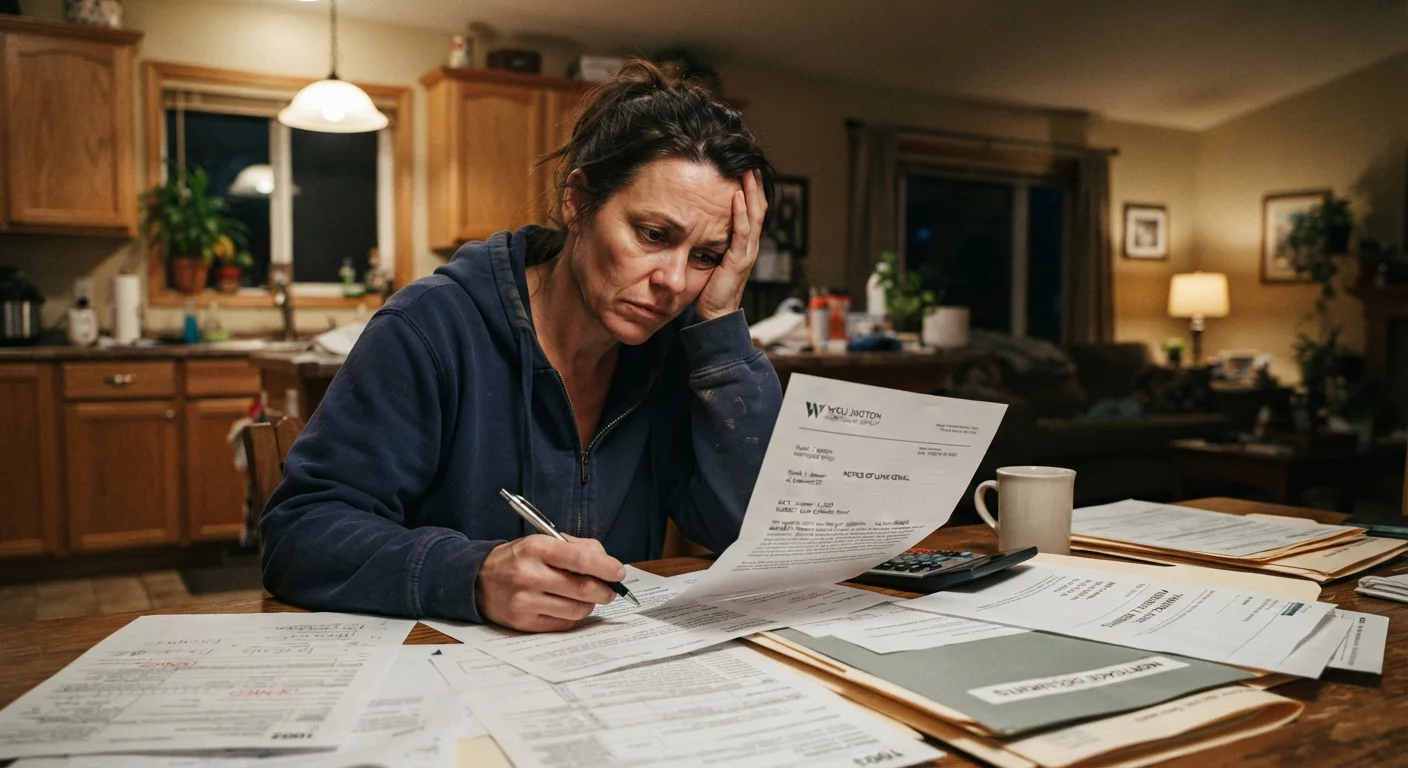
Why Claim Denials Happen More Often Than You'd Think
Receiving a denial letter after filing a home insurance claim can feel shocking — especially when you've been paying premiums faithfully for years. The reality is that most denials aren't arbitrary. They follow from specific conditions in the policy that weren't met, or from mistakes made long before the damage event. Understanding the structure of a claim decision helps you see where things go wrong.
Insurers assess a claim against three basic questions: Is the cause of loss a covered peril? Does the damage exceed the deductible? Did the policyholder meet their obligations (reporting, documentation, maintenance)? A 'no' on any of these can produce a denial. The good news is that most of the common failure points are preventable. For a broader look at how misreading policy language contributes to these situations, see what families commonly misread in their policies.
~5–8%
Home insurance claims denied annually
Industry estimates suggest a meaningful share of homeowner claims are denied each year, with exclusions and under-documentation among the leading reasons cited.
60%+
Underinsured US homes
CoreLogic has estimated that a majority of US homes are underinsured relative to current rebuilding costs, meaning many policyholders would face an out-of-pocket gap after a major loss.
The Most Common Mistakes That Lead to Denied Claims
Each of the errors below represents a distinct point in the coverage lifecycle where things can break down — from the day you sign up to the moment you file. Avoiding them requires knowing they exist.
Carrying coverage limits that no longer reflect the actual rebuilding cost of your home.
Why it happens: Many homeowners set their dwelling coverage at purchase and never revisit it, even as construction costs rise significantly over time.
Filing a claim for damage caused by a peril that is explicitly excluded from the policy.
Why it happens: Standard homeowners policies contain exclusions — for flooding, earthquake, and certain mold situations — that many policyholders simply aren't aware of until they file.
Failing to document belongings before a loss occurs.
Why it happens: Creating a home inventory feels unnecessary until it suddenly isn't — most people put it off indefinitely.
Neglecting routine home maintenance, then filing a claim when deferred damage worsens.
Why it happens: Homeowners sometimes assume insurance covers all structural damage, not realizing that gradual deterioration is treated as a maintenance failure rather than a covered loss.
Misrepresenting material facts on the original insurance application.
Why it happens: Applicants sometimes downplay details — an older roof, a home-based business, a trampoline — either to reduce premiums or because they don't realize these facts are relevant.
Misrepresentation Can Void Your Entire Policy
Providing inaccurate information when applying for coverage — such as understating the age of a roof or failing to disclose a home business — can give your insurer grounds to deny any claim, or even cancel your policy retroactively. Always answer application questions completely and honestly. If your circumstances change after the policy is issued, notify your insurer promptly.
It's also worth checking whether your expectations about coverage line up with reality. Many families hold assumptions about what's included that aren't supported by standard policy language. Our article on home insurance myths that leave families underprotected addresses several of the most costly ones.
What to Do If You're Facing a Denial
A denial is not always the final word. Most insurers have a formal appeals process, and if you believe a denial was issued in error, you have the right to contest it. Start by requesting a written explanation that cites the specific policy language the insurer relied on. Then compare that language against your actual policy document.
Don't Wait to Report Damage
Most homeowners policies require you to report a loss within a specific time window — sometimes as short as a few days after the event. Waiting to file because the damage seems minor, or because you're hoping to handle repairs yourself first, can give the insurer grounds to deny the claim on timeliness alone. When in doubt, report first and ask questions later.
If the denial involves interpretation of policy language, a licensed public adjuster or an independent insurance attorney can review the decision and advise on your options. For guidance on navigating the claims process from the start, the step-by-step claims walkthrough covers each stage in plain terms.
This article is for general informational purposes only and does not constitute insurance, legal, or financial advice. Coverage terms, exclusions, and claim procedures vary by insurer and state. Always read your actual policy documents and consult a licensed insurance professional for guidance specific to your situation.