
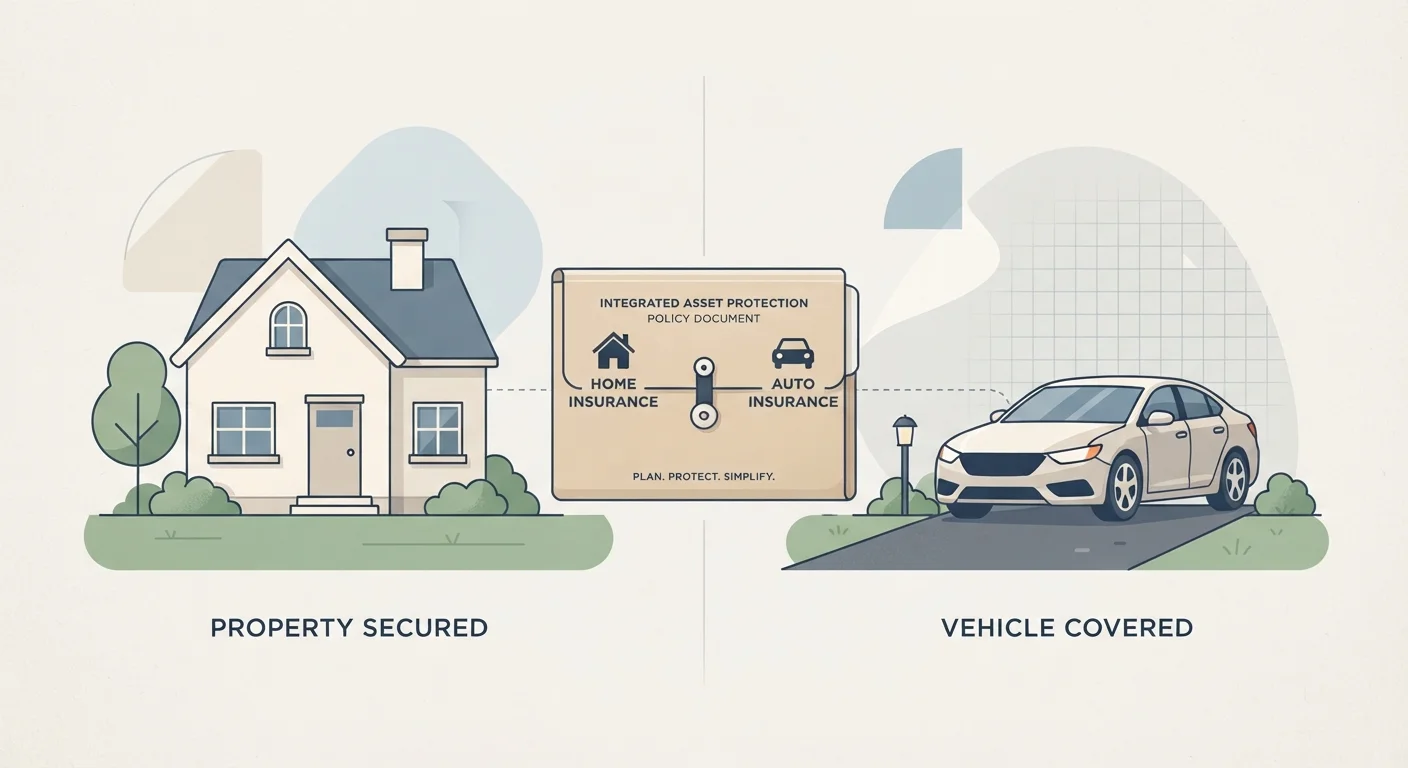
What Bundling Actually Means
When insurers talk about bundling, they mean holding two or more policies — typically homeowners and auto — with the same insurance company. In exchange, most insurers offer a multi-policy discount, sometimes called a bundling discount, applied to one or both premiums.
Bundling is not a product in itself. It is simply a pricing arrangement. Your home and auto policies remain separate contracts with their own coverage limits, deductibles, exclusions, and renewal dates. If you are new to how these policies work individually, the first-time policyholders guide is a useful starting point before evaluating whether to combine them.
Discounts vary considerably by insurer and state. It is accurate to say that bundling can reduce your overall cost — but it does not automatically produce the lowest total premium available to you.
Bundling Is Not Available Everywhere
Not every insurer operates in every state, and some carriers specialize in only one type of policy. In certain high-risk regions — such as coastal areas prone to hurricanes — home insurance may only be available through state-backed plans or specialty carriers that do not offer auto coverage at all. Always verify what is actually available in your area before assuming bundling is an option.
The Case for Bundling
There are legitimate reasons many households choose to keep both policies under one roof.
Multi-policy discount reduces total annual premiums
Most major insurers offer a percentage reduction on one or both policies when bundled together. The exact amount varies by insurer and state, but it can meaningfully offset what you pay each year.
Single insurer simplifies billing and account management
One login, one renewal cycle to track, and one customer service relationship to manage. For households juggling many financial accounts, this consolidation has real practical value.
Coordinated claims handling for shared events
When a single event — such as hail — damages both your home and vehicle, having one insurer can streamline the claims process. Some bundled policies include a deductible waiver for this scenario, though you should verify this benefit in your specific policy.
Loyalty perks and renewal incentives may accumulate
Some insurers offer additional benefits — such as accident forgiveness or declining deductibles — that build over time as a long-term policyholder, making the bundle more valuable the longer you stay.
Beyond discounts, consider that managing insurance with one company reduces administrative friction. You deal with one login, one phone number, and — if you ever file claims on both policies arising from the same event, such as a storm that damages your house and your parked vehicle — potentially one coordinated claims process. Some insurers also waive a deductible on one policy when a single event triggers claims on both, though this benefit varies and should be confirmed in writing before you rely on it.
The Case Against Bundling
The convenience of bundling can come at a cost that isn't always obvious upfront.
Bundled discount may not produce the lowest total cost
A 10–15% discount sounds significant, but if a competing insurer offers a substantially lower base rate on one or both policies, you could still pay more overall by bundling. Always calculate the actual dollar totals, not just the discount percentage.
Coverage quality may differ between policy types
Insurers that excel at auto coverage may not be as strong on homeowners coverage, and vice versa. Choosing one company for both can mean accepting a weaker policy on one side for the sake of convenience.
Switching one policy risks losing discount on both
If your insurer raises auto rates significantly at renewal, moving that policy means losing the bundling discount on your home policy too — reducing your flexibility to respond to rate changes.
Claims history on one policy can affect the other
With a single insurer, your overall relationship — including claims frequency — is evaluated together. A claim on your auto policy could potentially influence your standing when your home policy renews.
Fewer opportunities to find specialized coverage
Some homeowners need coverage that generalist insurers don't offer competitively, such as policies for older homes, high-value properties, or homes in areas with elevated catastrophe risk. Bundling may limit access to specialists.
One structural risk worth understanding: if you need to switch insurers for one policy — say, your auto insurer raises rates significantly — you may lose the bundling discount on the other policy too. That dependency can reduce your leverage at renewal time. For a broader look at what to evaluate when comparing policies, see what to compare beyond the premium.
How to Evaluate Whether Bundling Makes Sense for You
A side-by-side comparison is the only reliable way to know. Here is a practical framework:
- Get bundled quotes from insurers that offer both home and auto coverage in your state.
- Get separate quotes for each policy independently from specialists or different carriers.
- Compare total annual cost — add both premiums together in each scenario.
- Compare coverage — check limits, deductibles, and exclusions, not just price. The insurance glossary can help you decode policy language.
- Factor in claims service quality — customer satisfaction ratings from independent sources can reveal differences that price alone won't show.
If the bundled total is within a few dollars of the separate total, convenience may reasonably tip the balance. If the gap is substantial either way, let the numbers guide you. Understanding how deductibles and premiums interact also helps you make a fair apples-to-apples comparison.
5–25%
Typical multi-policy discount range
Industry sources generally cite bundling discounts in this range, though the actual amount depends on the insurer, state regulations, and individual risk profile.
~70%
US households with both home and auto coverage
Most homeowners who carry auto insurance also hold a homeowners policy, making bundling an option relevant to a large share of American households.
This article provides general information about insurance concepts and is not personalized insurance, financial, or legal advice. Coverage terms, discounts, and availability vary by insurer and state. Read your actual policy documents carefully and consult a licensed insurance agent or adviser for guidance specific to your situation.