
What a 'Peril' Actually Is
Before distinguishing the two coverage structures, it helps to understand the word itself. In insurance, a peril is a specific cause of loss or damage — fire, windstorm, theft, hail, and water damage are all examples. Your policy's coverage scope is almost entirely defined by which perils it recognizes.
The two main approaches to defining that scope are named perils and open perils. These aren't policy types on their own; they're structural frameworks that appear within policies like homeowners or renters insurance. Understanding which one applies to your coverage — and to which parts of it — is one of the most practical things you can learn as a policyholder. See our guide to reading your policy for more on how these structures appear within the document.
The Same Policy Can Use Both Structures
It's common for one policy to apply open perils to the home's physical structure and named perils to personal belongings. This means different sections of your coverage may have very different scopes. Always check which structure governs each coverage component — not just the policy as a whole.
Named Perils: Coverage Is Limited to the List
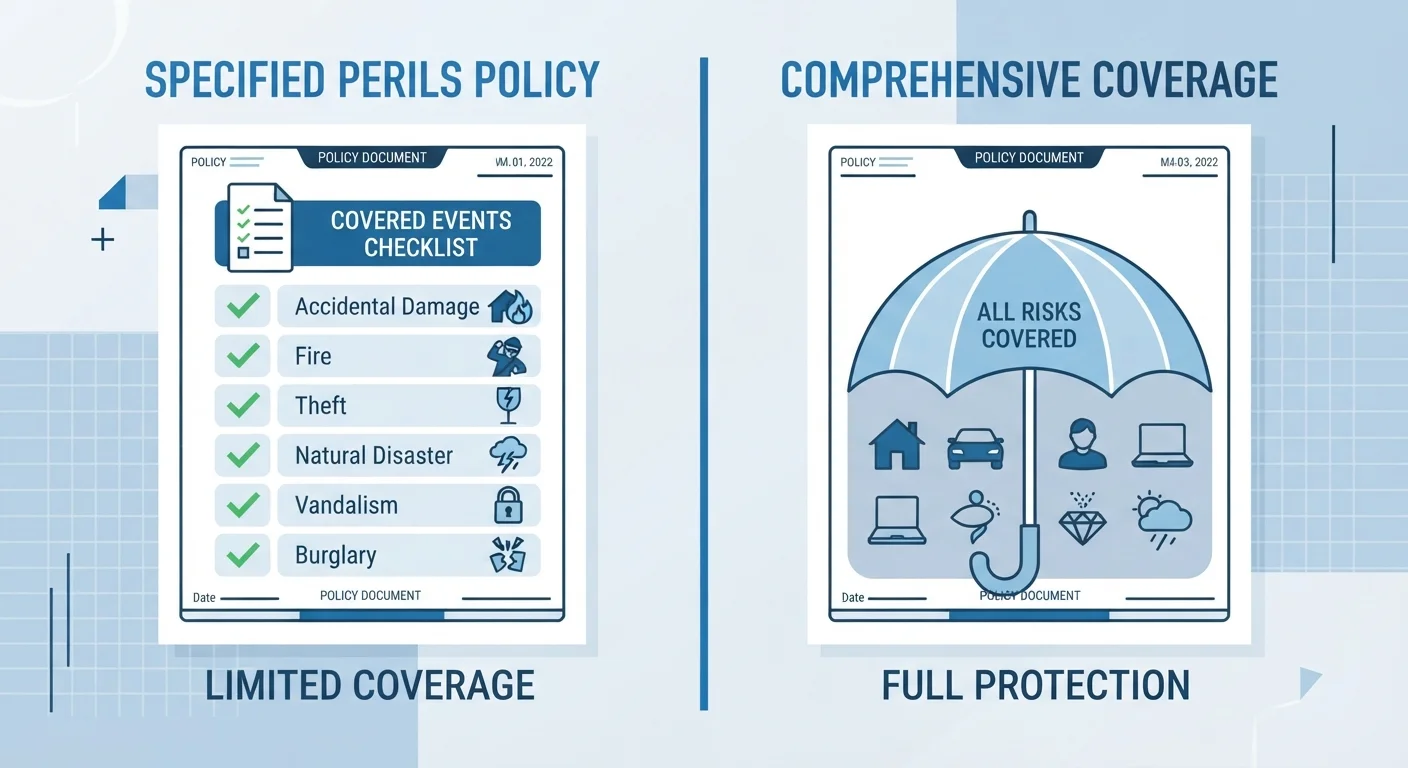
With a named perils policy, coverage applies only when a loss is caused by a peril that is explicitly named in the policy. Common named perils include fire, lightning, windstorm, hail, theft, vandalism, and a handful of others — typically 16 standard perils in widely-used policy forms.
If something damages your property and that cause is not on the list, the claim will be denied — regardless of how significant the loss is. For example, if a pipe bursts due to gradual deterioration and that specific cause isn't listed, you may have no coverage under a named perils structure.
The practical implication: you carry the burden of proof. You must show that a covered peril caused the loss. This can sometimes complicate claims when the exact cause of damage is unclear.
16
Standard named perils in common policy forms
The Insurance Services Office (ISO) HO-2 form lists 16 specific named perils commonly referenced in homeowners policies.
~60%
Of homeowners policies that use broader open perils forms
Industry estimates suggest a majority of homeowners purchase HO-3 or equivalent policies, which apply open perils to the dwelling structure.
Open Perils: Coverage Unless Excluded
An open perils policy flips the logic. Instead of listing what is covered, it covers everything except what is specifically excluded. The exclusions section becomes the most important part of the policy to read carefully.
Common exclusions from open perils policies include flood, earthquake, wear and tear, intentional acts, and in some cases mold or pest damage. These exclusions are clearly listed in the policy document, and if a cause of loss isn't on the exclusion list, the insurer generally must cover it.
This structure tends to provide broader protection because it catches unusual or unexpected causes of loss that nobody thought to put on a named perils list. However, it is not a guarantee of total coverage — exclusions can be extensive. See our article on perils standard policies won't cover to understand the most significant gaps.
How These Structures Appear in Real Policies
Many homeowners policies use both structures within the same document. A common arrangement applies open perils coverage to the dwelling (the physical structure of your home) while applying named perils coverage to personal property (your belongings inside the home). This hybrid approach means your furniture and electronics may have narrower protection than the walls around them.
Renters insurance policies frequently use named perils for personal property coverage. Auto insurance uses yet another framework — see how auto coverage types work for a breakdown of how perils are handled across vehicle policies.
For a fuller picture of what a standard homeowners policy actually protects, including how coverage sections interact, visit our overview of what a standard homeowners policy covers.
Read the Exclusions Section First
If you have an open perils policy, the exclusions section is the most important part of your document. It defines the actual limits of your coverage. Make a list of any exclusions that could apply to your specific property and location — such as flood zones or older wiring — and ask your agent whether separate coverage is available for those risks.
How to Find Out Which Structure Applies to You
Pull out your current policy document and locate the insuring agreement — usually one of the first substantive sections after the declarations page. A named perils policy will include a specific list of covered causes of loss. An open perils policy will use language like "we cover all risks of direct physical loss unless excluded."
If you're unsure how to navigate the policy document, reading your policy without getting lost offers a practical walkthrough of policy structure. When in doubt, contact a licensed insurance agent — they can explain exactly what structure your current policy uses and whether any gaps exist for your circumstances.
This article is for general informational and educational purposes only and does not constitute personalized insurance, legal, or financial advice. Coverage terms, exclusions, and regulations vary by insurer, policy, and state. Always read your actual policy documents and consult a licensed insurance professional for guidance specific to your situation.