
How Each Savings Method Actually Works
Understanding the basic mechanics of each tool helps you decide which one to reach for in any given situation.
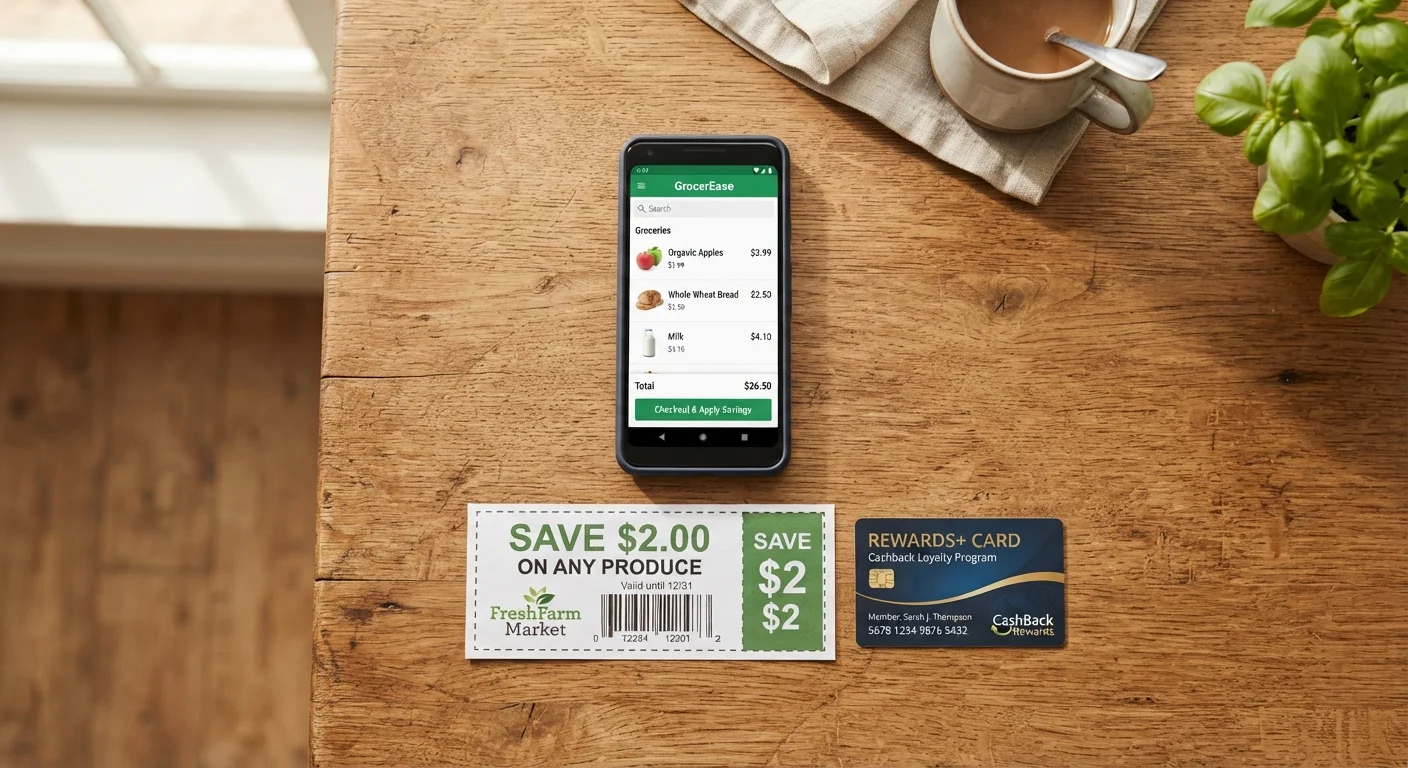
Paper coupons are certificates — printed or digital — that retailers accept in exchange for a fixed dollar amount or percentage off a specific product. You present them at checkout, and the discount is deducted from your total. Promo codes work the same way online: you enter an alphanumeric code at checkout, and the price drops before payment is processed. Both reduce what you owe before money leaves your account.
Cashback works differently. Instead of lowering the price upfront, cashback programs refund a percentage of your purchase price after the transaction is complete. That refund might arrive as account credit, a direct deposit, a check, or points — depending on the program. The key distinction is timing: cashback is a reward you receive later, not a discount you see immediately.
For a fuller picture of how deal-finding fits into everyday shopping, see our plain-language beginner's guide to smart shopping.
| Criterion | Coupons & Promo Codes | Cashback |
|---|---|---|
| When savings are applied | At checkout, before payment | After purchase, as a refund |
| Format | Paper clip, digital code, or barcode | Credit, deposit, check, or points |
| Effort to use | Moderate — must find and apply code | Low once set up — often automatic |
| Best for | Planned, specific purchases | Frequent, recurring spending |
| Can be stacked | Yes, often with cashback | Yes, often with promo codes |
| Typical savings range | Varies widely — fixed amounts or % | Usually 1%–5% per transaction |
| Immediate budget impact | Yes — lower price you pay now | No — received days or weeks later |
When One Outperforms the Other
The right tool depends on your purchase type, timing, and how much effort you're willing to invest.
Coupons and promo codes shine when:
- You're buying a specific item and a coupon is available for it.
- You're making a large purchase where even a small percentage off means real dollars saved.
- You need the savings immediately — your budget is stretched and you can't wait for a rebate.
Cashback tends to deliver more value when:
- You make frequent purchases across many categories (groceries, gas, household goods).
- No coupon or promo code is available for what you're buying, but a cashback portal covers the retailer.
- You're comfortable with a short delay before the reward arrives.
1%–5%
Typical cashback rate per transaction
Most consumer cashback programs return between 1% and 5% of the purchase price, depending on the retailer and category.
~30%
Digital coupon adoption among US shoppers
Consumer surveys consistently show that a significant share of US households use digital coupons or promo codes regularly, though exact figures vary by survey.
One important nuance: cashback percentages on everyday categories are often modest — typically 1%–5%. A well-timed promo code can outperform that on a single transaction. However, cashback applied consistently across months of regular spending can accumulate into a meaningful sum without requiring you to hunt for codes each time.
If you're curious how these tools interact with store loyalty programs, our comparison of loyalty programs vs. one-time discount apps covers that territory in detail.
Stacking: Using Both at the Same Time
These tools aren't mutually exclusive. In many cases, you can layer them — applying a promo code at checkout while also activating a cashback offer through a separate app or portal. Retailers and cashback providers generally permit this, though it's worth reading the terms of each offer since some cashback programs exclude transactions that already used a discount code.
A simple example: if a retailer's checkout accepts a promo code for 15% off, and a cashback portal also covers that retailer for 3% back, you could benefit from both on the same order. The promo code lowers the price before payment; the cashback is calculated on the final amount you paid.
Check Cashback Terms Before Applying a Code
Some cashback portals explicitly exclude orders where a third-party promo code was used at checkout, citing affiliate terms with the retailer. Before stacking, confirm that the cashback offer doesn't have a 'no coupon code' restriction. This information is usually available in the offer's fine print or FAQ section.
Building stacking into a regular routine takes practice but doesn't have to consume your weekend. The deal-hunting routine guide walks through a practical system for checking for discounts quickly and consistently. Families looking specifically at grocery savings may also find value in the everyday grocery savings strategies article, which covers approaches beyond traditional coupons.