
How Each Model Actually Works
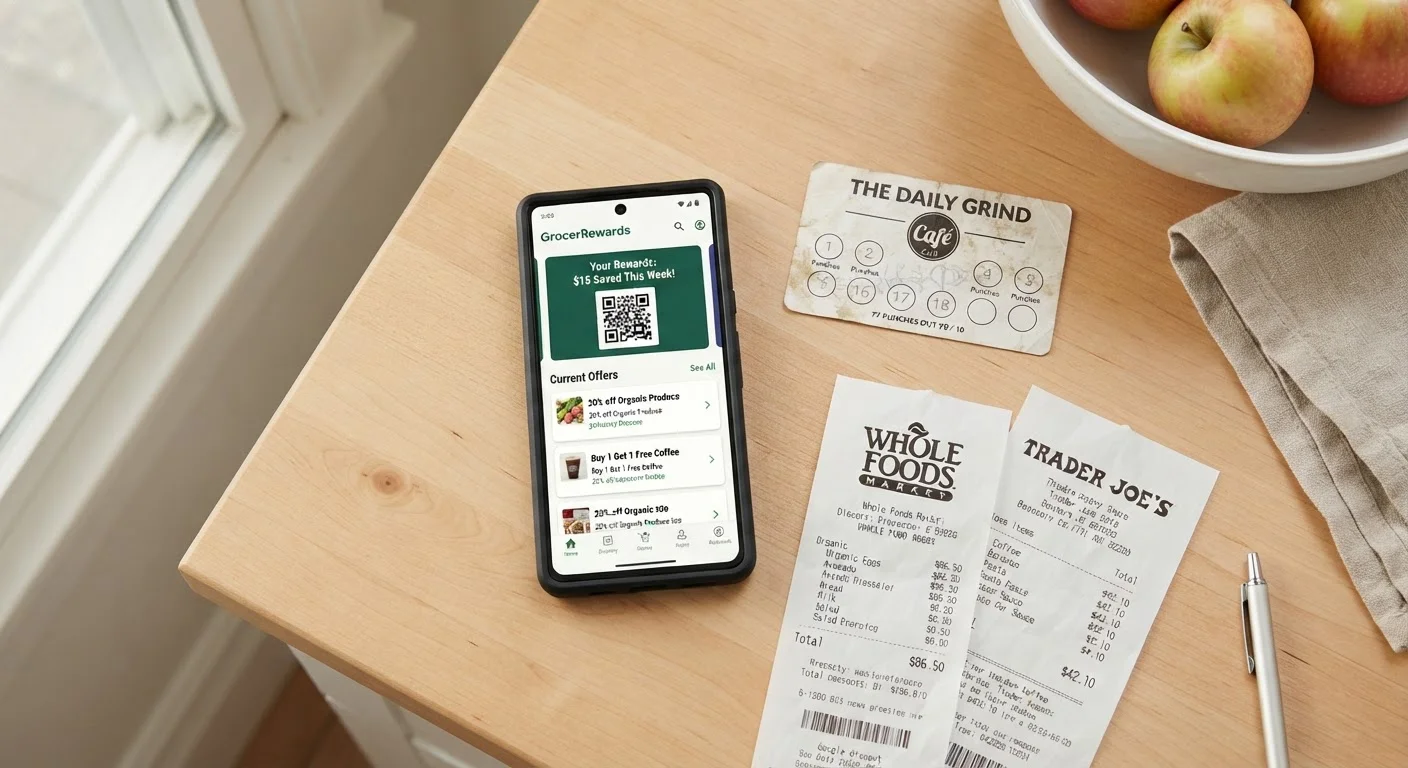
Store loyalty programs are membership systems run directly by retailers. When you sign up — usually free — your purchases earn points, stamps, or tier status that you redeem later for discounts, free items, or perks like early access to sales. The store controls the rules: how fast points accumulate, when they expire, and what they're worth.
One-time discount apps, by contrast, are independent tools — browser extensions, cashback platforms, or coupon aggregators — that surface deals across many stores without you pledging allegiance to any single brand. You might clip a digital coupon before checkout, activate a cashback offer, or use a code the app surfaces automatically. Savings are typically applied immediately or paid out as cashback within a few days.
The structural difference matters: loyalty programs are built to bring you back, while discount apps are built to help you shop smarter wherever you already go. For a broader look at how these savings types fit into the discount landscape, see our guide on coupons, promo codes, and cashback.
| Criterion | Store Loyalty Programs | One-Time Discount Apps |
|---|---|---|
| Store coverage | Single retailer per program | Many retailers, one tool |
| When savings arrive | Delayed — points accumulate over time | Immediate or within days |
| Setup required | Account per store, card or app | One app or extension install |
| Data collection | Detailed purchase history tracked | Varies widely by app |
| Works without changing habits | Requires shopping at specific stores | Works wherever you already shop |
| Risk of overspending | Higher — threshold chasing is common | Lower — savings apply to planned purchases |
| Best value scenario | High-frequency shoppers at one chain | Diverse, multi-retailer shoppers |
The Data Trade-Off Families Should Understand
Loyalty programs are valuable to retailers partly because they generate rich data: what you buy, how often, in what combinations, and at what price points. That data is used to personalize promotions — which can feel useful — but it also means your shopping behavior is being tracked in detail. Most programs disclose this in their terms, but few shoppers read them closely.
One-time discount apps vary widely. Some are straightforward coupon aggregators with minimal data collection. Others, particularly cashback apps, monitor purchase behavior or browser activity to serve targeted offers. Before using any app, it's worth reviewing what data it collects and whether it shares that data with third parties.
Check App Permissions Before You Install
Some discount apps request access to your email, browser history, or location to function. Review app permissions in your device settings after installation and limit access to what's strictly necessary. The Federal Trade Commission (FTC) provides general guidance on understanding app data practices at consumer.ftc.gov.
This doesn't mean either option is off-limits — just that the cost of the reward isn't always measured in dollars. Factoring in privacy is a reasonable part of the decision, especially for families.
When Loyalty Programs Deliver Real Value
Loyalty programs work best when your shopping behavior naturally aligns with what the program rewards. If your household buys most of its groceries from one chain, fills up gas at affiliated stations, and regularly visits a particular pharmacy, the accumulated rewards can add up to meaningful savings — often $50 to $200 or more annually, depending on spend volume and program design.
They also tend to offer member-only pricing that's simply unavailable to non-members, regardless of any app. Some grocery chains price certain items exclusively for loyalty cardholders, making enrollment practically necessary to avoid overpaying on staples.
The risk: loyalty programs can subtly encourage over-spending to hit reward thresholds. If you're buying extra items to earn a bonus or avoid letting points expire, you may be spending more than the reward is worth. Keeping your loyalty memberships tied to your household budget system helps prevent this drift.
When Discount Apps Fit Better
For families who shop at a wide variety of retailers — mixing big-box stores, online marketplaces, specialty shops, and local grocers — loyalty programs offer fragmented value at best. You'd need a dozen memberships to cover your spending, and most would accumulate too slowly to pay off.
Discount apps fill that gap by working horizontally across retailers. A browser extension that automatically applies promo codes, or a cashback portal that covers hundreds of stores, generates value proportional to total spend rather than loyalty to any one brand.
They're also easier to adopt without changing your shopping habits. You don't need to redirect purchases to qualify; the savings layer on top of what you'd already buy. For families building a deal-finding routine without overhauling their schedule, our guide on building a deal-hunting routine walks through how to layer these tools without the effort spiral.
~$177
Avg. annual loyalty reward value per household
Based on industry estimates from loyalty program research; actual value varies significantly by spend volume and program type.
58%
Shoppers who belong to 3+ loyalty programs
Multiple programs are common, but research suggests engagement drops sharply after a household's third or fourth membership.
Using Both Without Overcomplicating It
The two approaches aren't mutually exclusive. A practical approach for most families: maintain loyalty memberships at two or three stores where you genuinely shop frequently, and use one broad-coverage discount app for everything else. This captures concentrated rewards where your behavior already supports them, while keeping flexibility elsewhere.
The failure mode to avoid is app accumulation — signing up for every loyalty program and downloading every deal platform until the system becomes too complex to use consistently. Savings tools only work if you actually use them, and complexity is the most common reason people stop. Keep the stack small, review it a couple of times a year, and drop anything that isn't generating real value for your household. You can also explore how in-store and online deal-finding compare to round out your approach across shopping channels.