
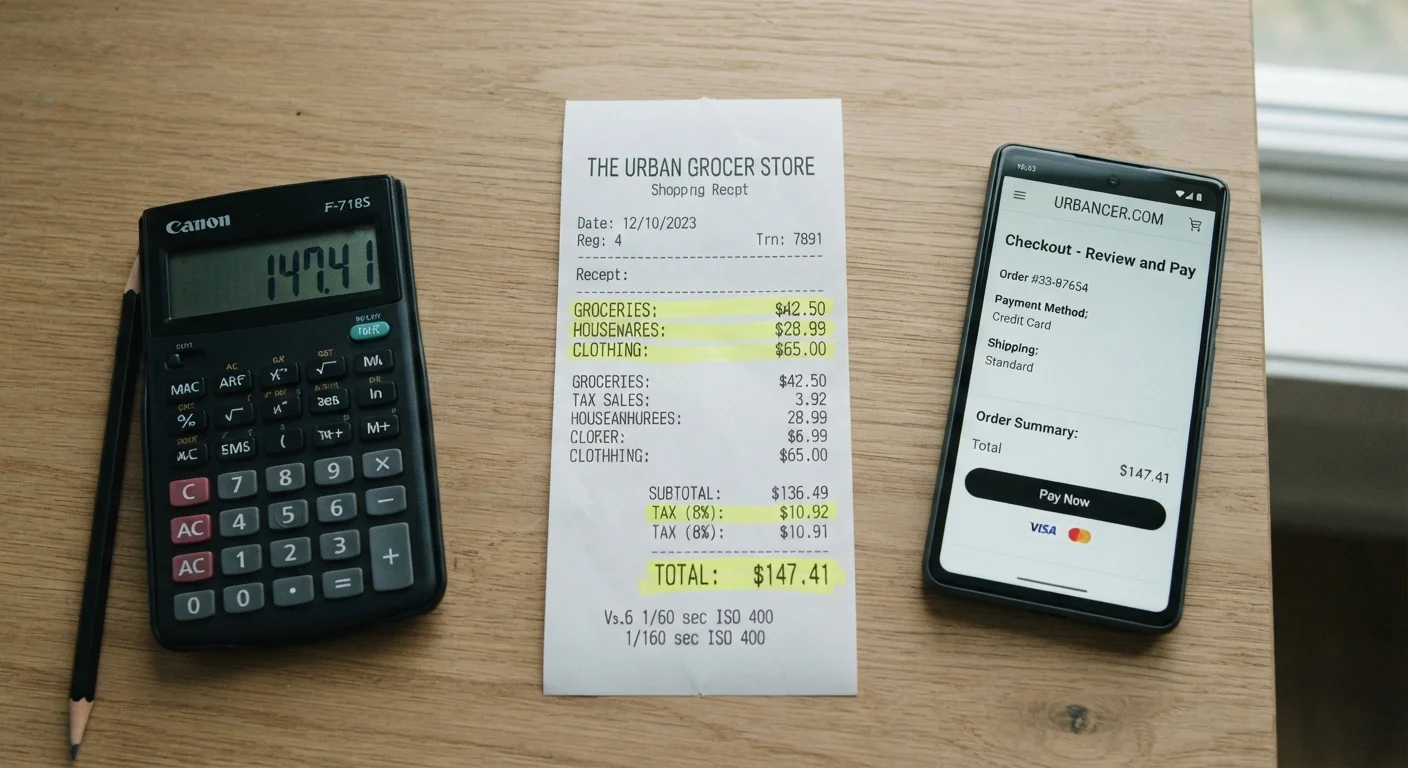
Why a Good Deal Can Still Cost You More
Spotting a discount feels like a win. But the final price you pay and the price that caught your eye are often two different numbers. Retailers and online platforms have layered on fees, add-ons, and automatic enrollments that inflate what looks like a bargain by the time you hit confirm order.
This isn't about blaming shoppers. These costs are frequently buried in fine print, shown only at the last step of checkout, or structured so they're easy to overlook in the excitement of a perceived deal. Understanding where they hide is the first step to making sure your savings are real. For a broader look at how retail pricing is designed to create urgency, see how to read a deal.
Ignoring shipping and handling fees until checkout.
Why it happens: Advertised prices almost never include shipping, and many shoppers compare item prices without accounting for delivery costs until the final screen.
Overlooking mandatory add-ons or accessories needed to use the item.
Why it happens: Product listings highlight the main item's price, leaving out required cables, batteries, installation kits, or compatible parts that aren't included.
Missing auto-enrollment in a subscription or membership at checkout.
Why it happens: Retailers often pre-check a subscription box during checkout, framing it as a way to unlock the deal or free trial. It's easy to miss when you're rushing through steps.
Forgetting that taxes can vary significantly between sellers and platforms.
Why it happens: Online shoppers often compare listed prices without realizing that tax rates differ by seller location, product category, and state, sometimes adding 8–10% or more.
Not checking the return or restocking policy before buying a discounted item.
Why it happens: Clearance and sale items frequently carry stricter return terms — including restocking fees of 15–25% — that don't apply to full-price purchases. Shoppers often assume standard policies apply.
Buying in bulk to capture a lower unit price without accounting for storage or spoilage.
Why it happens: The per-unit math looks compelling, but families underestimate how much space bulk items need or how quickly perishables expire before they're used.
Building the Habit of Total-Cost Thinking
The fix for most of these mistakes is the same: pause before confirming a purchase and add up what you're actually paying. That means shipping, tax, any required accessories, potential return costs, and any ongoing charges. If that total no longer beats buying locally or waiting for a more straightforward offer, walk away.
~67%
Online shoppers who abandoned carts due to unexpected fees
Research from the Baymard Institute consistently finds that extra costs like shipping and taxes are the leading reason shoppers abandon online carts.
15–25%
Typical restocking fee on returned sale items
Restocking fees on discounted or opened items vary widely by retailer but commonly fall in this range, enough to eliminate savings on a modest discount.
This kind of discipline also applies to bigger purchases. Hidden fees aren't limited to online shopping carts — new car buyers face a similar trap with dealer fees, registration, and gap insurance. The same total-cost mindset applies across every spending category.
Families who track their actual spending — not just the sale prices they see — tend to spot patterns faster. If you're building a smarter household budget, resources on home budgeting can help you frame purchases in the context of your full financial picture. And if your deal-hunting routine already costs you hours each week, the math on those savings may look different than you expect.
Free Trials Attached to Discounts Often Auto-Charge
When a deal is unlocked through a 'free' trial membership, the charge after the trial period is frequently higher than the savings you received upfront. Set a calendar reminder before the trial ends, and make sure you know exactly how to cancel — some services require a phone call rather than an online click.