
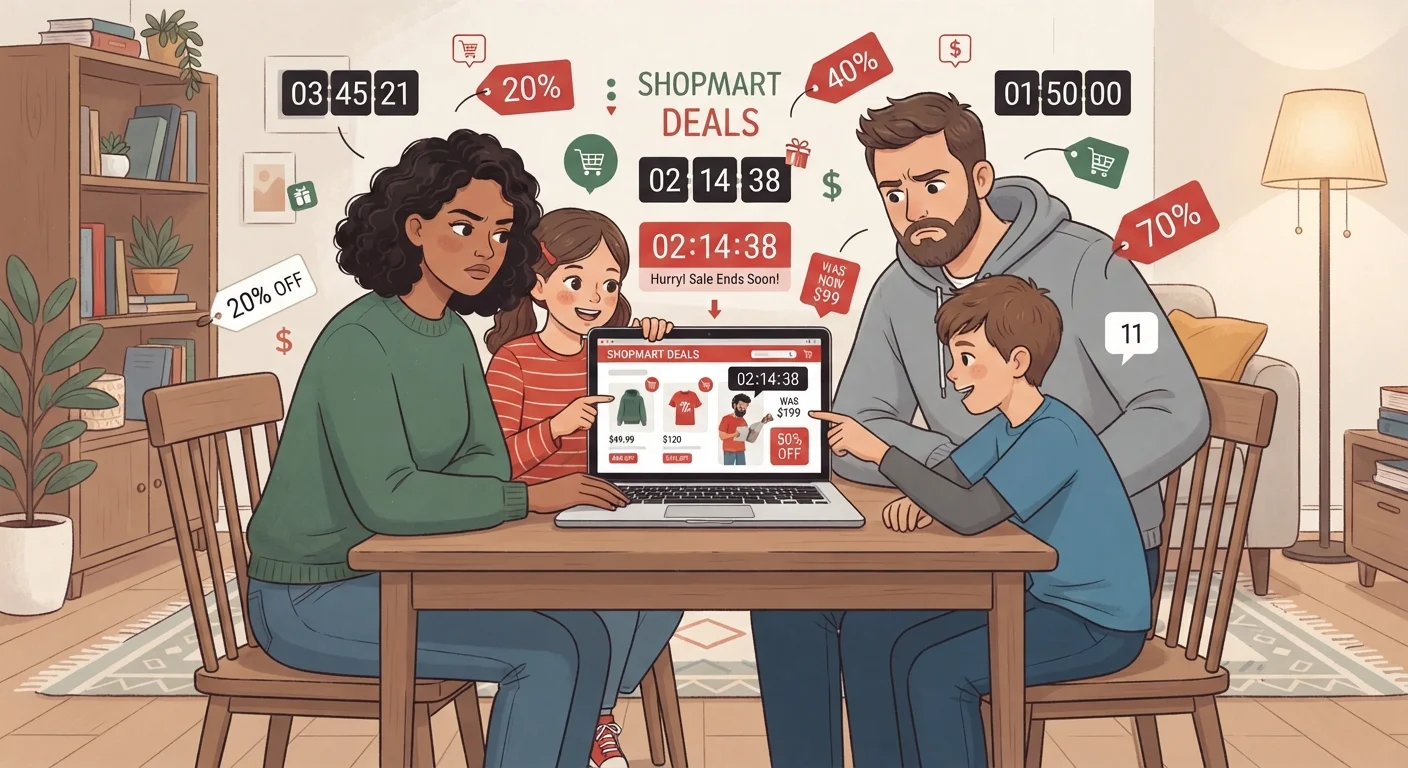
Why Manufactured Urgency Works — and How to Recognize It
Retailers invest heavily in techniques that compress your decision-making time. The faster you act, the less you compare. Countdown timers, flashing "Only 3 left!" labels, and limited-time banners are all designed to trigger a fear of missing out — not to inform you that prices are genuinely low.
These tactics aren't illegal, but they are deliberately psychological. Research in consumer behavior consistently shows that perceived scarcity increases purchase likelihood, even when the scarcity isn't real. A timer that resets at midnight or a stock counter that never reaches zero are both common implementations of this approach.
The first step to reading a deal clearly is recognizing that urgency cues are marketing tools, not evidence of value. When you notice one, treat it as a prompt to slow down — not speed up. See how holiday sale pricing actually compares in our article on how retail pricing really works on sale days.
“The perception of scarcity is one of the most powerful drivers of purchase decisions — more powerful, in many cases, than the actual price of the item.”
— Robert Cialdini, Researcher and author, known for foundational work on influence and persuasion
Best Practices for Evaluating Any Deal
Separating genuine savings from manufactured urgency comes down to a consistent set of habits. Apply these before you add anything to your cart.
Check the item's price history before trusting any sale price.
A crossed-out 'original price' may reflect an inflated reference price that the item rarely, if ever, sold at. Price history tools show what the item actually sold for over the past weeks or months, giving you a real baseline for comparison.
Ask yourself whether you planned to buy this item before seeing the promotion.
Urgency tactics are most effective on unplanned purchases. If the sale is what generated your interest rather than an existing need, you're at higher risk of overspending — regardless of the discount percentage.
Factor in all costs before comparing prices.
Shipping fees, required accessories, subscription commitments, and restocking fees can significantly reduce or eliminate a stated discount. The true price is what you actually pay to own and use the item.
Test urgency claims by waiting 24 hours when possible.
Many countdown timers reset, and 'limited stock' items restock regularly. If the deal is still available the next day, the urgency was manufactured. If you missed it, the item will likely go on sale again — most do.
Compare across multiple sources before committing to a price.
A deal is only a deal relative to other available prices. A single retailer's 'sale' may still be higher than the everyday price elsewhere. A brief multi-source check prevents paying more than necessary.
Quick Actions You Can Take Before Your Next Purchase
You don't need a spreadsheet or hours of research to shop smarter. These fast checks take only a few minutes and can save you from buyer's remorse.
For a more structured approach to finding discounts without draining your weekend, see our guide on building a deal-hunting routine. And before celebrating any find, check whether hidden costs are eating into your savings — shipping fees and subscription traps are worth reviewing first.
The Bigger Picture: Deals Are Only Valuable in Context
Even a steep discount doesn't create value if you didn't need the item. This sounds obvious, but it's the most common way urgency tactics succeed — they reframe an unplanned purchase as a responsible decision because of the price.
~40%
Of purchases that are unplanned at point of entry
Studies on retail shopping behavior consistently find that a large share of purchases were not on shoppers' lists before entering a store or site, with estimates often ranging from 40–60% depending on category.
1 in 3
Shoppers who regret impulse purchases
Consumer surveys in the US have found that roughly one in three shoppers report regretting at least one impulse purchase made during a sale event, citing the feeling of pressure as a contributing factor.
A useful mental check: would you have put this item on your shopping list this week, without the sale? If not, saving 40% on something you didn't need is still spending 60% you didn't plan to. This is especially worth keeping in mind for clearance sections, where emotional pricing can feel compelling — our piece on why clearance sections aren't always a bargain explains the mechanics behind those tags.
Thinking about your broader household budget? The principles here connect directly to reducing unnecessary spending — explore saving and debt tips for actionable ways to keep more of what you earn. If you're just starting out with smarter shopping habits, our beginner's guide to smart shopping covers the fundamentals in plain language.
Make 'Do I Already Own the List?' Your Default Check
Before any significant purchase, quickly scan your existing shopping or needs list. If the item isn't on it, pause and ask what changed — did a genuine need arise, or did a promotion create a new want? This one-second check can prevent a significant share of regret purchases. It costs nothing and takes less time than entering your payment details.