Why Product Longevity Matters for Family Budgets
Personal care is non-negotiable for every member of the family — but the costs add up fast when products are used carelessly or stored incorrectly. The good news? You don't have to switch to lesser-quality options to spend less. Small, consistent habits can dramatically extend how long your everyday products last without cutting corners on cleanliness or effectiveness.
If you're also looking at ways to reduce household spending across the board, these strategies pair well with practical home budgeting approaches that help families manage everyday expenses more confidently.
2–3×
How much product most people over-apply
Consumer product researchers and dermatologists consistently note that people routinely use far more shampoo, body wash, and moisturizer than product directions recommend.
15–20%
Product remaining in "empty" bottles
Packaging studies suggest a significant amount of product typically remains clinging to the sides and bottom of bottles that most consumers discard as empty.
Best Practices for Getting More From Your Products
The following practices are rooted in common sense and widely accepted guidance from dermatologists and consumer health experts. They apply to shampoo, conditioner, body wash, moisturizer, toothpaste, and most other personal care staples your family uses daily.
Measure product amounts rather than free-pouring or squeezing by feel.
Most people use two to three times more product than necessary, especially with shampoo and body wash. A small, intentional amount — often the size of a coin or less — is typically sufficient for full effectiveness. Overusing doesn't improve results; it just empties the bottle faster.
Add a small amount of water to nearly-empty pump or squeeze bottles.
Significant product clings to the walls and bottom of bottles and never reaches your hand. Adding a little water, shaking, and dispensing again can recover several additional uses from what seemed like an empty container — with no impact on performance for most rinse-off products.
Store products away from direct heat, steam, and sunlight.
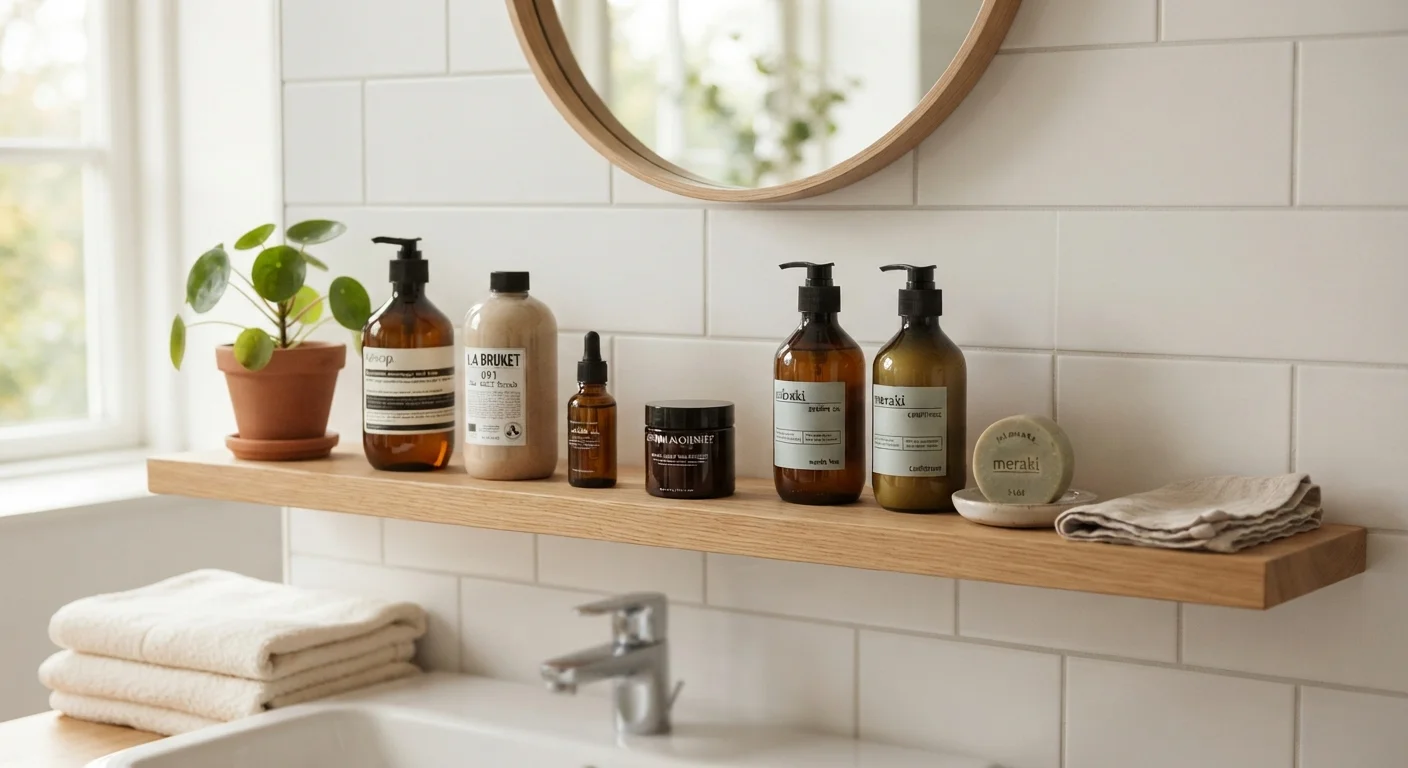
Heat and humidity accelerate the breakdown of active ingredients and can encourage bacterial growth in water-containing formulas. A product stored on a cool, dry shelf outside the shower will typically last longer and remain more effective than one left inside a steamy shower caddy.
Use clean, dry hands or dedicated tools when scooping from jar-style products.
Repeatedly dipping wet or unwashed fingers into jars introduces bacteria and moisture, which can degrade the product and potentially cause skin irritation over time. This is particularly important for face creams, balms, and treatments. If you're curious why your moisturizer might not be performing as expected, common moisturizer mistakes are often storage and application related.
Replace shared-use items like loofahs and washcloths on a regular schedule.
Reusable bathing tools harbor bacteria and mold in warm, damp conditions, even when rinsed. Using these tools beyond their safe lifespan undermines hygiene regardless of how good your body wash is. Replacing them regularly is a hygiene investment, not an extravagance.
Storage and Hygiene: The Non-Negotiables
Saving money only makes sense when the products you're using are still safe and effective. Heat, moisture, and bacterial contamination are the three biggest threats to personal care products stored in bathrooms. Here's what to keep in mind:
When to Stop Using a Product
Every personal care product has a period-after-opening (PAO) guideline — that's the small open-jar symbol with a number, like "6M" or "12M," meaning six or twelve months after opening. Once a product smells off, changes texture, or separates unexpectedly, it's time to replace it regardless of how much is left. Using degraded or contaminated products can irritate skin or, in rare cases, cause infection. When in doubt, toss it out.
If you're building out routines for the whole family, age-appropriate personal care habits for kids are a great place to start — including teaching measured product use from an early age.
For your own daily face routine, a quick 5-minute morning face routine can help you use fewer products more intentionally.
Simplifying Your Shelf Without Compromising Care
One underrated way to stretch your personal care budget is to reduce the total number of products you need. Many households unknowingly buy duplicate products with overlapping ingredients. Understanding common ingredient overlaps in skincare and haircare can help you consolidate without losing coverage.
Similarly, knowing how to actually read what's on the bottle matters. If you want to understand what you're buying, reading a shampoo label without a chemistry degree is a plain-language primer worth bookmarking.
“The most sustainable beauty routine isn't necessarily the one with the fewest products — it's the one where every product you own is used intentionally and stored properly.”
— American Academy of Dermatology, U.S. professional dermatology association providing consumer skin care guidance
Thoughtful choices at the store — combined with better habits at home — make personal care genuinely more affordable for busy families, without asking anyone to go without.