The Timing and Technique Mistakes Most People Make
You bought the moisturizer, you're using it every day — so why does your skin still feel tight, flaky, or dull? More often than not, how and when you apply it matters just as much as which product you pick.
The single most impactful change most people can make is applying moisturizer to damp skin — ideally within two to three minutes of washing your face or stepping out of the shower. Moisturizers work by trapping existing water in the skin's surface layers (the outermost layer is called the stratum corneum). If your skin is already dry when you apply, there's very little moisture left to seal in.
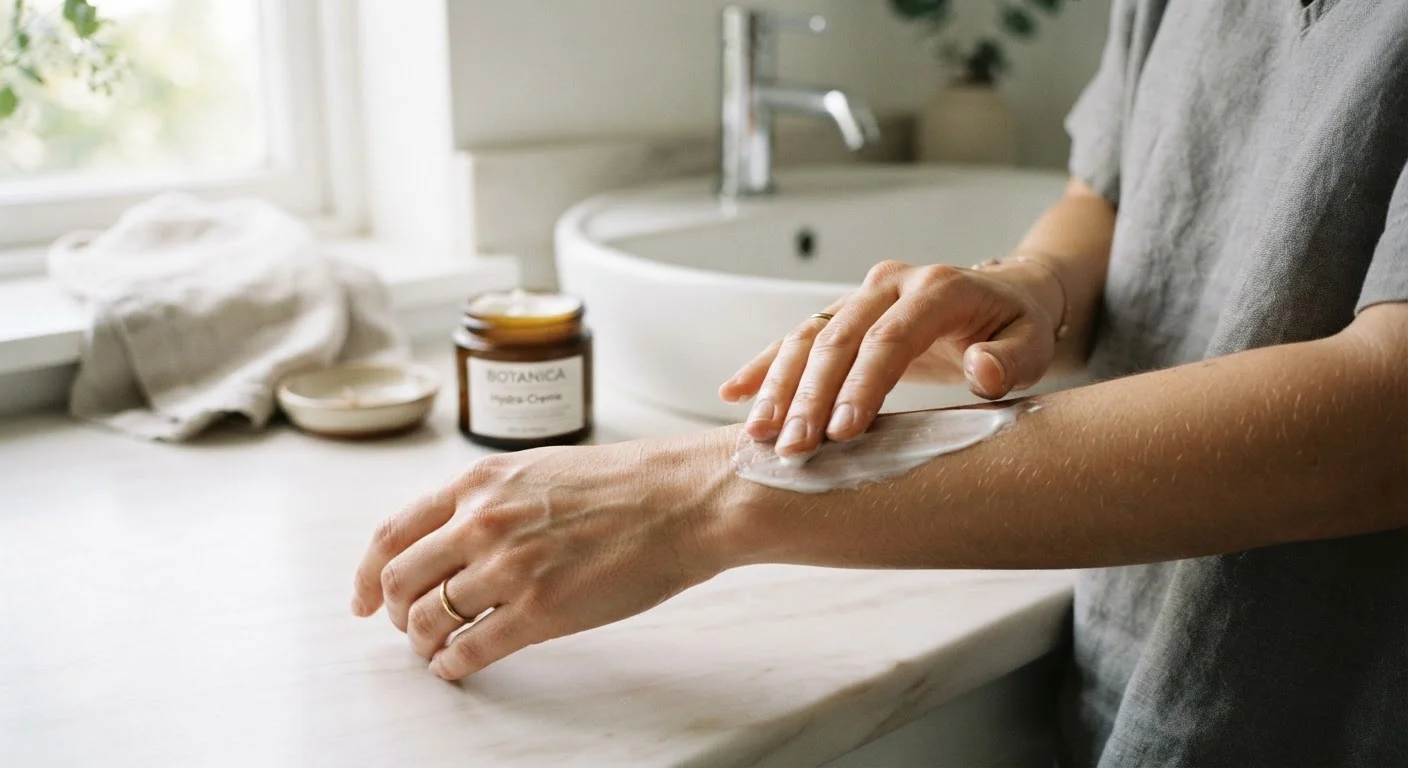
Another overlooked factor is how much product you're using. A fingertip-sized amount is typically enough for the face, but many people apply a thin smear that evaporates before it can do anything. For the body, don't be shy — a generous, even layer goes a long way.
Applying moisturizer to completely dry skin instead of damp skin.
Why it happens: Most people think of moisturizing as a step they do after they're fully dried off, without realizing that damp skin is the key to locking in hydration.
Using a formula that doesn't match your skin type.
Why it happens: With so many options on store shelves, many people grab whatever seems popular or is on sale, without checking whether it suits their specific needs.
Applying too little product to make a meaningful difference.
Why it happens: People worry about wasting product or making their skin look greasy, so they apply a minimal amount that simply isn't enough to hydrate the full surface.
Skipping or inconsistently exfoliating, leaving a barrier of dead skin cells.
Why it happens: Exfoliation feels like an extra, optional step — and many beginners either skip it entirely or overdo it when they do try.
Choosing a moisturizer with high-concentration alcohol or added fragrance.
Why it happens: These ingredients are common in attractively-packaged or pleasantly-scented products, so many people don't realize they can counteract hydration.
Choosing the Wrong Formula for Your Skin
Not all moisturizers are created equal, and reaching for a random formula without knowing your skin type is one of the fastest routes to disappointment. If you're not sure where your skin falls, our explainer on identifying your skin type is a great starting point.
In general, moisturizers fall into three main categories:
- Humectants (like hyaluronic acid and glycerin) — draw water to the skin's surface. Lightweight and great for oily or combination skin.
- Emollients (like shea butter and fatty acids) — fill in tiny cracks between skin cells, softening texture. Good for normal to dry skin.
- Occlusives (like petrolatum and dimethicone) — form a physical seal over skin to prevent water loss. Best for very dry or compromised skin.
Many formulas blend all three, but the proportions vary widely. A gel-water moisturizer designed for oily skin won't cut it for someone with dry, flaky patches — and a thick occlusive cream can feel suffocating on an already oily complexion.
Watch Out for 'Natural' Doesn't Mean Gentle
Many moisturizers marketed as natural or organic still contain potent botanical ingredients — like citrus oils or certain plant extracts — that can irritate sensitive skin. Always patch-test a new product on a small area of skin (like your inner forearm) for 24–48 hours before applying it to your face. This is especially important if your skin tends to react easily.
If you'd like to keep costs down while building out a routine that actually works, our guide on beginner skincare on a budget walks through the essentials without the overwhelm.
Ingredient and Routine Conflicts Sabotaging Your Results
Sometimes the moisturizer itself is fine — it's what surrounds it in your routine that's the problem. Certain common ingredients can actively undermine hydration.
Alcohol (specifically denatured alcohol or SD alcohol) appears in many toners, serums, and even some moisturizers as a texture agent. In higher concentrations, it can disrupt the skin barrier and leave skin drier than before you started. Check the ingredient list: if an alcohol is in the first five ingredients, that's worth noting.
Fragrance — both synthetic and natural — is another culprit. It adds nothing functionally to a moisturizer and can trigger irritation or sensitivity in many skin types, making skin feel reactive rather than calm and hydrated.
Don't Mistake Irritation for Dryness
If your skin feels tight, stinging, or red after applying moisturizer, the formula may be causing irritation rather than helping. This is especially common with products containing fragrance, essential oils, or high concentrations of active ingredients. Stop use and consider a simpler, fragrance-free alternative. Persistent skin reactions are worth discussing with a dermatologist.
Finally, skipping exfoliation (or overdoing it) throws off absorption. Dead skin cell buildup creates a physical layer that moisturizer struggles to penetrate. A gentle chemical exfoliant — like a low-percentage lactic acid — used one to two times per week helps clear the path. That said, over-exfoliating strips the skin barrier and makes everything worse, so less is more.
If you're curious about where skincare ingredients overlap with other products around your home, our piece on shared ingredients across skincare and haircare can help you simplify your shelf.
This article is for general informational and educational purposes only. It is not a substitute for professional dermatological or medical advice. If you have persistent skin concerns, consult a qualified healthcare provider.