Why Skincare Doesn't Have to Be Complicated
Walk into any beauty aisle and you'll find serums, toners, essences, acids, and at least a dozen moisturizers promising miracle results. For a beginner — or a parent who barely has five minutes in the morning — it's a lot. Here's the good news: the fundamentals of effective skincare are genuinely simple, and you can build a solid routine without buying half the store.
The skincare industry generates enormous revenue by marketing complexity, but skin health research consistently points to a small core of habits that deliver the most benefit. Everything else is optional enhancement. Before you spend a single dollar, it helps to understand what your skin is actually doing and what it needs — which starts with knowing your skin type. Our guide to skin types walks you through exactly how to identify yours at home, for free.
Skin barrier
The outermost protective layer of your skin that locks in moisture and keeps irritants and bacteria out. Keeping it intact is the main goal of a basic skincare routine.
Non-comedogenic
A label indicating a product is formulated to avoid blocking pores, making it a safer choice for oily or acne-prone skin types.
Broad-spectrum SPF
A sunscreen that protects against both UVA rays (linked to aging) and UVB rays (linked to burning). SPF 30 or higher is the commonly recommended minimum for daily use.
Humectant
An ingredient that attracts water molecules and draws moisture into the upper layers of skin. Glycerin and hyaluronic acid are two widely used examples.
Ceramides
Naturally occurring lipids (fats) found in skin that help hold the skin barrier together. Many moisturizers include synthetic ceramides to reinforce this barrier.
Exfoliant
A product that helps remove dead skin cells from the surface, either through gentle physical scrubbing or chemical agents like acids. Not recommended as a daily step for most beginners.
The Three Steps Every Routine Needs
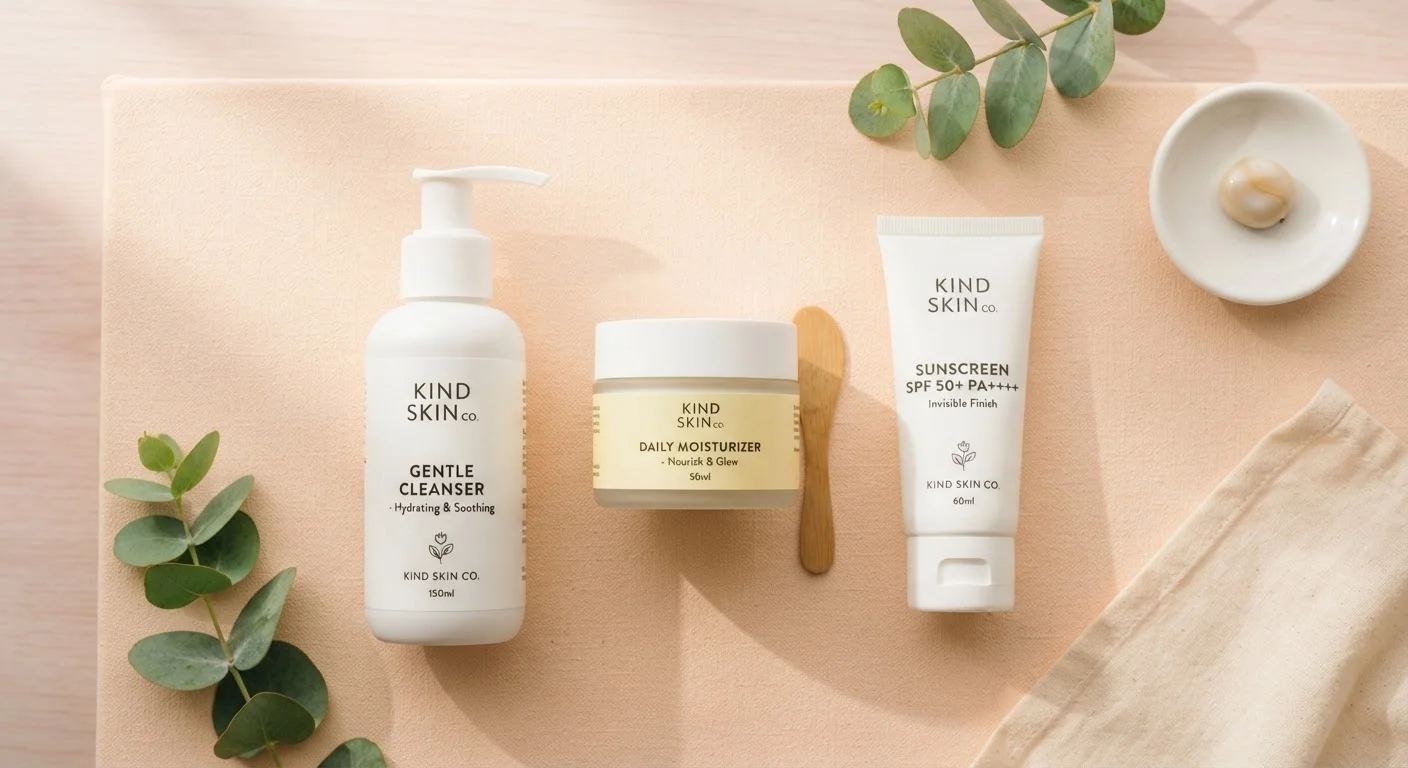
Regardless of skin type, age, or budget, three actions form the backbone of any effective skincare routine.
1. Cleanse
A gentle cleanser removes the day's buildup — oil, sweat, sunscreen, and environmental grime — without stripping your skin's natural barrier. Look for words like gentle, hydrating, or for sensitive skin on the label. Harsh soaps and heavily fragranced formulas can disrupt the skin barrier, which is the outermost layer that keeps moisture in and irritants out. Washing your face once in the morning and once at night is usually sufficient for most skin types.
2. Moisturize
Moisturizers help your skin hold onto water and support the barrier function. Even oily skin benefits from a lightweight, non-comedogenic moisturizer — a term meaning it's formulated to avoid clogging pores. If you've ever applied moisturizer and still felt dry or tight, you might be using the wrong type for your skin; our article on why moisturizers sometimes underperform explains the most common reasons.
3. Protect with SPF
Daily broad-spectrum sunscreen — SPF 30 or higher — is the single most evidence-backed skincare step for preventing premature skin aging and supporting long-term skin health. Apply it every morning as the last step in your routine, even on overcast days. If you're short on time, a moisturizer with built-in SPF covers both steps at once.
Sunscreen Doubles as Anti-Aging
If you can only add one new habit, make it daily SPF. Dermatologists consistently rank sun protection as the most impactful thing you can do for long-term skin health — and it costs about the same as a cup of coffee. Apply it every morning, rain or shine, after your moisturizer.
How to Choose Products Without Overspending
Price rarely predicts performance in skincare. Many dermatologists note that drugstore formulas often contain the same active ingredients as premium products, just without the luxury packaging markup. Here are some practical guidelines for shopping smart:
- Shorter ingredient lists are often better for beginners. Fewer ingredients mean fewer chances for an irritating reaction, and it's easier to identify what caused a problem if one occurs.
- Fragrance-free is your friend. Fragrance is one of the most common causes of skin sensitivity reactions, whether the product is synthetic or naturally scented.
- Look for key ingredient types, not brand names. Ingredients like glycerin (a humectant that draws moisture to skin), ceramides (lipids that reinforce the skin barrier), and hyaluronic acid (another moisture-binding ingredient) appear across a wide price range of products.
- Buy one product at a time. Introduce new products one at a time, spaced a week or two apart, so you can tell exactly what your skin responds to.
If you're trying to build a household routine that covers everyone without breaking the bank, our family medicine cabinet beauty guide offers a practical, need-based checklist that sidesteps brand hype entirely. And if you want to fold skincare spending into a broader household budget, home budgeting basics is a useful starting point.
Don't Patch-Test? You Might Regret It
Before applying any new product all over your face, test it on a small area — like the inside of your wrist or behind your ear — and wait 24 to 48 hours. This helps you spot allergic reactions or sensitivity before causing widespread irritation. It's a small step that saves a lot of discomfort.
When to Add More (and What to Skip)
Once your three-step routine feels comfortable and consistent — typically after four to six weeks — you might consider adding one optional product at a time. Common add-ons include exfoliants (which help remove dead skin cells on the surface), vitamin C serums (an antioxidant often associated with brightening), or targeted treatments for specific concerns like uneven tone or fine lines. These are genuinely useful for many people, but they're not where beginners should start.
What you can confidently skip at first: multi-step toner systems, pore strips, face masks as a daily habit, and anything marketed with dramatic before-and-after promises. These are either occasional-use tools or products whose benefits are often overstated.
If you're really pressed for time in the morning, a stripped-down version of this routine is still valuable. Our 5-minute morning face routine shows exactly how to make it work on a tight schedule. Building any consistent self-care habit also fits naturally into a broader preventive health mindset — something our guide to preventive health routines addresses in a wider context.
The real secret to great skin on any budget? Showing up for the simple steps, consistently, over time. No serum can outperform that.
This article is for general informational and educational purposes only. It is not a substitute for advice from a licensed dermatologist or medical professional. If you have a skin condition, persistent irritation, or health concerns related to your skin, please consult a qualified healthcare provider.