
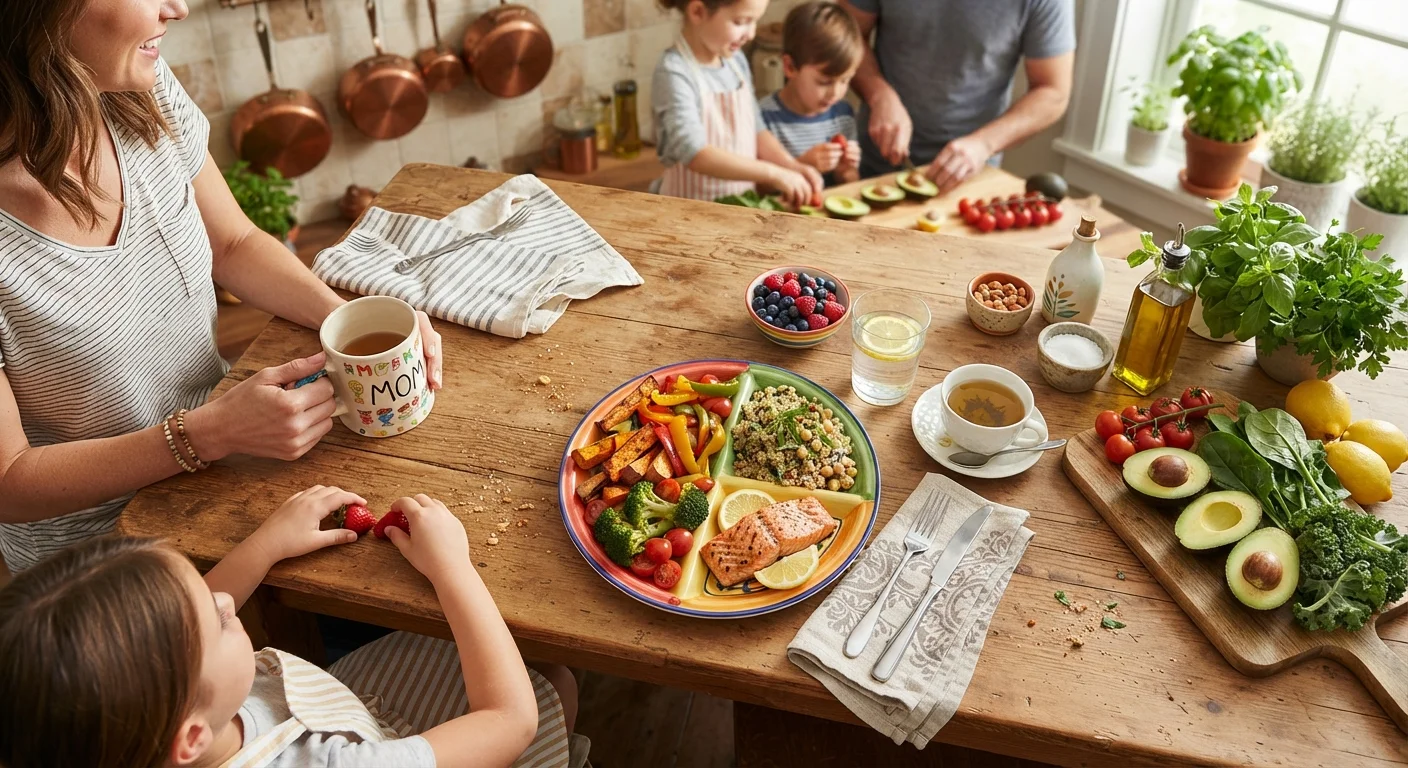
What Does a Balanced Plate Actually Mean?
Nutrition can feel like an overwhelming subject, especially with competing advice from every direction. The good news is that the foundation of healthy eating for families comes down to one straightforward idea: variety and proportion at most meals. A balanced plate isn't a strict prescription - it's a flexible starting point.
The most widely referenced model in the United States is the USDA's MyPlate, which replaced the older food pyramid. MyPlate suggests dividing a plate visually: roughly half for vegetables and fruit, a quarter for grains, and a quarter for a protein food, with dairy or a dairy alternative on the side. This isn't a rigid rule for every meal, but a helpful mental image for building consistent habits over time.
Nutrition knowledge builds naturally from here. Once your family feels comfortable with basic proportions, tools like reading a nutrition label can help you make more informed choices at the grocery store.
MyPlate
A visual guide created by the USDA that divides a dinner plate into four sections - vegetables, fruit, grains, and protein - with a small circle representing dairy on the side. It's designed to show proportions at a glance rather than prescribe exact amounts.
Whole grains
Grains that still contain all three parts of the original grain kernel - the bran, germ, and endosperm. Examples include oats, brown rice, and whole wheat bread. They provide more fiber and nutrients than refined grains.
Macronutrients
The three main categories of nutrients the body uses for energy and structure: carbohydrates, protein, and fat. All three are needed in a balanced diet; none needs to be eliminated.
Micronutrients
Vitamins and minerals the body needs in smaller amounts - such as vitamin C, calcium, and iron. They support immune function, bone health, and many other body processes.
Fiber
A type of carbohydrate found in plants - vegetables, fruits, whole grains, and legumes - that the body cannot fully digest. It supports digestive health and helps people feel fuller for longer.
Fortified food
A food that has had vitamins or minerals added to it during processing. Common examples include fortified cereals, which often have iron or B vitamins added, and fortified plant milks with added calcium and vitamin D.
The Five Food Groups Families Need to Know
Each food group contributes something the body genuinely needs. Understanding what each group offers - without labeling any food as "bad" - helps families make confident choices rather than anxious ones.
- Vegetables: Rich in fiber, vitamins, and minerals. Dark leafy greens, orange vegetables, and beans all contribute different nutrients, so variety matters.
- Fruits: Provide natural sugars alongside vitamins and fiber. Whole fruit (rather than juice) preserves the fiber content.
- Grains: The body's main energy source. Whole grains - oats, brown rice, whole wheat bread - contain more fiber and nutrients than their refined counterparts.
- Protein foods: Support muscle, immune function, and many body processes. Sources include meat, poultry, seafood, eggs, beans, peas, nuts, and seeds.
- Dairy and alternatives: Provide calcium, vitamin D, and protein. Fortified soy milk is a common non-dairy alternative with a similar nutrient profile.
For families at different life stages - from toddlers to grandparents - the amounts needed from each group shift. Our guide on family nutrition through every life stage covers those age-specific differences in detail.
Getting Proportions Right Without Overthinking It
Precise measuring isn't realistic at most family dinners, and it doesn't need to be. Visual cues work well for beginners and help make balanced eating sustainable.
A practical approach: before filling a plate, scan it mentally. Is there at least one vegetable present? Is the grain portion roughly the same size as the protein portion? These two quick checks cover most of the work.
Use the Half-Plate Rule as Your Starting Point
When serving dinner, try filling half the plate with vegetables or a mix of vegetables and fruit before adding grains and protein. This simple visual habit naturally shifts proportions without any measuring. Over time it becomes automatic - and it works at restaurants too, not just at home.
It also helps to think across the whole day rather than scrutinizing each individual meal. A breakfast that's heavier on grains and fruit can be balanced by a dinner with more vegetables and protein. Nutrition is cumulative - the pattern over days and weeks matters more than any single meal.
Practical Habits for Busy Families
Small, repeatable habits tend to produce better results than occasional efforts at perfection. A few approaches that work well for busy households:
- Add one vegetable to what you're already making. Stirring spinach into pasta sauce or adding sliced peppers to tacos takes almost no extra time.
- Keep fruit visible and easy to grab. A bowl on the counter is more effective than fruit stored in a drawer.
- Swap in whole grains where the family won't notice. Oats for breakfast and whole wheat tortillas are easy starting points.
- Plan two or three dinners each week rather than all seven. Reducing decision fatigue is a real win for consistency.
Building a well-stocked pantry is one of the most effective things a family can do to support consistent healthy cooking. Our article on stocking a family pantry offers an actionable checklist to get started. For child wellness more broadly, consistent meals and routines also support healthy development beyond nutrition.
This article is for general informational purposes only and is not a substitute for personalized medical or dietary advice. Always consult a qualified healthcare provider or registered dietitian for guidance tailored to your family's needs.
Making Nutrition Affordable on a Family Budget
One of the most common concerns families raise about healthy eating is cost. The encouraging reality is that some of the most nutritious foods are also among the most affordable.
Healthy Eating Doesn't Require Premium Ingredients
There is a common misconception that nutritious food must be expensive or specialty. In practice, many of the most nutrient-dense options - legumes, frozen vegetables, eggs, and whole grains - cost less per serving than heavily processed convenience foods. The key is building a routine around affordable staples rather than aiming for a diet that requires a larger budget.
A few budget-friendly foundations worth building around:
- Dried or canned beans and lentils are an inexpensive source of protein and fiber. Rinsing canned beans reduces their sodium content.
- Eggs are a versatile, affordable protein that most families already buy.
- Oats provide whole grains at very low cost per serving.
- Frozen vegetables and fruit are picked and frozen at peak ripeness, preserving their nutrients - often at a lower price than fresh.
- Canned tomatoes, fish, and pumpkin are nutrient-dense options with a long shelf life.
Connecting nutrition habits with household financial planning is worth doing. The family budgeting guide offers a step-by-step approach to building a spending plan that can include a realistic grocery allocation. Managing both together makes sustainable healthy eating much more achievable for most families.