
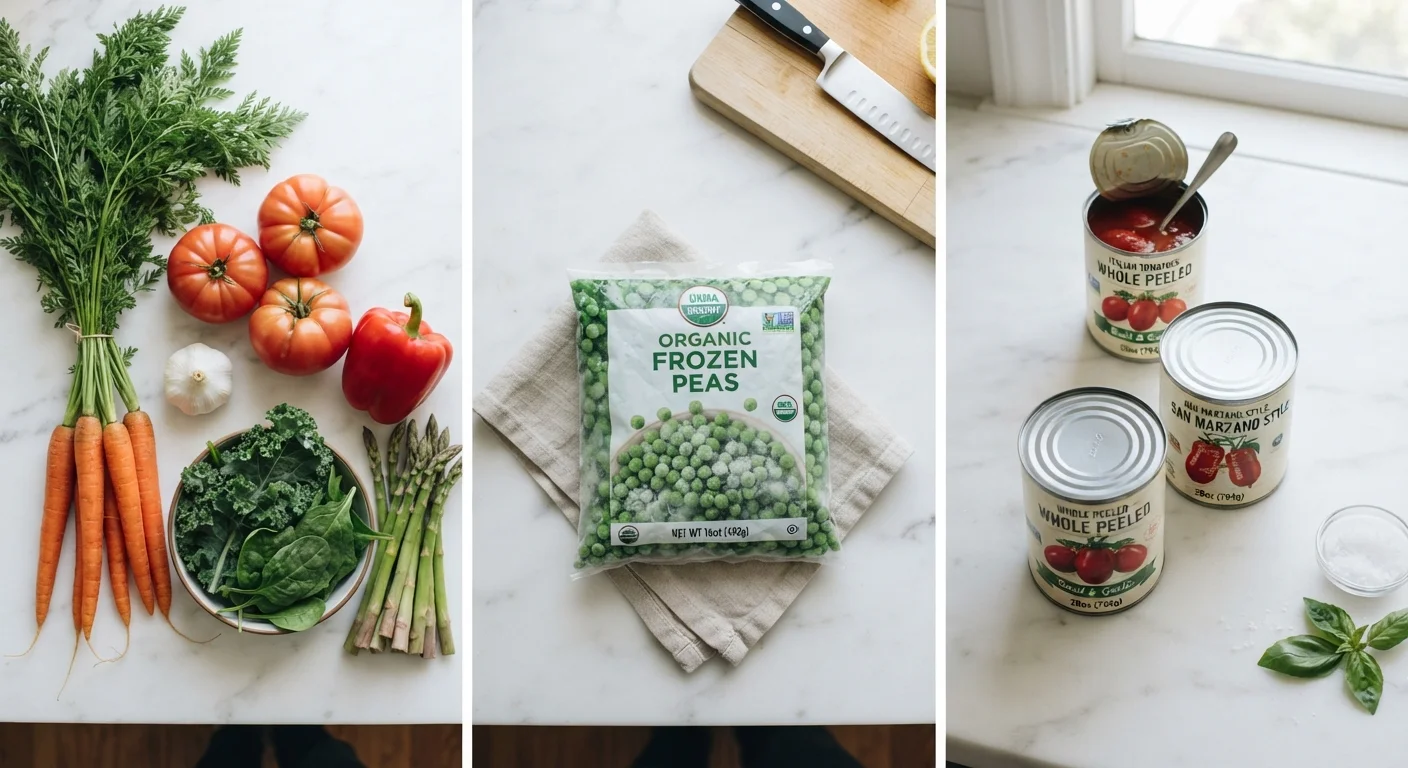
The Nutrition Story: Are Fresh Vegetables Really Superior?
Many families assume fresh produce is always the most nutritious option — but the reality is more nuanced. Fresh fruits and vegetables can be excellent sources of vitamins, minerals, and fiber, particularly when they're locally grown and eaten within a day or two of harvest. However, the journey from farm to grocery store to your refrigerator often spans several days, during which nutrient levels — especially heat-sensitive vitamins like vitamin C and certain B vitamins — can gradually decline.
Frozen produce, by contrast, is typically harvested at peak ripeness and flash-frozen within hours, locking in a high concentration of nutrients. Research published by institutions including the University of California, Davis has found that frozen fruits and vegetables can match or occasionally exceed fresh counterparts in nutrient content, particularly for vitamin C. For families who can't shop daily, frozen produce is a reliable nutritional workhorse.
Canned produce undergoes heat processing, which does reduce some heat-sensitive vitamins. That said, many nutrients — including fiber, potassium, and certain antioxidants like lycopene in tomatoes — are well preserved or even made more bioavailable through the canning process. Choosing canned options with no added salt or sugar helps you capture the nutritional benefit without unnecessary additives.
| Fresh | Frozen | Canned | |
|---|---|---|---|
| Nutritional value | High when very fresh | High; rivals fresh | Moderate; some loss of heat-sensitive vitamins |
| Shelf life | Days to 1–2 weeks | Months in the freezer | 1–5 years unopened |
| Average cost | Variable; higher out of season | Generally affordable | Typically lowest cost |
| Food waste risk | Higher — spoils quickly | Low — use as needed | Very low — long shelf life |
| Prep convenience | Requires washing, cutting | Minimal prep needed | Ready to use, drain and rinse |
| Additives to watch | None typically | Check for added sauces/salt | Added salt or syrup common |
Cost and Waste: Where Your Dollar Goes Further
For families keeping an eye on grocery bills, the financial case for frozen and canned produce is compelling. Fresh produce — especially out-of-season items — can carry a significant price premium, and roughly 30–40% of food in the average US home is wasted, according to the USDA. Wilted spinach and forgotten bell peppers are a common, silent budget drain.
Frozen and canned produce sidestep most of that waste. You use what you need and store the rest. A bag of frozen broccoli florets or a can of chickpeas stays good for months, meaning you're far less likely to throw money away. If budget is a priority, strategies for nutritious, budget-friendly shopping can help you build a sustainable approach.
A Simple Strategy: Use All Three
Rather than choosing just one form of produce, consider keeping all three in rotation. Use fresh items early in the week when they're at their best, rely on frozen vegetables for quick weeknight sides, and lean on canned staples like beans and tomatoes as a pantry safety net. This mix reduces waste, keeps costs manageable, and ensures vegetables are always within reach — no matter how busy the week gets.
When fresh produce is in season locally, prices drop and quality rises — making it the smart buy during those windows. For pantry planning, stocking your pantry with canned and frozen staples gives you a ready foundation for healthy weeknight meals.
Convenience and Kid-Friendly Cooking
Convenience is often the deciding factor for busy parents. Frozen vegetables require no peeling or chopping — they go straight from freezer to pan in minutes. Canned beans, tomatoes, and corn are pantry staples that come ready to use with minimal prep. Fresh produce generally requires the most preparation time, though some items (baby carrots, berries, cherry tomatoes) are naturally convenient.
Getting children to eat vegetables can be as much about texture and presentation as nutrition. Softer-cooked frozen or canned vegetables may actually be easier for younger children to eat and enjoy. How you prepare and present vegetables can matter just as much as which form you choose.
30–40%
Food wasted in average US households
According to the USDA, a substantial portion of fresh food purchased never gets eaten, contributing to unnecessary household spending.
~90%
Nutrient retention in flash-frozen produce
Research from the University of California, Davis suggests most vitamins are well preserved when produce is frozen shortly after harvest.
For families exploring more plant-forward meals, having all three forms on hand makes it easier to stay consistent. Plant-based eating for families benefits enormously from the flexibility that frozen and canned produce provide.
This article is for informational purposes only and does not constitute medical or dietary advice. Consult a registered dietitian or qualified healthcare professional for guidance tailored to your family's specific nutritional needs.