
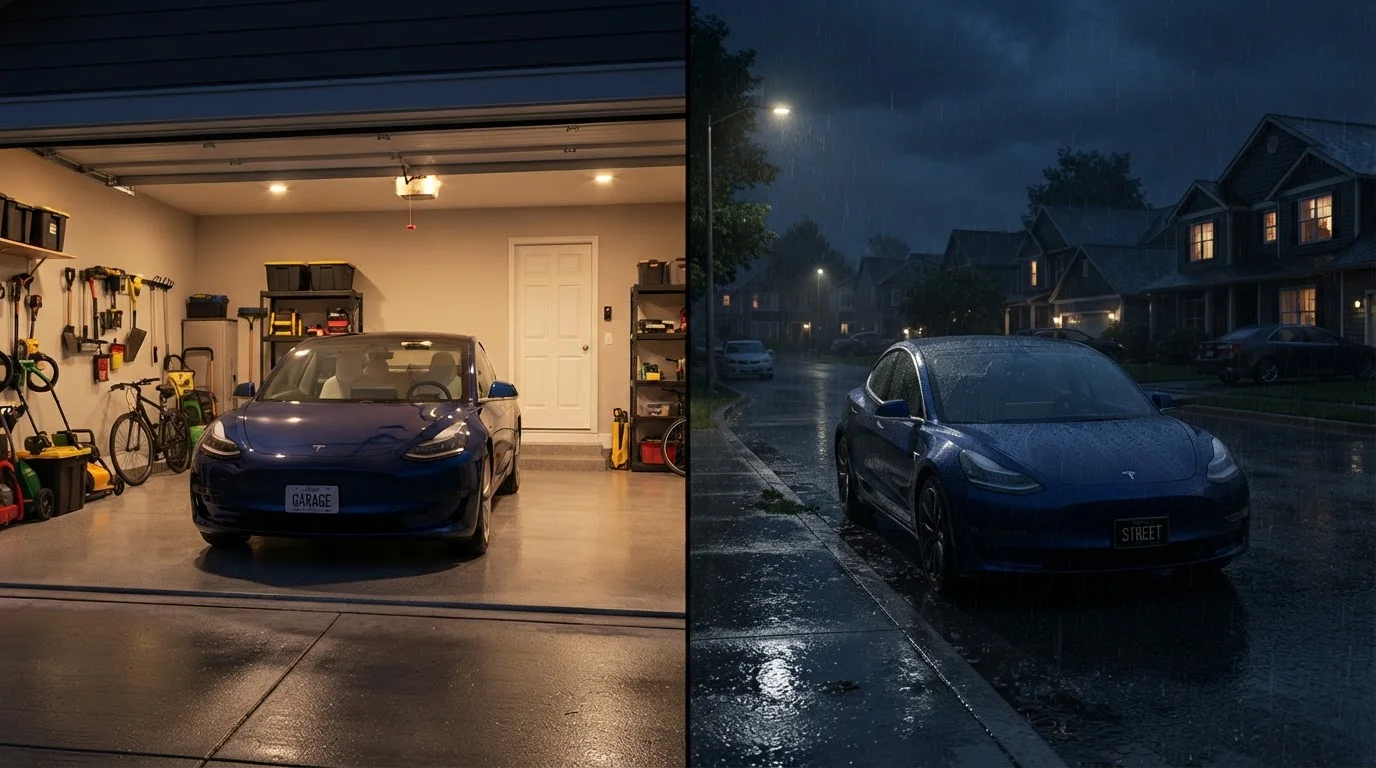
How Parking Location Wears on Your Car
Most families think about where to park in terms of convenience — is there a spot nearby, does the garage fit the car? But parking location is also a slow-moving maintenance decision. Over three, five, or ten years, the environment your car sits in every night leaves a visible mark.
Sun, rain, temperature swings, road salt, and physical exposure to other vehicles all affect paint, rubber seals, mechanical components, and overall condition. A garaged car is shielded from most of these. A street-parked car faces them continuously.
This doesn't mean street parking ruins a car — millions of well-maintained vehicles live outside indefinitely. But the wear patterns are real, and understanding them helps you plan smarter. For more on the full picture of ownership costs, see our breakdown of what car ownership really costs.
Garaged vs. Street-Parked: A Direct Comparison
Here's how the two storage situations compare across the factors that matter most to everyday owners.
| Factor | Garaged | Street-Parked | |
|---|---|---|---|
| UV and paint fading | Strongly protected | Continuous exposure | |
| Rust and corrosion risk | Lower, especially in winter climates | Higher with road salt and moisture | |
| Theft and vandalism exposure | Generally lower | Higher on public streets | |
| Hail and storm damage | Protected in most cases | Fully exposed | |
| Interior temperature extremes | More stable year-round | Wide seasonal swings | |
| Insurance premium impact | May be slightly lower | May be slightly higher | |
| Resale condition over time | Typically better preserved | More variable |
Paint oxidation — when the clear coat dulls and fades — is one of the clearest signs of long-term UV and weather exposure. Garaged cars are largely protected from this. Rust risk is another area where garage storage helps, especially in northern states where roads are salted in winter. Salt clings to the undercarriage and accelerates corrosion on brake lines, suspension parts, and frame components.
The Resale Value Connection
Cosmetic condition plays a meaningful role in what a used vehicle is worth. A car with faded paint, rust spots, or cracked trim sells for less — even if it runs perfectly. Buyers notice, and so do dealers when making trade-in offers.
Garaged vehicles tend to hold their appearance better, which can translate to a stronger resale position. This ties directly into how depreciation works and what affects it — condition is one of the variables owners can actually control.
Document Your Car's Condition
Take dated photos of your vehicle's exterior and interior every six to twelve months. This gives you a clear record of condition over time — useful if you ever sell privately, trade in, or need to support an insurance claim. It takes five minutes and costs nothing.
That said, a vehicle with documented regular maintenance and a clean service history can offset some cosmetic disadvantage. Buyers weigh both factors.
Insurance and Theft Considerations
Where you park can affect your auto insurance premium, though the relationship isn't always straightforward. Insurers consider your garaging address and sometimes whether the vehicle is stored indoors, since vehicles parked on public streets face higher statistical exposure to theft, vandalism, and hit-and-run damage.
If you move from street parking to a garage, it's worth notifying your insurer — you may see a modest rate adjustment. Conversely, if you list a garage address but regularly park on the street, that discrepancy could create issues at claim time. Always be accurate on your policy paperwork.
Don't Misrepresent Your Parking Situation
Listing a garage address on your insurance policy when you regularly park on the street is considered a material misrepresentation. If discovered during a claim, it can lead to reduced payouts or policy cancellation. Always report your actual primary parking location accurately.
For a broader look at how these costs fit into your yearly budget, the annual car ownership cost breakdown is a useful starting point.
What Street Parkers Can Do to Reduce the Damage
If a garage isn't available to you, a few practical steps can reduce the long-term impact of outdoor storage:
- Use a car cover when the vehicle will sit for extended periods. A fitted cover blocks UV rays and reduces moisture buildup on the paint surface.
- Wash regularly and wax twice a year. Washing removes road salt, bird droppings, and debris that eat through clear coat. Waxing adds a protective layer against UV and moisture.
- Apply an undercoating or rust inhibitor if you live in a region where roads are salted in winter. A shop can spray this on the undercarriage for modest cost.
- Park strategically. Shade from buildings or trees reduces UV exposure. Avoid parking under trees that drop sap or attract birds consistently.
- Check rubber seals and window weatherstripping annually. Outdoor exposure dries these out faster, which can lead to water intrusion.
None of these eliminate the gap between indoor and outdoor storage, but they meaningfully slow the wear. If you're weighing longer-term vehicle decisions, knowing when to repair versus replace is a useful framework to have.