
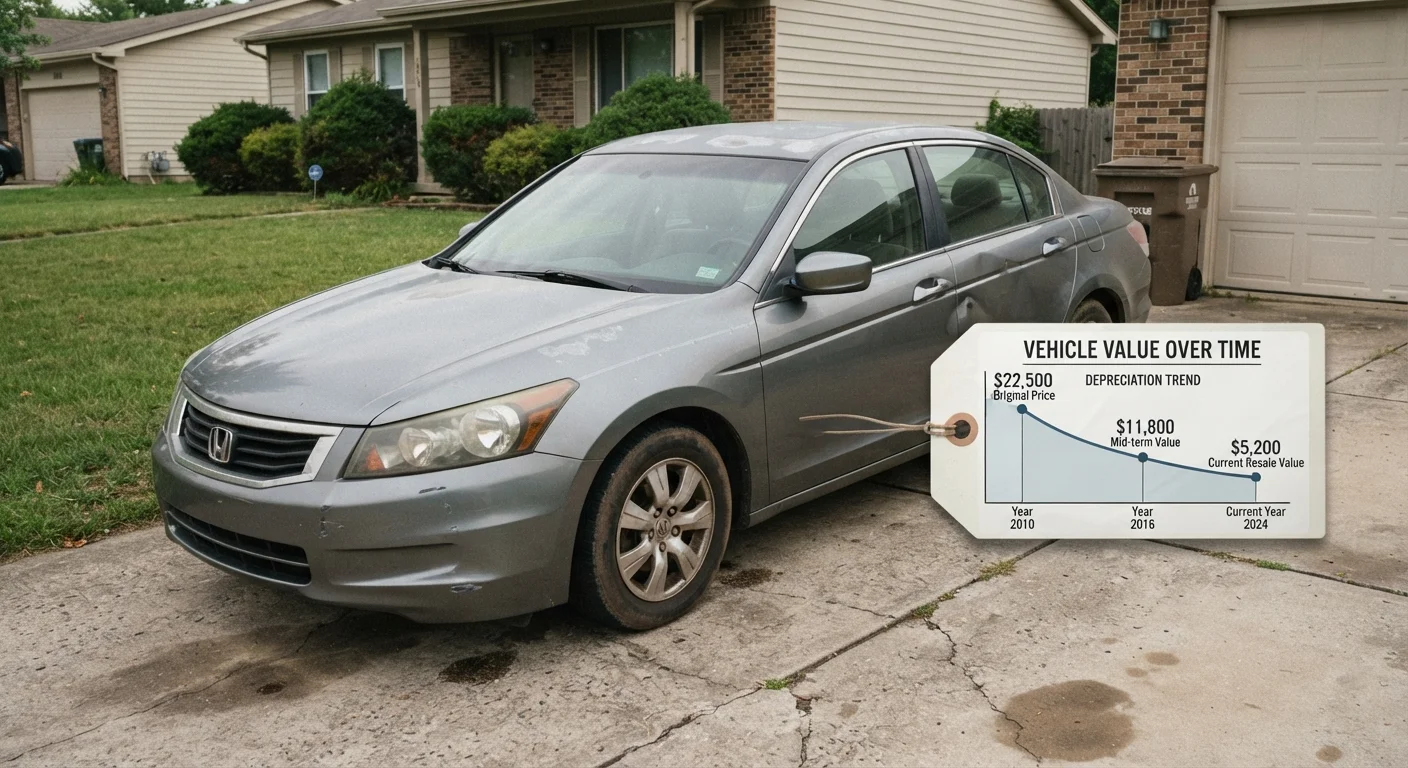
Why Cars Lose Value the Moment You Drive Away
The day you drive a new car off the lot, it stops being a "new car" in the eyes of the used-car market. A buyer shopping for a used vehicle won't pay new-car prices, so the value adjusts downward almost immediately. This isn't a flaw in how cars are priced — it's simply how the resale market works.
Think of it this way: a car at a dealership comes with a manufacturer warranty, zero previous owners, and the full sense of newness. The moment it leaves that lot with a registered owner, none of that is quite true anymore. The resale market prices that difference in immediately.
This is why depreciation is considered one of the biggest costs in car ownership — not repairs, not fuel, not insurance. For many families, it's the line item they never see on a monthly statement but feel most when it comes time to trade in or sell. It's worth understanding alongside the other expenses covered in our annual car ownership cost breakdown.
~20%
Average first-year value loss for new vehicles
Industry estimates commonly place the first-year depreciation for a new car at roughly 15% to 25% of its purchase price.
~50%
Value lost by year five for many vehicles
Many new vehicles retain only about half their original purchase price after five years, depending on make, model, and usage.
#1
Depreciation as a share of total ownership cost
For many drivers, depreciation accounts for a larger share of total ownership cost than fuel, maintenance, or insurance combined.
What Affects How Fast a Vehicle Loses Value
Not every car depreciates at the same rate. Several factors push the value down faster — or slow the slide:
- Mileage: High annual mileage signals more wear and shortens the remaining useful life of key components. Vehicles with well below the average annual mileage tend to hold value better.
- Condition: Dents, stains, worn interiors, and skipped oil changes all show up in resale pricing. A clean, well-maintained vehicle commands more at trade-in.
- Brand and model reputation: Some brands are widely known for reliability and longevity. Vehicles with strong reliability track records tend to depreciate more slowly because demand stays higher.
- Fuel type and efficiency: Market shifts — like rising fuel prices — can affect how quickly certain vehicle types lose value. Large trucks and SUVs with low fuel economy can depreciate faster when gas prices climb.
- Color and trim: Neutral colors like white, silver, and black tend to resell more easily. Unusual or polarizing colors can reduce buyer interest and lower resale value.
- How and where you store it: Exposure to sun, salt air, and extreme weather accelerates wear on paint and mechanical systems. Our guide on garaged vs. street-parked vehicles covers this in more detail.
Simple Ways to Protect Resale Value
Stick to your vehicle's scheduled maintenance intervals and keep the service records. A documented history of oil changes and inspections reassures buyers and supports a higher resale price. Keeping the interior clean and parking in covered or shaded spots when possible also makes a measurable difference by the time you're ready to sell or trade in.
How Depreciation Affects Your Ownership Decisions
Understanding depreciation changes how you think about a few common decisions:
New vs. used
Buying used means you're not absorbing that first-year value drop. A vehicle that's two to three years old has already lost the largest chunk of its value, but often still has most of its useful life ahead. For families focused on total cost of ownership, this trade-off is worth weighing carefully. Our article on the true cost of owning a car breaks down how depreciation compares to other ongoing expenses.
How long you keep a vehicle
Depreciation is front-loaded — the sharpest losses happen in years one through three. If you trade in every two years, you're cycling through the steepest part of the curve repeatedly. Holding a vehicle longer spreads that depreciation cost over more years of use, which generally improves your cost-per-mile.
Gap insurance when financing
If you finance a vehicle and it's totaled early in the loan, the insurance payout may be less than what you still owe — because the car has already depreciated. Gap insurance (a type of supplemental auto coverage) is designed to cover that difference. It's one of several hidden costs new buyers often overlook.
“The purchase price is just the beginning. The ongoing cost of ownership — including depreciation — is what really determines the financial impact of a vehicle over time.”
— Consumer Financial Protection Bureau, U.S. federal agency providing consumer financial education
This article is for general informational purposes only and does not constitute financial or purchasing advice. Consult a qualified financial professional for guidance specific to your situation.