
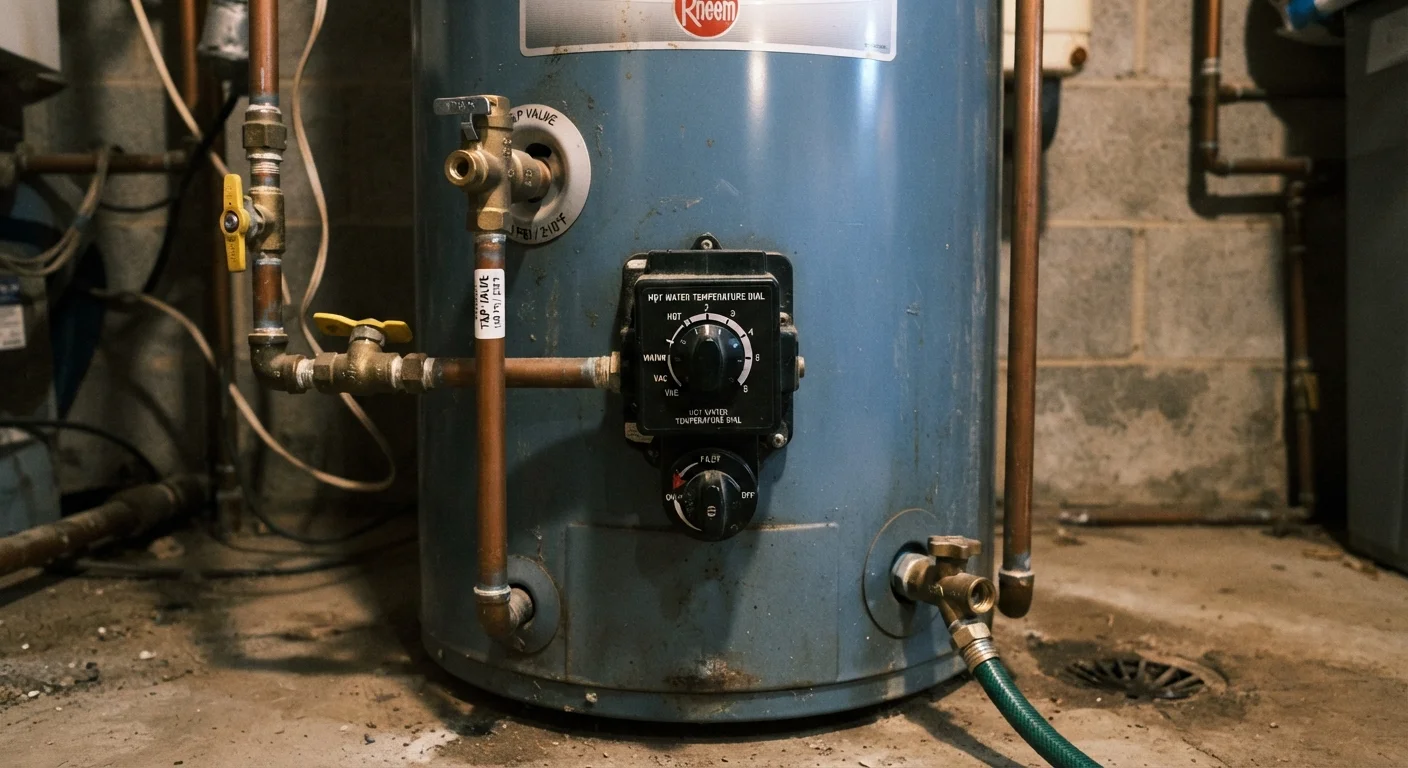
The Appliance Most Homeowners Forget About
Your water heater runs every single day — heating water for showers, laundry, and dishes — yet most homeowners never look at it until cold water starts coming out of the hot tap. That neglect is costly. A failed water heater can flood a utility room, damage flooring and drywall, and leave a family without hot water for days.
The good news: a few simple habits can extend its life significantly and help you spot trouble before it becomes an emergency. This is especially worth building into your routine if you're new to homeownership — as covered in our guide to overlooked maintenance tasks, water heater upkeep rarely makes beginner checklists but matters a great deal.
Never flushing sediment from the tank.
Why it happens: Most homeowners don't know this task exists. The drain valve at the bottom of the tank is easy to overlook, and there's no reminder built into the appliance.
Never testing the pressure relief valve (T&P valve).
Why it happens: The T&P valve — which releases pressure if the tank overheats — is unfamiliar to many new homeowners, and testing it feels intimidating.
Ignoring the age of the water heater.
Why it happens: If hot water is still flowing, it's easy to assume everything is fine — even when the unit is well past its expected lifespan.
Setting the temperature too high or too low.
Why it happens: Factory settings aren't always ideal, and many homeowners never adjust the thermostat dial on the tank.
Skipping the anode rod inspection.
Why it happens: The anode rod — a metal rod inside the tank that attracts corrosion so the tank lining doesn't corrode — is rarely mentioned in homeowner guides.
Warning Signs You Shouldn't Brush Off
Even with good habits, your water heater will eventually signal that something is wrong. Knowing what to look and listen for gives you time to act before a full breakdown — or a flood.
10–15 years
Typical water heater lifespan
According to the U.S. Department of Energy, most conventional storage water heaters last between 10 and 15 years with proper maintenance.
~$4,400
Average water damage claim cost
The Insurance Information Institute has reported that water damage is among the most common homeowners insurance claims, with average costs in the thousands of dollars.
- Rust-colored or metallic-tasting water — This usually means the tank lining is corroding from the inside. Once corrosion starts, replacement is typically the only fix.
- Rumbling or popping sounds — Hardened sediment at the bottom of the tank gets superheated and makes noise. Flushing early may resolve it; heavy buildup often means efficiency is already compromised.
- Water pooling near the base — Even a small puddle can indicate a slow tank leak. Don't ignore it. Small leaks escalate quickly and can cause serious structural damage.
- Inconsistent hot water — If the supply runs out faster than it used to, the heating element or thermostat may be failing.
Gas Water Heaters: Don't DIY Repairs
If you have a gas-powered water heater and notice a rotten-egg smell, hear unusual sounds near the gas line, or suspect a leak, leave the area and call your gas utility immediately. Gas line work must be handled by a licensed professional — it is not a DIY task. Attempting repairs on gas connections without proper training can be extremely dangerous.
If your water heater is more than 10 years old and showing any of these signs, have a licensed plumber assess it. Continuing to run a failing tank risks a rupture, which can release gallons of water in minutes. Include this check in your seasonal routine — the fall home prep checklist is a natural time to do it.