
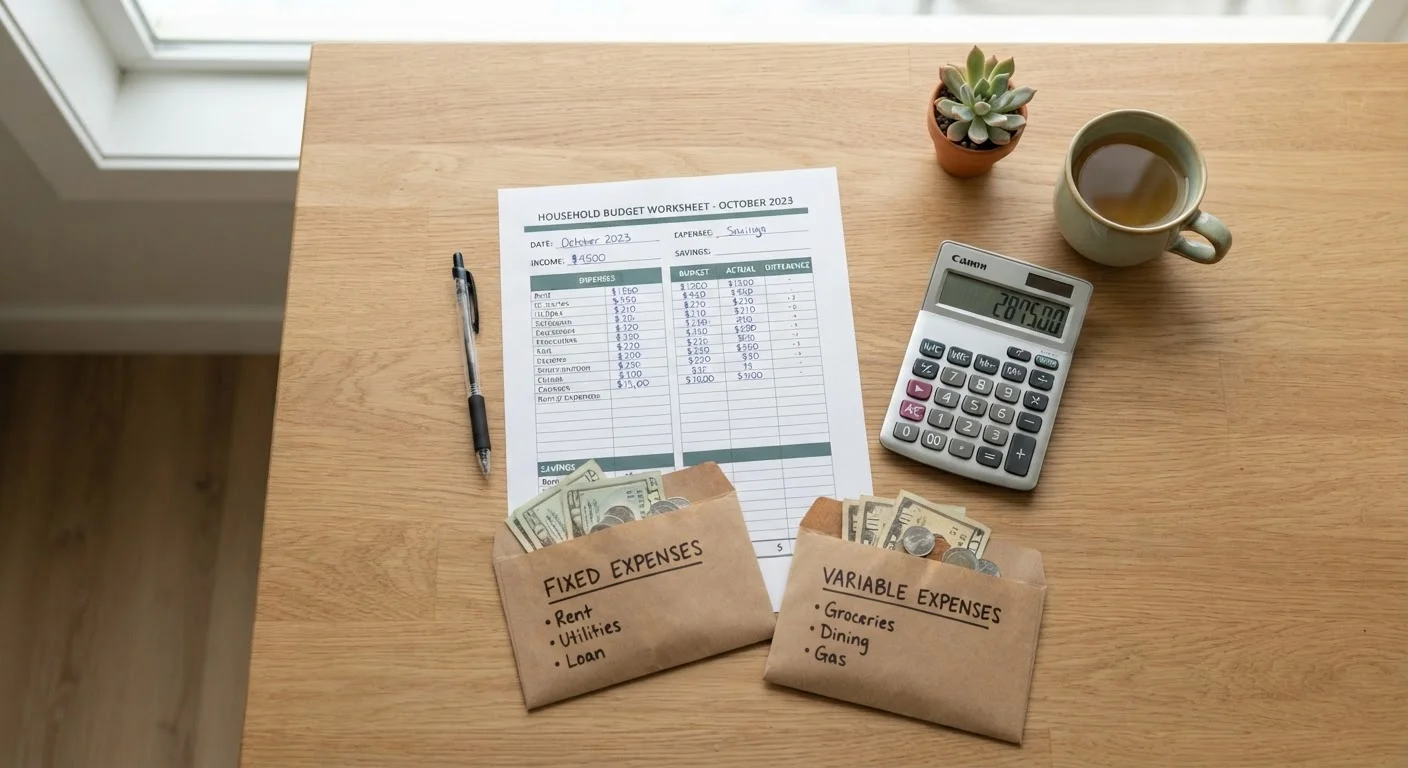
The Core Difference: Predictable vs. Flexible
Every dollar that leaves your household each month falls into one of two fundamental categories: fixed or variable. Understanding which is which is the starting point for any effective home budget.
Fixed expenses are costs that stay the same amount each month, regardless of how much you use a service or how your habits change. Your mortgage or rent payment is the clearest example — the amount due on the first of the month doesn't shift because you cooked at home more or drove less. Other common fixed costs include car loan payments, most insurance premiums, and subscription services at a flat rate.
Variable expenses, by contrast, fluctuate from month to month based on usage, behavior, or external conditions. Groceries, gasoline, dining out, clothing, and entertainment all fall into this category. One month you might spend $400 on groceries; another month, with a holiday or a sick child at home, you spend $550.
There's also a middle ground worth naming: semi-variable expenses. Utilities like electricity and gas happen every month (making them feel fixed), but the actual bill amount shifts with the season or your usage habits. These are sometimes called periodic fixed costs and deserve their own planning attention. See our complete household budget overview for how each category fits into the bigger picture.
| Criterion | Fixed Expenses | Variable Expenses |
|---|---|---|
| Amount each month | Same every month | Changes month to month |
| Common examples | Mortgage, car loan, insurance | Groceries, gas, dining, utilities |
| Budgeting approach | Record exact amount | Average over 2–3 months |
| Room to reduce quickly | Limited; requires renegotiation | Often immediate with behavior change |
| Planning difficulty | Low — highly predictable | Moderate — requires tracking |
| Impact of lifestyle changes | Minimal or none | Direct and measurable |
Why This Distinction Matters for Your Budget
Knowing whether a cost is fixed or variable changes how you plan for it — and what you can do about it.
Fixed expenses set your minimum monthly obligation. Add them all up and you have the floor of what you must earn to keep the household running. If your take-home income regularly exceeds that floor, you have breathing room for variable spending and savings. If it barely covers it, that's a signal to examine whether any fixed commitments can be renegotiated or eliminated over time.
Variable expenses are where most families find their financial flexibility. You can't easily lower your mortgage payment this month, but you can choose to eat out twice instead of six times. This is where budgeting strategies like the envelope method or spending caps per category can make an immediate, tangible difference.
~33%
Average share of income spent on housing
The U.S. Bureau of Labor Statistics Consumer Expenditure Survey consistently finds housing is the largest single fixed expense for American households.
~15%
Average share spent on food (fixed + variable)
According to BLS Consumer Expenditure data, food — a largely variable expense — represents a significant and controllable slice of household budgets.
For homeowners managing variable-rate debt — such as adjustable-rate mortgages or credit cards — the line between fixed and variable gets more complex. Learn how interest rate changes affect your monthly debt payments to avoid being caught off guard when rates shift.
If your household income itself varies month to month, budgeting strategies for irregular income can help you build a stable plan around both fixed obligations and unpredictable earnings.
How to Use Both Categories to Build a Practical Budget
A straightforward approach for beginner budgeters is to build your monthly plan in two distinct steps.
- List all fixed expenses first. Pull up your bank statements and note every recurring charge that's identical or nearly identical each month. Add these up — this is your non-negotiable baseline.
- Track variable expenses for at least two to three months. Averages are more reliable than a single month's snapshot. Once you have averages, set a realistic monthly target for each variable category.
A helpful rule of thumb used in personal finance education is to ensure your fixed expenses don't consume more than 50% of your take-home pay, leaving room for variable spending needs and savings goals. This is general guidance — not a guarantee — and every household's situation is different. Always consult a licensed financial professional for advice tailored to your specific circumstances.
Semi-Variable Costs Need Their Own Line
Utilities, phone bills with overages, and medical copays don't fit neatly into either category — they occur regularly but vary in amount. Budget for these using a three-month average rather than a single month's bill. This prevents both underestimating and overestimating what you'll owe. Treating them as their own sub-category in your budget helps you plan more realistically.
For a deeper look at how to organize all your household costs into clear, manageable categories, see where your household money actually goes. And if you're looking for strategies to pay down debt while managing these costs, the Saving & Debt Tips hub offers practical, actionable guidance.
This article is for general informational and educational purposes only and does not constitute personalized financial advice. Consult a qualified financial professional before making decisions about your household budget or financial plan.