
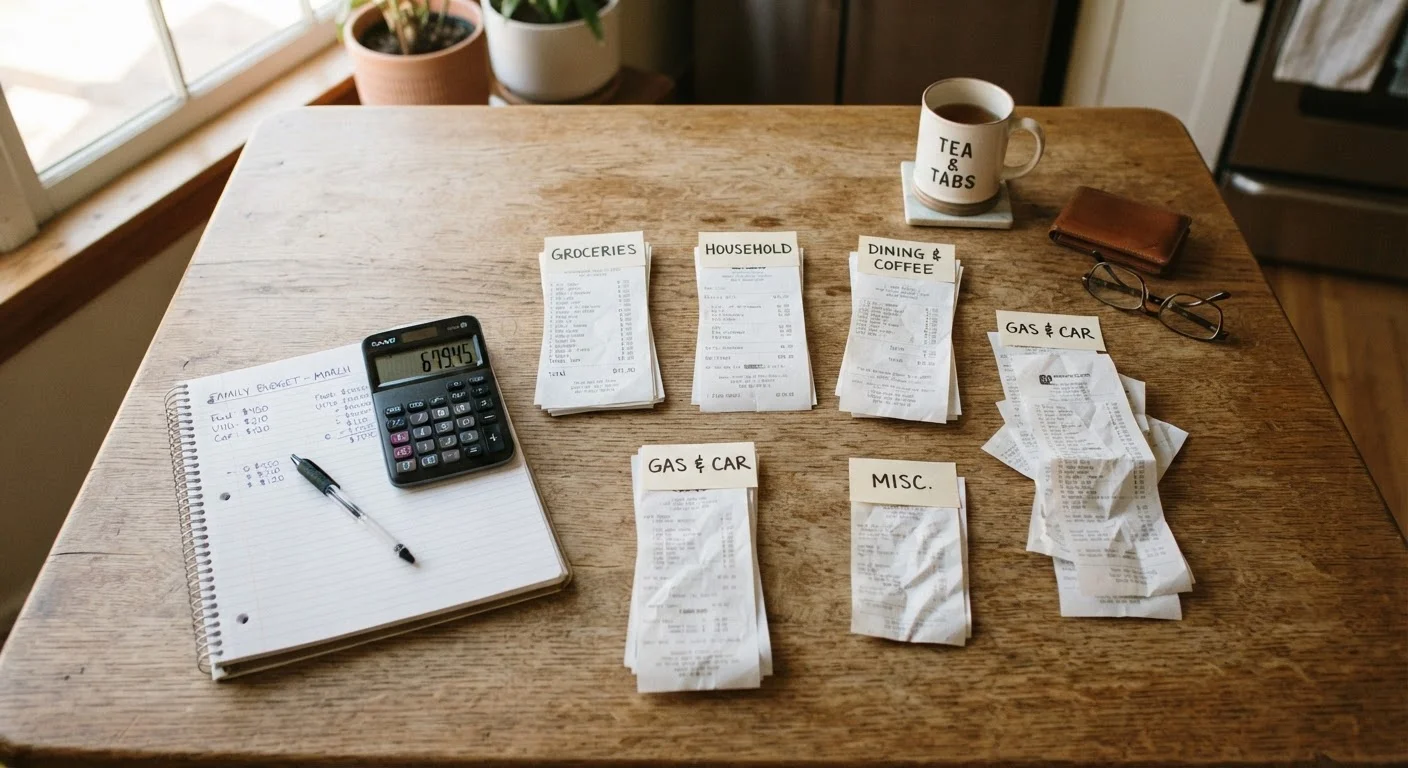
Why Categories Matter More Than Totals
Many families know roughly what comes in each month. Far fewer know where it all goes. A single monthly bank total tells you almost nothing useful — it's the breakdown that reveals the story.
When you assign every purchase to a category, two things happen quickly. First, you spot where money is quietly leaking — the subscriptions that add up, the takeout habit that's three times larger than expected. Second, you gain a baseline: a realistic picture of what your household actually costs to run, not what you guess it costs.
This matters especially for families trying to reduce overspending. Without categories, cutting back is vague and frustrating. With them, it becomes specific: our food spending is higher than our housing costs — that's worth a closer look.
33%
Average share of income spent on housing
According to the U.S. Bureau of Labor Statistics Consumer Expenditure Survey, housing consistently represents the largest single spending category for American households.
12–13%
Typical share of income spent on food
The BLS Consumer Expenditure Survey shows food — including groceries and dining out — accounts for roughly 12–13% of average household spending annually.
~17%
Share of income spent on transportation
Transportation is the second-largest spending category for most US households, per BLS data, covering vehicles, fuel, and related costs.
The Five Core Spending Categories
While every family's budget is different, most household spending clusters around five areas:
- Housing: Mortgage or rent, property taxes, homeowner's or renter's insurance, HOA fees, and basic maintenance. This is typically the largest single category for most US households.
- Food: Groceries and dining out together. Many families separate these into two subcategories once they start tracking — the gap between what they spend at the grocery store versus restaurants often surprises people.
- Transportation: Car payments, fuel, insurance, parking, tolls, and public transit. Depreciation is real but harder to track day-to-day, so most household budgets focus on out-of-pocket costs.
- Healthcare: Insurance premiums, copays, prescriptions, dental, and vision. This category can be highly variable for families with ongoing medical needs.
- Personal and Discretionary: Clothing, entertainment, subscriptions, hobbies, personal care, and gifts. This is the most flexible category — and the one with the most room to adjust.
A sixth category worth carving out separately is savings and debt repayment. Treating these as non-negotiable line items rather than afterthoughts is a widely supported principle in personal finance education. See saving and debt tips for more on that approach.
Once you understand these groupings, you can connect them to a fuller picture. A complete household budget breakdown shows how each category fits together across the whole month.
Fixed vs. Variable: The Split That Changes How You Plan
Within any category, expenses behave in one of two ways. Fixed expenses are the same every month — your rent, a car loan, or a streaming subscription at a set price. Variable expenses shift based on your behavior — groceries, gas, clothing, and dining out all fluctuate.
This distinction is important because it determines where you actually have control. Fixed costs can sometimes be renegotiated or eliminated, but they can't be trimmed a little each week. Variable costs can. Most overspending happens in variable categories, simply because there's no automatic limit.
Start With Your Biggest Variable Category
If you're new to tracking, don't try to monitor everything at once. Pick the one variable category where you suspect the most overspending — usually food or discretionary — and track just that for 30 days. A single focused month of data is more useful than a half-finished attempt at tracking everything.
For a deeper look at how to plan around both types, fixed vs. variable household expenses explained walks through the practical implications for your monthly plan.
How to Start Categorizing Your Own Spending
You don't need an app or a financial planner to begin. Here's a simple approach that works for most families:
- Gather two months of statements — bank accounts and any credit cards you use regularly.
- Write down each transaction and assign it to one of the five core categories above. Don't overthink edge cases — consistency matters more than perfection.
- Add up each category and compare. Which is largest? Which surprised you?
- Set a rough target for the next month in each category. Even a loose estimate gives you something to measure against.
Once you have a category breakdown, building an actual spending plan becomes much more straightforward. Setting up a monthly spending plan in an afternoon shows how to take those category totals and turn them into a working budget your whole family can follow.
It also helps to run each purchase through a simple filter: is this a need or a want? That one question, applied consistently, does more to reduce overspending than almost any other habit. A practical needs vs. wants framework explains how to apply it at home.
This article is for general informational and educational purposes only and does not constitute financial advice. Consult a qualified financial professional for guidance tailored to your personal situation.