
How Each Method Works
Understanding the mechanics of each approach is the first step. Both systems share the same goal — spending intentionally — but they get there very differently.
Zero-Based Budgeting
With zero-based budgeting, you begin each month by listing your total take-home income, then assign every dollar to a category — rent or mortgage, groceries, utilities, debt payments, savings, and so on — until the remaining balance equals zero. "Zero" does not mean you spend everything; it means every dollar has been deliberately allocated, including amounts earmarked for savings or an emergency fund.
The process resets monthly, which means you are building a fresh plan based on that month's actual income and anticipated expenses. This is particularly helpful if your pay varies or if you have irregular costs like quarterly insurance premiums.
The 50/30/20 Rule
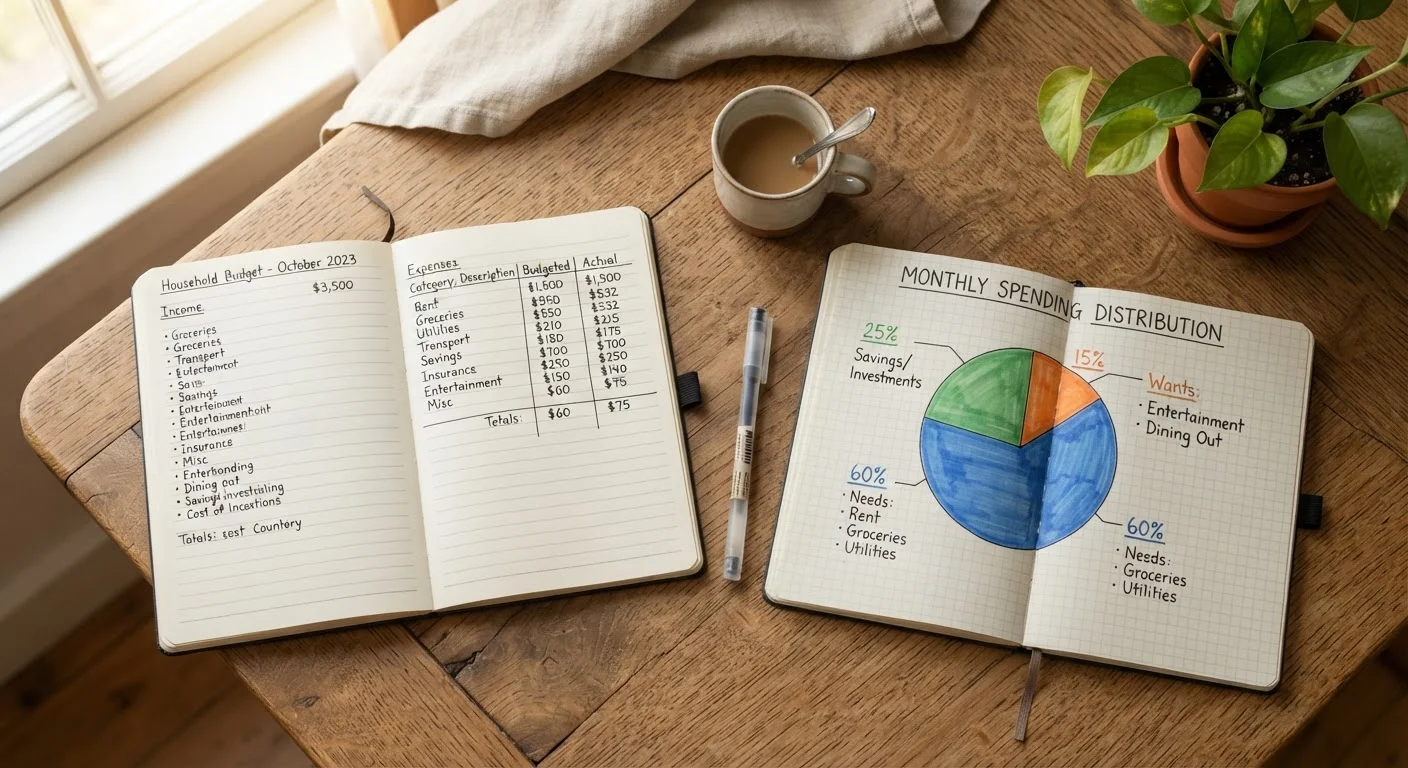
The 50/30/20 rule, popularized in personal finance literature, divides your monthly after-tax income into three broad categories: 50% toward needs (housing, utilities, groceries, minimum debt payments), 30% toward wants (dining out, subscriptions, hobbies), and 20% toward savings and debt repayment beyond minimums.
Rather than tracking individual categories in detail, you monitor whether your overall spending in each bucket stays within its percentage. It is a framework, not a ledger. For a deeper walkthrough of how percentages apply to a homeowning household, see The 50/30/20 Rule Explained for Homeowners.
| Criterion | Zero-Based Budgeting | 50/30/20 Rule |
|---|---|---|
| Core concept | Every dollar assigned a job | Income split into three percentages |
| Monthly setup time | High — rebuilt each month | Low — percentages stay constant |
| Tracking detail | Category by category | Three broad buckets |
| Best income type | Variable or irregular income | Stable, predictable salary |
| Debt paydown focus | Explicit, line-item control | Within 20% savings bucket |
| Beginner-friendliness | Moderate — steeper learning curve | High — simple to start |
| Flexibility mid-month | Requires category reassignment | Adjust within buckets freely |
Effort, Flexibility, and When Things Get Complicated
Both methods have real trade-offs when life doesn't follow a neat script.
A Note on 'Needs' vs. 'Wants'
One common sticking point with the 50/30/20 rule is deciding whether an expense is a need or a want. Housing, utilities, and minimum debt payments are generally considered needs. Subscriptions, restaurant meals, and discretionary shopping are typically wants. However, the line can blur — for example, a second car may be a need in a rural area but a want in a city with strong public transit. Being honest with yourself about these distinctions is what makes the rule effective.
Time and Effort
Zero-based budgeting demands the most upfront time. Setting up 15–20 spending categories, assigning every dollar, and reconciling actual spending against your plan mid-month is a meaningful commitment. Many households find this gets faster with practice, but the first few months can feel overwhelming.
The 50/30/20 rule requires far less time. Once you understand which expenses fall into needs versus wants, you mainly need to review whether you're staying within each third of your income. For guidance on the tools that support either method, compare paper, spreadsheet, and app-based tracking to find what fits your routine.
Handling Irregular Expenses
Zero-based budgeting handles irregular expenses well because you can build them in as named categories — for example, setting aside $50 per month for an annual car registration that costs $600. The 50/30/20 rule can accommodate irregular costs too, but the broader buckets make it easier to absorb surprises in a way that may mask patterns over time.
Income Variability
Freelancers, contractors, and households with commission-based earners often find zero-based budgeting more practical because they can plan around actual monthly income rather than an assumed average. If you'd like to compare this approach with another granular system, see how zero-based budgeting compares to the envelope method.
~40%
Americans without a formal monthly budget
Surveys conducted by the National Foundation for Credit Counseling have consistently found that a large share of U.S. adults do not use a written or structured budget.
3–6 months
Recommended emergency fund size
General financial guidance widely cited by consumer finance educators suggests households aim for three to six months of essential expenses in an accessible savings account.
Choosing the Right Method for Your Household
There is no universally superior budgeting system. The right choice depends on your household's financial situation, personality, and willingness to maintain the habit.
If you are carrying high-interest debt, rebuilding an emergency fund, or trying to understand exactly where your money goes, zero-based budgeting's precision may be worth the extra effort. The Saving & Debt Tips hub offers actionable guidance that pairs well with a line-item approach.
If you have a stable income, your basic expenses are covered, and you want a framework you can apply quickly without detailed tracking, the 50/30/20 rule is a strong starting point. You can always layer in more detail later as your financial confidence grows. Families brand new to any budgeting system may also benefit from reading Family Budgeting From the Ground Up before choosing a method.
Some households even use both: the 50/30/20 rule to set high-level targets and zero-based thinking to plan individual categories within each bucket. What matters most is that you choose a system you will actually use consistently, because a simpler method maintained every month will outperform a detailed one abandoned after two weeks.
This article is for general informational and educational purposes only and does not constitute personalized financial advice. Consult a qualified financial professional for guidance specific to your household circumstances.