
Why Every Pet Owner Needs a First-Aid Kit
Accidents and minor health scares happen — a paw cut on a walk, a suspected insect sting, or a minor scrape from rough play. In those moments, having the right supplies within reach lets you respond calmly and reduce your pet's discomfort while you arrange veterinary care.
This kit is not meant to replace your vet. Think of it the way you'd think of a family medicine cabinet: it helps you manage a situation until a professional can assess it properly. If you're still setting up your overall approach to pet health, the habits that support long-term pet health are a good companion read.
This Kit Supports Your Vet — It Doesn't Replace One
A first-aid kit is designed to help you manage a situation in the minutes before professional care is available. Never use it as a reason to delay or avoid a vet visit for anything more than a very minor issue. If you are ever unsure whether a situation is serious, call your veterinarian or an emergency animal clinic immediately.
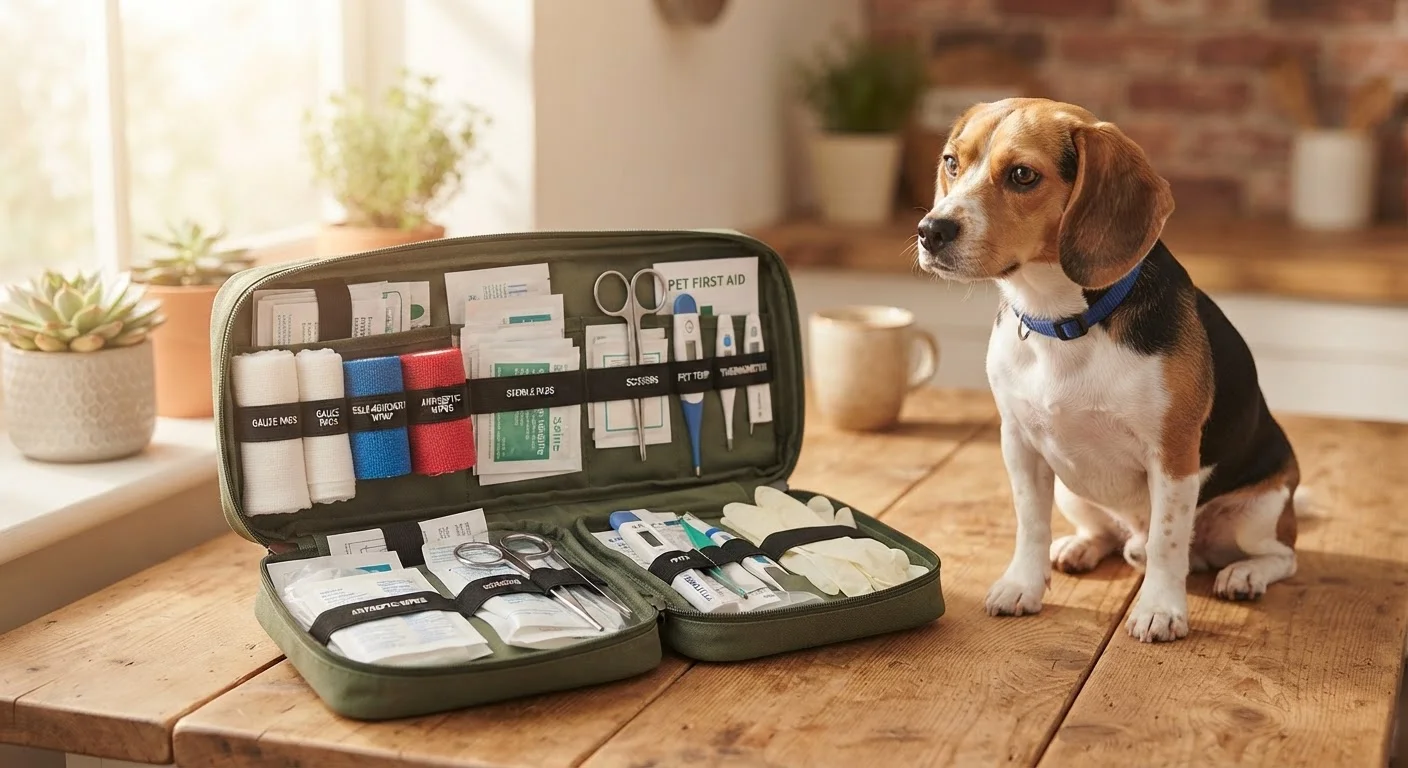
Use this checklist to build and stock your kit. Work through each group, check off what you already own, and note what still needs to be sourced. Aim to keep the kit in one labeled, waterproof container stored somewhere adults can reach it quickly.
What to Put in Your Kit
Wound Care Basics
Monitoring and Assessment
Handling and Restraint
Records and Reference
Specialty Additions (Vet-Guided)
Once your kit is assembled, take 10 minutes to familiarize yourself with what each item does. Reading directions on packaging before an emergency is far easier than reading them during one. You might also ask your vet to walk through basic first-aid scenarios at your pet's next veterinary visit.
Do Not Give Human Medications Without Vet Guidance
Many over-the-counter medications safe for people — including common pain relievers like ibuprofen and acetaminophen — are toxic to dogs and cats. Before adding any medication to your pet first-aid kit, confirm with your veterinarian that it is appropriate for your specific animal. When in doubt, call your vet before administering anything.
Keeping Your Kit Ready Over Time
Building the kit is the first step — maintaining it is what makes it useful in a real emergency. Set a reminder every six months to check expiration dates, replace used items, and confirm the vet contact card is still accurate.
Store the kit somewhere consistent: a labeled shelf in a hallway closet, a cabinet in the laundry room, or a dedicated drawer in the kitchen all work well. Avoid locations that get very hot or humid, such as a car trunk, which can degrade supplies and medications.
If you have multiple pets or pets with known health sensitivities — such as seasonal allergies — talk with your vet about whether any additional items belong in your kit. You can read more about managing environmental triggers in our article on preparing your pet for allergy season.
This article is for general informational purposes only and does not constitute veterinary or medical advice. Always consult a licensed veterinarian before treating your pet for any injury or illness.