
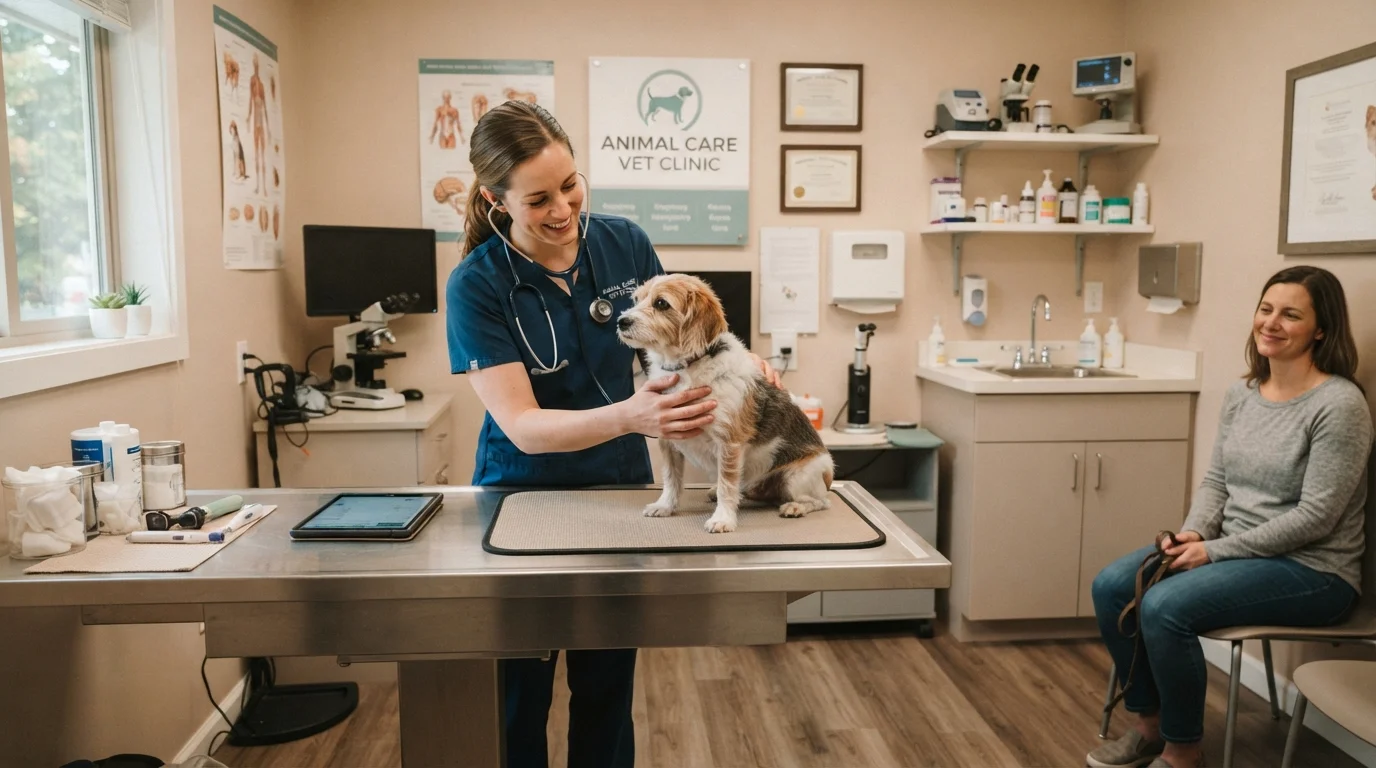
What to Bring to the Appointment
Walking into your pet's first vet visit prepared makes the whole experience smoother — for you, your pet, and the veterinary team. Here's what to gather beforehand:
- Health records: If your pet came from a shelter, rescue, or breeder, ask for any vaccination history, deworming treatments, or prior exam notes. Even incomplete records help the vet avoid duplicating vaccines.
- A fresh stool sample: Collect a small amount (about a teaspoon) in a sealed plastic bag or clean container no more than a few hours before the appointment. The vet will test it for common intestinal parasites.
- A list of what your pet eats: The type of food, portion sizes, and any treats or supplements help the vet assess nutritional health.
- Your observations: Note anything unusual — changes in appetite, energy, bathroom habits, or behavior since you brought your pet home.
If you're wondering what costs to expect, this breakdown of a typical vet bill explains common line items and why prices vary.
Core vaccines
Vaccinations recommended for nearly all pets of a given species, regardless of lifestyle, because the diseases they prevent are widespread or particularly dangerous.
Wellness exam
A routine checkup focused on preventive care — assessing overall health, updating vaccines, and catching potential problems early, rather than treating a specific illness.
Intestinal parasites
Worms or other organisms that live inside a pet's digestive tract. Many are invisible to the eye, which is why vets test a stool sample to detect them.
Body condition score
A standardized way vets assess whether a pet is underweight, at an ideal weight, or overweight, based on visual and hands-on evaluation rather than weight alone.
Heartworm prevention
Medication given regularly (usually monthly) to prevent heartworm disease, a potentially life-threatening condition spread by mosquitoes, primarily in dogs.
What Happens During the Exam
A first wellness exam is a systematic, head-to-tail physical assessment. The vet is looking for signs of illness, developmental concerns, or anything that warrants closer attention. Here's what the appointment typically covers:
- Weight and body condition
- The vet will weigh your pet and assess whether they are underweight, at a healthy weight, or overweight for their age and breed.
- Eyes, ears, nose, and mouth
- Checking for discharge, inflammation, dental issues, or signs of infection in these areas.
- Heart and lungs
- Using a stethoscope to listen for irregular heartbeats or abnormal breathing sounds.
- Abdomen and lymph nodes
- Gently feeling for organ size, tenderness, or unusual lumps.
- Coat and skin
- Looking for parasites (fleas, ticks, mites), dry patches, or signs of allergic reaction.
- Musculoskeletal check
- Assessing limb movement and posture, especially in young or older animals.
The vet will talk you through findings as they go. Don't hesitate to ask for clarification on anything — it's your time, and no question is too basic.
Vaccinations, Parasite Prevention, and Next Steps
After the physical exam, the vet will review your pet's vaccination needs. Core vaccines — those recommended for virtually all pets regardless of lifestyle — are usually discussed or started at this visit. For dogs, these typically include distemper, parvovirus, and rabies. For cats, they commonly include feline herpesvirus, calicivirus, panleukopenia, and rabies. Your vet will explain the schedule and what's due now versus at follow-up visits.
Parasite prevention is another standard topic. The vet may recommend a plan to prevent fleas, ticks, heartworm (in dogs), and intestinal worms. These recommendations vary by region, your pet's lifestyle, and age, so the vet will tailor the conversation to your situation.
If your pet is not yet spayed or neutered, the vet will typically discuss the general timeline and considerations for that procedure as well.
Bring a Notepad or Use Your Phone
It's easy to forget what the vet said once you're back home. Jotting down key points — vaccine dates, follow-up timing, food recommendations — during the visit means you won't have to rely on memory later. Many clinics also provide printed visit summaries, so ask if that's available.
As your pet ages, their health needs will evolve. Learn how vet care typically changes for older pets so you know what to expect down the road.
How to Help Your Pet Stay Calm
Anxiety during a vet visit is normal — unfamiliar smells, sounds, and handling can be genuinely stressful for animals. A few simple preparations can make a real difference:
- Carrier acclimation: Leave a carrier or crate out at home in the days before the visit. Place familiar bedding or a worn t-shirt inside so your pet associates it with comfort, not just trips to the vet.
- Practice car rides: Short, positive car trips in the days leading up to the appointment reduce travel-related stress.
- Skip the large meal: A light stomach reduces the chance of nausea during travel and can make your pet more responsive to treats the vet might use as positive reinforcement.
- Stay calm yourself: Pets often pick up on their owner's anxiety. Matter-of-fact, relaxed handling sends a reassuring signal.
Building positive associations with handling at home also pays off long-term. Consistent basic training can make routine procedures — nail trims, ear checks, and exams — far less stressful over time.
Questions Worth Asking Your Vet
A first appointment is one of the best opportunities to build a clear picture of your pet's health needs. Because appointments are often short, writing down questions beforehand helps you make the most of the time. Consider asking:
- What is an appropriate weight range for my pet's breed and age?
- What diet and portion size do you recommend?
- Which vaccines are due today, and what's the follow-up schedule?
- What parasite prevention do you recommend for our area and lifestyle?
- Are there any early signs of health issues I should watch for at home?
- When should we schedule the next routine visit?
For more strategies on getting the most out of any preventive care appointment, this preparation guide covers how to organize your questions and follow up effectively. It's also worth having a basic pet first-aid kit at home before any health concerns arise.
This article is for general informational purposes only and is not a substitute for professional veterinary advice. Always consult a licensed veterinarian for guidance specific to your pet's health needs.