
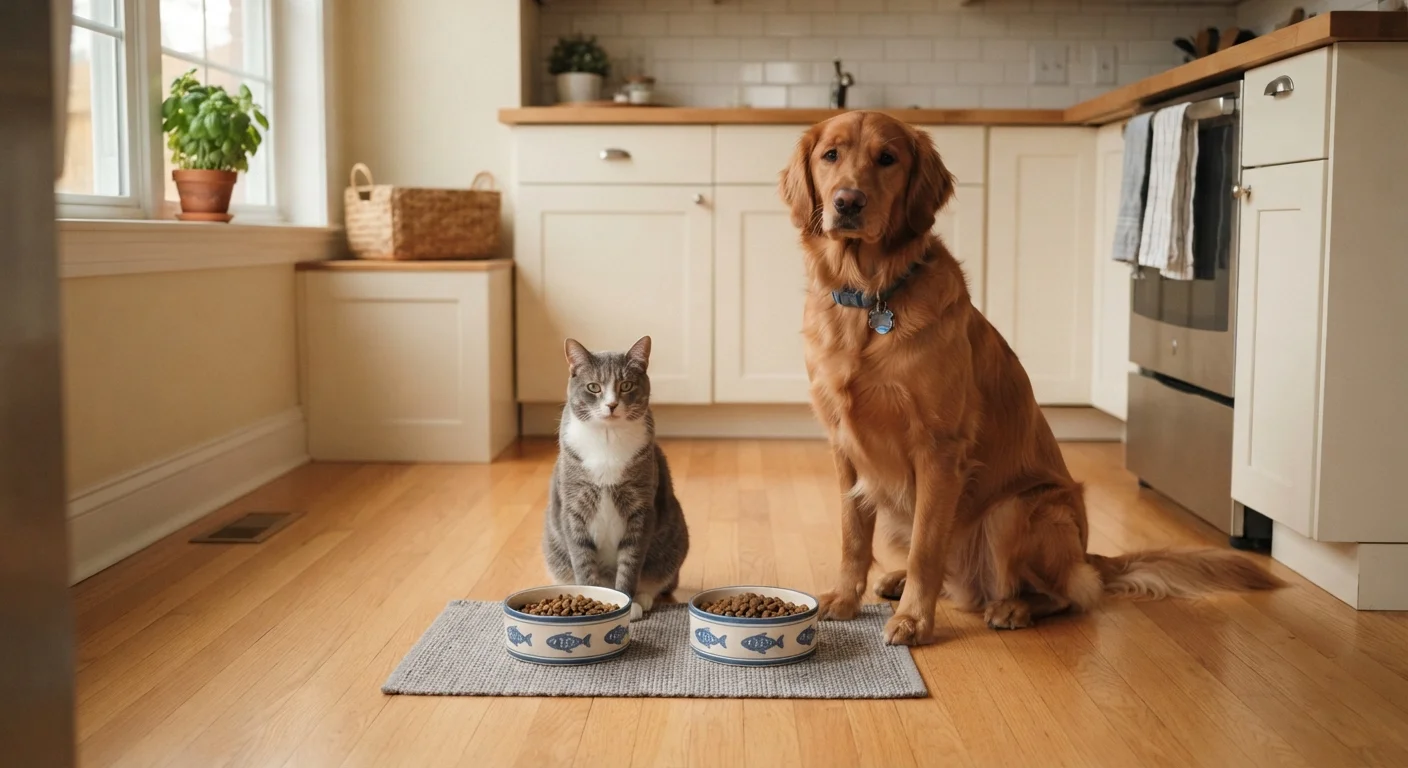
Why a Feeding Routine Makes a Real Difference
Consistency is one of the most powerful tools in pet nutrition — and one of the most underestimated. Feeding your pet at the same times each day helps regulate their digestive system, reduces food-guarding behaviors, and makes it far easier to notice early signs of illness, such as a sudden loss of appetite. A pet that eats on a schedule gives you a reliable baseline to measure against.
Routine also supports the whole household. When everyone knows when the pet eats, how much, and what counts as an acceptable treat, confusion and accidental overfeeding drop significantly. This checklist works for dogs and cats in most life stages — if you have a puppy, kitten, senior pet, or an animal with a medical condition, talk to your veterinarian about adjustments specific to their needs. You can also explore how feeding habits connect to broader wellness in our pet health guidance hub.
Kitchen Scale or Measuring Cups
Used to measure precise food portions rather than estimating, which helps prevent chronic overfeeding.
Stainless Steel or Ceramic Food and Water Bowls
Easier to clean thoroughly than plastic, reducing the risk of bacterial growth between meals.
Pet Calorie Calculator
Helps estimate your pet's daily caloric needs based on weight and activity level — your vet can verify the result.
Feeding Schedule Chart or App
Keeps all household members aligned on meal times and portions so the routine stays consistent.
The Complete Feeding Routine Checklist
Work through these groups in order when setting up a new routine, or use them to audit what's already in place. Items marked must are non-negotiable for your pet's basic health; should items are strongly recommended; and nice-to-have items offer meaningful improvements when resources allow.
Know What You're Actually Feeding
Set Portions Correctly
Establish a Consistent Meal Schedule
Water and Bowl Hygiene
Manage Treats and Table Scraps
Don't Rely Solely on Label Feeding Guides
Feeding guidelines printed on pet food bags are calculated for an average animal and are often set on the generous side. Your pet's actual needs depend on their age, breed, activity level, health status, and whether they are spayed or neutered. Always treat label suggestions as a starting point, not a prescription, and confirm the right amount with your veterinarian.
Some Human Foods Are Dangerous for Pets
Common household foods including grapes, raisins, onions, garlic, chocolate, macadamia nuts, and products containing xylitol (an artificial sweetener) can cause serious illness or worse in dogs and cats. Even small amounts of some of these can be harmful. If your pet ingests something you're unsure about, contact your veterinarian or the ASPCA Animal Poison Control Center promptly.
For a deeper look at why the numbers on your measuring cup matter so much, see why portion sizes matter more than the food itself.
Sudden Changes to Diet Can Cause Digestive Upset
Switching your pet to a new food abruptly — even a healthier one — commonly triggers vomiting, diarrhea, or reduced appetite. Any food transition should be made gradually over 7–10 days, slowly increasing the proportion of the new food. See our gradual food transition guide for a step-by-step approach.
If your pet is entering their senior years, keep in mind that caloric needs and nutrient priorities shift with age. Our article on how health needs shift as animals age covers what to watch for and when to revisit your feeding plan with a vet.
This article is for general informational purposes only and is not a substitute for personalized veterinary advice. Always consult a licensed veterinarian before making significant changes to your pet's diet or if you have concerns about their health.