
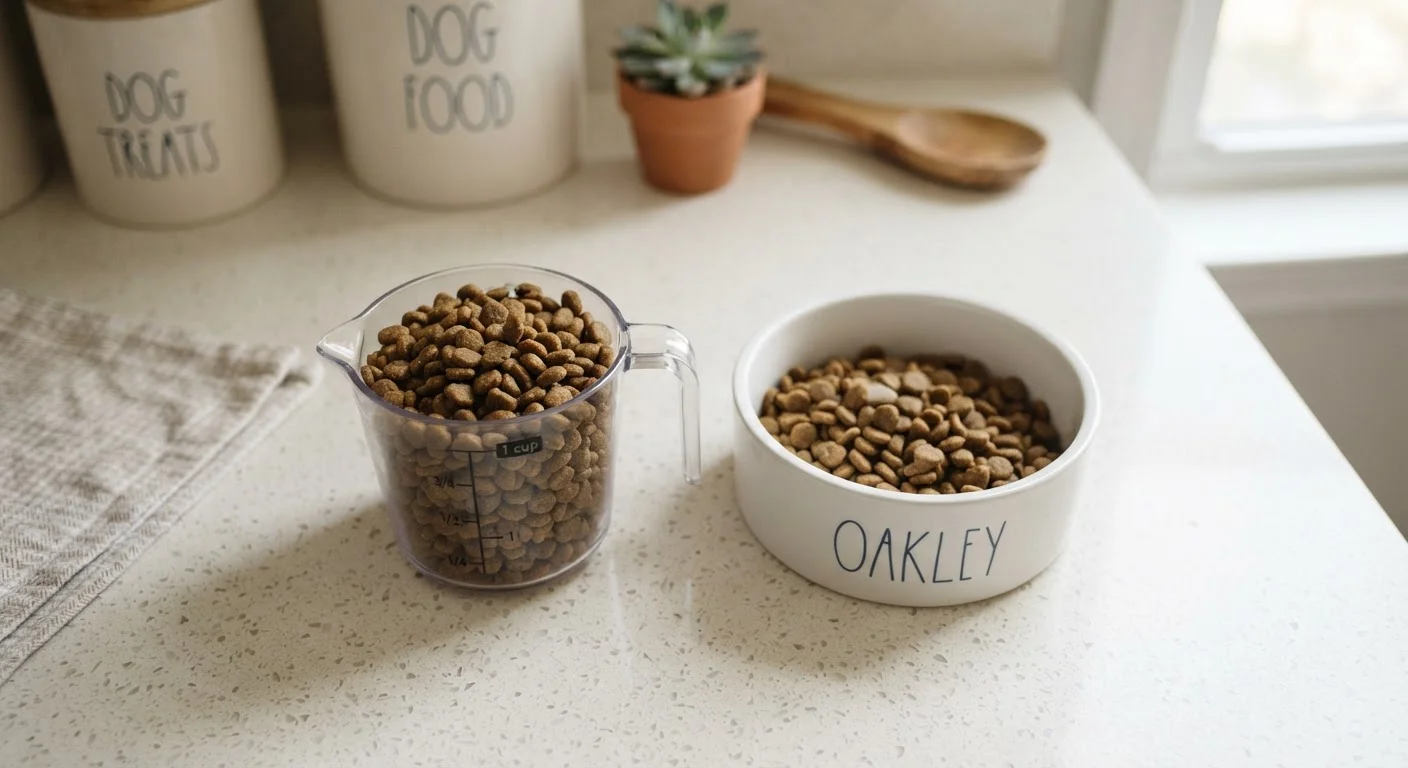
The Real Driver of Pet Obesity Isn't What's in the Bowl
Many pet owners spend considerable time and money choosing the right food — scanning ingredient lists, comparing protein sources, and debating grain-free versus grain-inclusive formulas. That diligence makes sense. But veterinary research consistently points to a more immediate problem in American households: pets are simply being fed too much.
Pet obesity is estimated to affect roughly half of all dogs and cats in the United States, according to surveys by veterinary organizations. The consequences go well beyond a rounder silhouette — excess weight strains joints, stresses the heart, accelerates diabetes risk, and can meaningfully shorten a pet's life. And in most cases, the cause isn't a low-quality diet. It's an oversized one.
Understanding what healthy weight actually looks like for your pet is a useful foundation before diving into portions. Once you have that picture, portion control becomes the most direct lever you have.
~59%
US dogs classified as overweight or obese
According to the Association for Pet Obesity Prevention's annual clinical surveys of veterinary practices across the United States.
~61%
US cats classified as overweight or obese
Also from Association for Pet Obesity Prevention surveys, reflecting a long-running trend in domestic cat weight patterns.
10%
Maximum recommended daily calories from treats
A widely cited veterinary guideline suggesting treats should not exceed 10% of a pet's total daily caloric intake to avoid displacing balanced nutrition.
Why Package Feeding Guides Are Only a Starting Point
The feeding chart printed on your pet food bag is a reasonable starting point, but it's built around averages. It typically assumes an unaltered adult animal of average activity — which describes fewer pets than you might think. Spayed and neutered pets, senior animals, and those with low activity levels often need 20–30% fewer calories than the chart suggests.
Compounding this, bag guidelines are usually expressed as a range (for example, "1.5 to 2.5 cups per day for a 30-pound dog"). Without knowing where in that range your individual pet falls, many owners default to the higher end — sometimes significantly overshooting their pet's actual need.
For a more precise number, ask your veterinarian to calculate your pet's Resting Energy Requirement (RER) — a formula based on body weight — and adjust it for life stage and activity. This single number, expressed in daily kilocalories, gives you something the bag label cannot: a portion target built specifically for your animal.
Learning to decode the caloric information on pet food labels is the next practical skill — caloric density varies widely between products, and the same cup measurement means very different things across food types.
Ask Your Vet for a Calorie Target
At your pet's next wellness visit, ask the vet to calculate a specific daily kilocalorie target rather than a cup amount. This number stays useful even when you switch foods, because you can divide it by the caloric density of any new product to get the correct serving. It's one of the most practical, lasting tools for accurate home feeding.
The Four Factors That Actually Determine the Right Portion
Getting portions right means accounting for a handful of variables that shift across a pet's life:
- Current body weight: Portions scale with size, but larger pets don't simply get proportionally more — caloric formulas curve rather than scale linearly.
- Age and life stage: Puppies and kittens need more calories per pound than adults; seniors typically need fewer. Life-stage formulas on packaging reflect this, but portion size still needs adjustment.
- Activity level: A dog that runs off-leash daily has meaningfully higher needs than one that takes two short walks. Honest assessment here prevents chronic overfeeding.
- Reproductive status: Spayed and neutered pets have lower metabolic rates on average. This is one of the most commonly overlooked portion factors.
For households with multiple pets, individual portioning matters even more. Larger or more assertive animals can quietly consume a smaller pet's share, creating both overfeeding and underfeeding in the same home. Supervised mealtimes and separate bowls are a practical fix. See our guide to building a consistent feeding routine for step-by-step strategies.
Practical Steps to Calibrate Portions at Home
You don't need special equipment or a nutrition degree to feed your pet more accurately. A few simple habits make a real difference:
- Use a measuring cup or kitchen scale every time. Eyeballing portions — even by experienced owners — introduces surprising variability. A digital kitchen scale is especially helpful for wet food or home-cooked meals.
- Track weight monthly. Weigh your pet at home or at a vet clinic once a month. Gradual weight gain of even a few ounces per month can accumulate quickly. Early detection means small, easy adjustments rather than a difficult weight-loss program later.
- Count treats in the daily total. Every treat has calories. If your pet gets several throughout the day, reduce the main meal portion proportionally so total intake stays on target.
- Avoid free-feeding if weight is a concern. Leaving food out all day makes it nearly impossible to know how much your pet has eaten — and removes a natural mechanism for regulating intake.
If your pet eats a breed-specific formula, there may be additional nuance to consider. Small and large breed dogs have different caloric and nutritional needs that go beyond simple portion scaling.
This article is for general informational and educational purposes only and is not a substitute for personalized veterinary advice. Always consult a licensed veterinarian for guidance specific to your pet's health and dietary needs.