Why a Dedicated Beauty Section Makes Life Easier
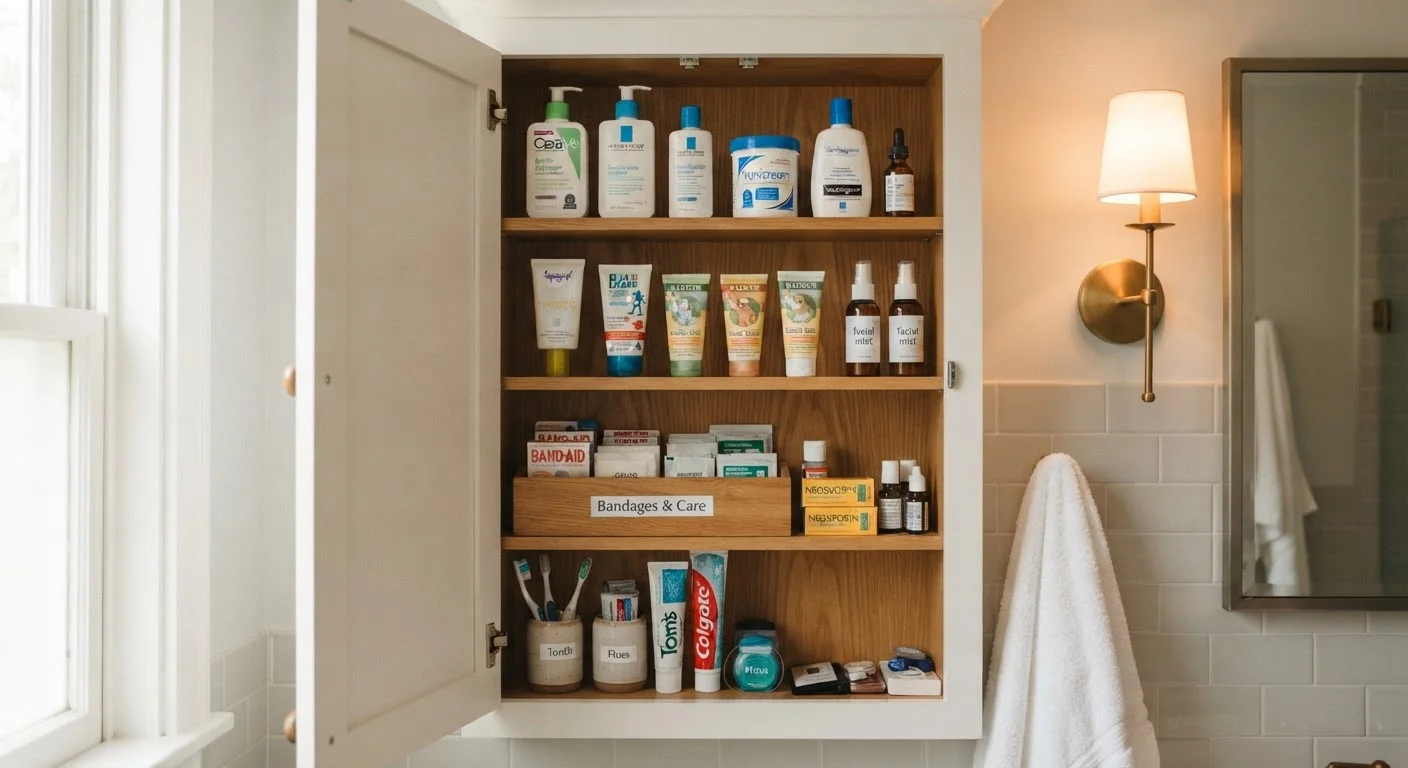
Most families have personal care products scattered across bathrooms, gym bags, and kitchen drawers — duplicates hiding in plain sight, half-used bottles expiring quietly at the back of a shelf. Carving out a dedicated beauty section inside your medicine cabinet (or a small basket or bin nearby) changes that entirely. It creates one predictable place your household can rely on, and it naturally prompts you to think about what you genuinely use versus what just accumulates.
This checklist is organised by function, not by person. That's intentional. When you stock by need — cleansing, moisturising, sun protection, hair care, and so on — you're more likely to spot ingredient overlaps that let you consolidate. For a deeper look at that idea, our guide on ingredient overlaps in skincare and haircare is a great companion read.
Before you shop for anything, spend ten minutes doing a quick audit of what you already own. Check expiration dates, note quantities, and discard anything with an off smell, changed texture, or colour. That audit alone often reveals you need far less than you think.
Waterproof labelling tape
Label shared containers with open dates so you know when products were first used and can track freshness.
Small basket or drawer organiser
Keeps the beauty section physically separated from first-aid or medication items inside the cabinet.
Permanent marker
Write the month and year on product bottoms when opened — especially helpful for sunscreens and mascaras with short shelf lives.
Printed or digital checklist
Use this checklist as a running reference during your cabinet audit so nothing is missed.
The Checklist: Personal Care Essentials by Category
Work through the groups below as a household audit. Check off what you already have, flag what needs replacing, and add only what's genuinely missing. You don't need every item on day one — build toward completeness over a few shopping cycles. For tips on making products last longer once you've stocked up, see our article on stretching your personal care products further.
Skin Cleansing
Moisturising and Skin Protection
Hair Care
Oral Care
Hygiene Basics
Don't assume all products are safe to share
Some personal care products — particularly prescription treatments, medicated shampoos, or products designed for a specific skin condition — should not be shared between household members. Always read the label, and check with a healthcare professional before using any medicated product on a child or outside its intended use. If anyone in your household has a known allergy or skin sensitivity, ingredient-check new products before adding them to shared shelves.
Making It Work on Any Budget
The word «budget» means something different to every household, so this checklist deliberately avoids naming price points or products. What it does do is flag priority level — must items are the non-negotiables your family will reach for every single day. Start there. The should and nice-to-have items can wait until you've covered the basics.
A few practical habits that stretch any personal care budget further:
- Buy larger sizes of high-use staples (body wash, shampoo, gentle cleanser) when storage allows — the cost-per-use is almost always lower.
- Look for gentle, fragrance-free versions of any shared products. They're less likely to irritate sensitive skin and tend to work across a wider age range, from toddlers to adults.
- Resist the impulse to stock specialty items before you know your household actually needs them. A basic moisturiser used consistently outperforms a cabinet full of targeted serums that nobody touches.
If you're working toward a broader household financial strategy, the principles in home budgeting resources apply here too — small, intentional purchases add up to real savings over time. And if you're building other household stockpiles alongside this one, our family fashion budget guide uses a similar needs-first framework.
Sunscreen is a daily non-negotiable
Dermatologists widely agree that daily broad-spectrum SPF use is one of the most impactful skin-health habits a family can build — regardless of skin tone or climate. It's not a warm-weather luxury. If budget forces you to choose between beauty extras, prioritise sunscreen above almost anything else on this list. Talk to your family's healthcare provider about what formulation is appropriate for children under six months, as special guidance applies.