
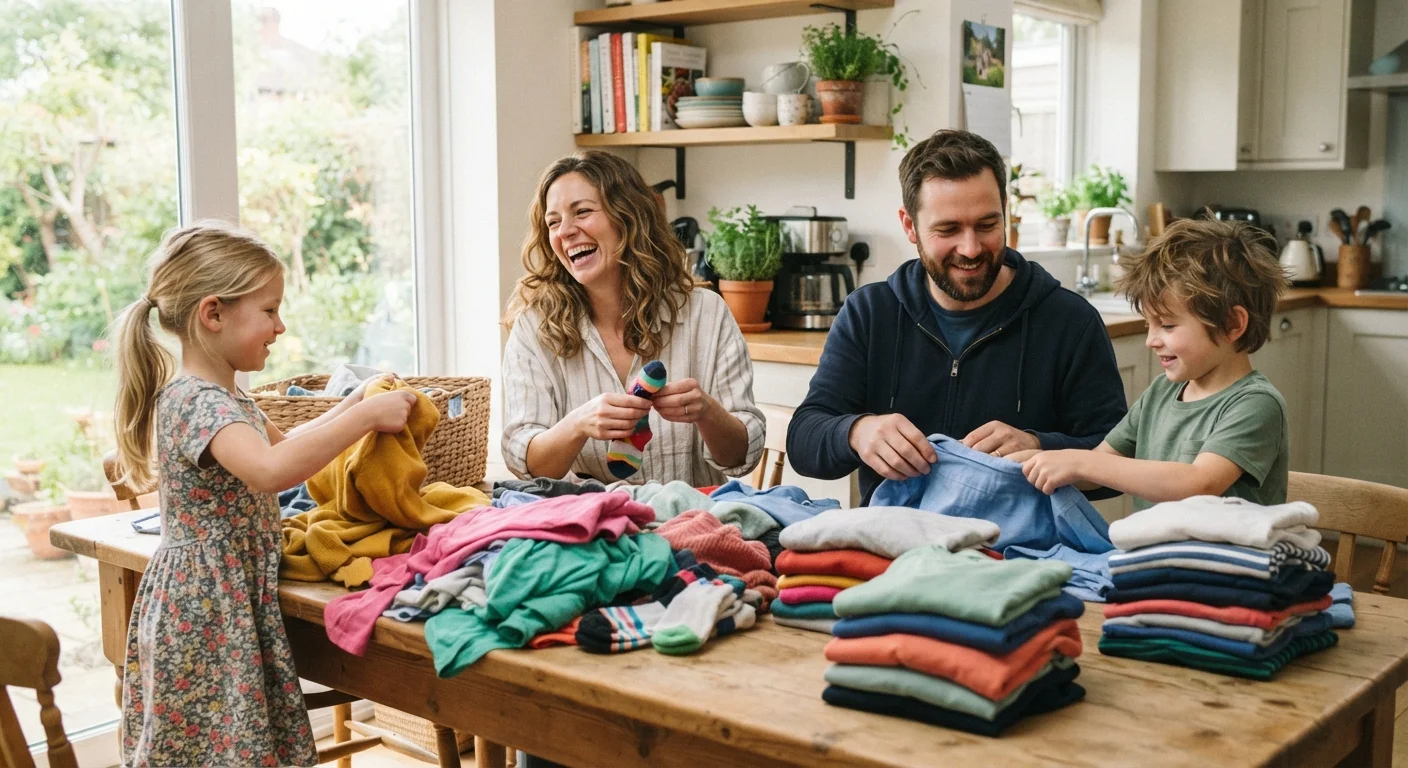
Why Family Clothing Costs Add Up Fast
Dressing four people — especially when two of them are growing at a startling rate — is one of those household costs that quietly balloons. A new pair of sneakers here, a school uniform requirement there, and suddenly the clothing budget has consumed money earmarked for something else entirely.
The core challenge is that kids don't stay the same size. Unlike an adult's wardrobe, which needs occasional refreshing, children's clothing requires near-constant investment just to keep up with growth. Add in seasonal shifts, school dress codes, sports uniforms, and the occasional formal event, and the category expands fast.
Understanding why costs spike is the first step to getting ahead of them. Impulse buying, failing to track what's already owned, and defaulting to full-price retail without exploring alternatives are the most common culprits. Our article on family style pitfalls breaks down the specific habits that quietly drain clothing budgets.
Start With a Wardrobe Audit
Before spending a single dollar, spend an hour. Pull everything out of closets and drawers and sort it honestly: what still fits, what's worn out, and what was a mistake that never got used. This process — sometimes called a wardrobe audit — gives you a clear picture of actual gaps versus perceived ones.
For kids, check that seasonal items still fit before storing or pulling them out. A jacket bought last winter may no longer button. Shoes are especially important to check, since children's foot size can change every few months.
Our seasonal clothing audit guide includes a practical checklist to work through each family member's wardrobe systematically, so nothing slips through the cracks.
Photograph Before You Shop
Before a shopping trip, take quick photos of each family member's current wardrobe — especially kids' drawers and closets. This gives you an instant reference when you're in a store or browsing online, preventing duplicate purchases and impulse buys for items you already own.
Building a Budget-Friendly Clothing Plan
A simple seasonal clothing plan prevents overspending by turning reactive shopping into intentional buying. The idea is to assign a rough per-person budget for each season, then prioritize replacements and genuine needs before adding anything new.
For adults, the goal is usually maintenance — replacing worn basics and filling occasional gaps. For children, the goal shifts toward tracking growth and anticipating transitions (moving from kindergarten to elementary school, for example, often changes what's needed day-to-day).
Capsule wardrobe
A small, carefully chosen set of clothing items that all work well together, reducing the need for many separate pieces while still creating a variety of outfits.
Cost per wear
A way of thinking about clothing value: divide what you paid by how many times the item gets worn. A $40 jacket worn 80 times costs $0.50 per wear — often better value than a $10 item worn twice.
Versatile piece
A clothing item that works appropriately in multiple settings — school, play, errands, and casual occasions — without needing to be swapped out.
Consignment
A secondhand selling arrangement where the original owner gets a share of the sale price. Consignment shops and apps typically carry items in better condition than standard thrift stores.
Seasonal audit
A periodic review of every family member's clothing to identify what still fits, what needs replacing, and what can be donated or passed down before new items are purchased.
Focus on versatile pieces that work across multiple contexts. A solid-colored pullover that goes from school to weekend errands to a casual family dinner does far more work than a novelty graphic tee worn once. See our guide to versatile wardrobe pieces for specific item types worth prioritizing. For a broader framework, The Complete Family Fashion Playbook covers seasonal planning across every age group in the household.
Smart Shopping Habits That Stretch Every Dollar
Where and how you shop matters as much as how much you spend. Thrift stores, consignment shops, and resale apps have become genuinely good sources for children's clothing in particular — because kids outgrow clothes before wearing them out, secondhand items are often in excellent condition.
End-of-season sales are another reliable strategy. Buying next winter's coats in late winter or early spring, when inventory is being cleared, can reduce costs significantly without sacrificing quality. The tradeoff is planning ahead and estimating sizing — a reasonable challenge for kids but manageable with a size buffer.
Clothing budgeting shares a lot of DNA with general household budgeting. If you're also working to get household expenses under control more broadly, the resources at Home Budgeting offer practical frameworks that apply across spending categories.
Free and Low-Cost Ways to Refresh Kids' Wardrobes
Some of the most effective strategies for keeping kids' clothing costs low don't involve shopping at all. Two stand out in particular.
Hand-me-down systems — even in families with just two children — can dramatically reduce per-child clothing costs when clothes are bought with durability in mind and stored properly between uses. Our article on hand-me-down strategy goes deep on how to buy, wash, and store kids' clothes so they survive multiple wearers.
Clothing swaps are community events where families exchange outgrown items at little or no cost. Many neighborhoods, schools, and parent groups organize these seasonally. They're an excellent way to simultaneously clear out too-small clothes and pick up the next size up. Learn how to find or host one in our guide to community clothing swap events.
Keeping Costs Low Season After Season
Budget-friendly family dressing isn't a one-time project — it's a recurring habit. The families who manage it best treat clothing like any other household line item: tracked, planned, and revisited regularly.
A few practices make this sustainable over time:
- Run a brief wardrobe audit at the start of each season before buying anything new.
- Keep a running note of sizes and upcoming needs (a child approaching a new school year, for example) so you're not making rushed decisions.
- Rotate quality basics rather than chasing trends — classic cuts and neutral colors stay wearable year after year.
- When you do buy, prioritize quality in high-wear categories like footwear and outerwear, where durability directly translates to lower long-term cost.
This kind of household-level thinking about clothing connects naturally to broader financial habits. If managing the family clothing line alongside other household costs feels like a juggling act, exploring general strategies at Home Budgeting can help bring it all together.