
Why At-Home Nail Care Pays Off
Salon visits are a treat, but the weeks in between are where nail health is actually built. Regular at-home upkeep keeps nails strong, reduces the risk of infections, and means you'll need fewer corrective treatments over time. It's one of those personal care habits — much like the routines covered in our guide on making personal care products go further — where small, consistent effort delivers outsized results.
For busy parents, good nail hygiene is also a practical model for kids. Introducing simple habits early sets children up for a lifetime of healthy self-care. Our article on age-appropriate personal care routines for kids covers when and how to bring children into these habits meaningfully.
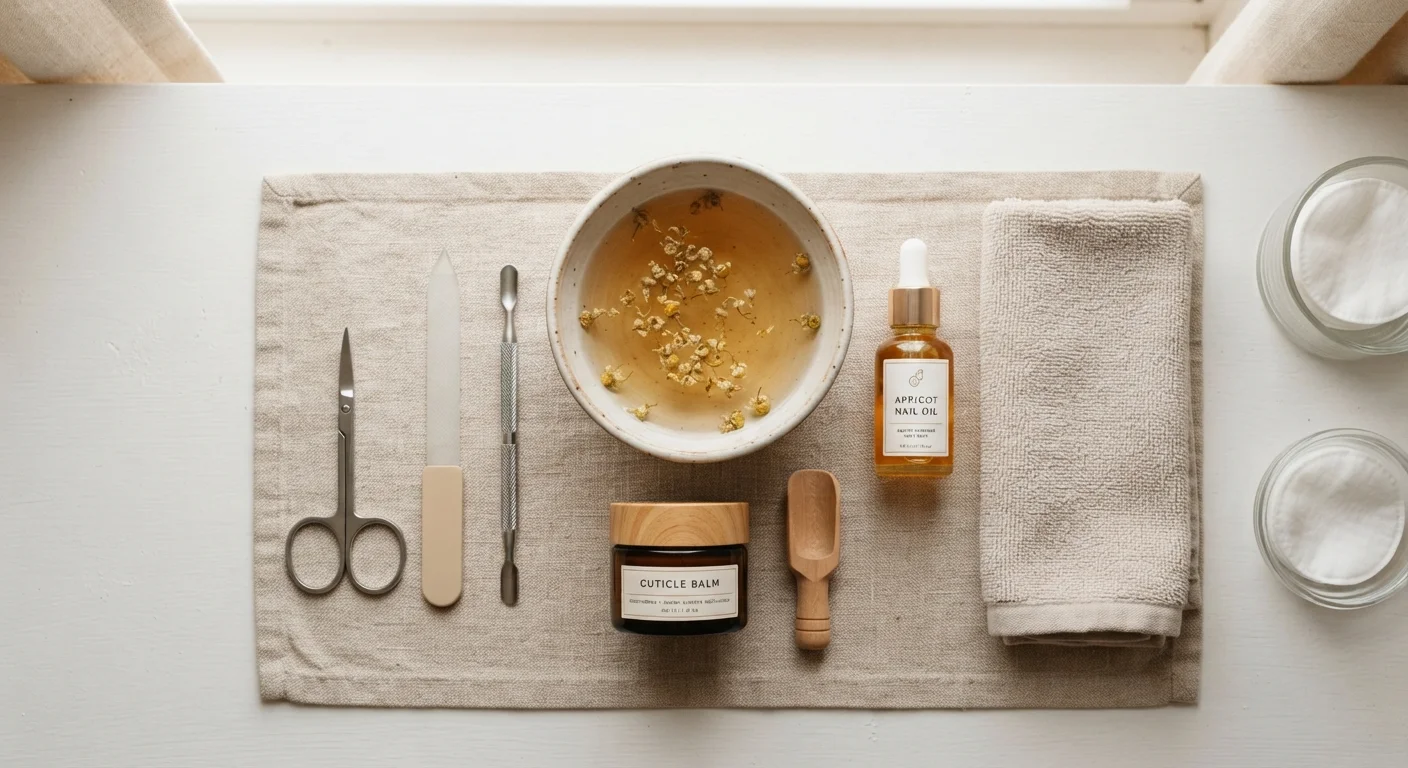
What you will need
Before you begin, gather your supplies. Having everything within reach makes the process quicker and less likely to be interrupted — particularly helpful if you have young children nearby.
Nail clippers (fingernail and toenail, separate)
Trims nails cleanly to prevent tearing, snagging, or uneven edges.
Nail file or emery board
Smooths rough edges after trimming to reduce snagging and breakage.
Cuticle pusher
Gently pushes back softened cuticles without cutting or damaging the protective skin.
Unscented moisturizer
Hydrates the nail bed, cuticles, and surrounding skin to prevent cracking and brittleness.
Isopropyl alcohol or tool-cleaning solution
Disinfects metal nail tools between uses to prevent bacterial or fungal transfer.
Foot file or pumice stone
Gently reduces callused skin on heels and balls of feet during foot care sessions.
Following the Steps
Work through the routine below at your own pace. Most people find that doing a quick hand session once or twice a week — and a slightly more thorough foot session every one to two weeks — keeps nails in good shape with minimal fuss.
Clean and sanitize your tools
Before you start, wash metal clippers, files, and pushers with soap and water, then wipe them down with isopropyl alcohol. This simple step removes bacteria and fungi that can cause infections — especially important if tools are shared among family members. Let everything air dry before use.
Soak hands or feet briefly in warm water
Fill a small bowl with warm (not hot) water and a drop of mild soap. Soak fingertips for 2–3 minutes, or feet for up to 5 minutes. This softens the nail plate and cuticle area, making trimming safer and more comfortable. Pat dry thoroughly when done — excess moisture left on skin and nails can encourage fungal growth.
Trim nails to an appropriate length
Using clean clippers, trim fingernails in a gentle curve following the natural shape of the fingertip. For toenails, cut straight across — this is particularly important for the big toe, as curved cuts can increase the likelihood of ingrown nails. Leave a small sliver of white at the tip rather than cutting down to the quick (the sensitive skin beneath the nail).
File edges smooth
Use a nail file or emery board in one direction — avoid a back-and-forth sawing motion, which can weaken the nail edge over time. A few gentle strokes are all it takes to smooth any rough spots left by the clippers. For feet, a coarser file or pumice stone can gently reduce callused areas on heels, but stop if skin feels sore or irritated.
Gently push back cuticles — don't cut them
The cuticle is a thin layer of skin that seals the base of your nail, acting as a barrier against bacteria. Using a wooden orange stick or rubber-tipped cuticle pusher, gently push cuticles back toward the base of the nail. Avoid cutting cuticles — removing this protective skin creates small openings where infection can enter. If cuticles are very dry, a drop of cuticle oil or plain vitamin E oil can help soften them before pushing.
Moisturize nails, cuticles, and surrounding skin
Apply an unscented hand cream or foot lotion generously, massaging it into the nail beds, cuticles, and surrounding skin. For feet, cotton socks worn over lotion for 20–30 minutes can help moisture absorb more deeply — a useful trick during dry winter months. Consistent moisturizing helps prevent brittleness, peeling, and the painful cracking that can develop at the corners of toenails.
Consistency Beats Perfection
You don't need a lengthy routine to maintain healthy nails. A quick trim, a once-over with a file, and regular moisturizing done consistently will do far more than an elaborate session performed once a month. Think of it as a two-minute habit added to days you already wash your hands thoroughly.
Signs That Warrant a Professional Look
At-home care covers most everyday nail maintenance, but certain changes are worth flagging to a healthcare provider. This is general information, not medical advice — always consult a qualified professional for personal health concerns.
- Discoloration: Yellow, brown, white spots, or dark streaks under the nail can have several causes, some requiring treatment.
- Thickening or crumbling: Nails that have become noticeably thicker, brittle, or that crumble at the edges may indicate a fungal infection.
- Separation from the nail bed: If a nail is lifting away from the skin beneath, avoid attempting to fix it at home.
- Persistent redness or swelling: Inflammation around a nail that doesn't resolve within a few days, or that feels warm and painful, should be evaluated.
- Ingrown toenails causing pain: Mild cases can sometimes be managed carefully at home, but recurring or infected ingrown nails need professional care — especially for anyone with diabetes or vascular conditions.
Don't Ignore Unusual Nail Changes
Nail changes can occasionally reflect underlying health conditions unrelated to hygiene or nail care habits. If you notice something that looks unusual — especially a dark vertical stripe, sudden significant thickening, or a nail that has separated — don't wait it out for weeks. A dermatologist or podiatrist can assess the nail quickly and put your mind at ease.
Keeping nails healthy is a small but genuinely worthwhile investment in overall wellbeing. Like many aspects of home upkeep — think of the money saved by catching small issues early, as discussed in our guide on home maintenance myths that cost money — consistent attention to basics prevents bigger problems down the road.
This article provides general personal care information for educational purposes only and is not a substitute for advice from a qualified healthcare or medical professional. If you have concerns about your nail or skin health, please consult a dermatologist, podiatrist, or your primary care provider.
