Why Shampoo Labels Feel Like a Foreign Language
Flip over almost any shampoo bottle and you'll find a dense wall of text: 'sodium laureth sulfate,' 'polyquaternium-10,' 'butylphenyl methylpropional.' It reads like a chemistry exam, not a personal care choice. The good news? Once you understand a few structural rules, the label starts making a lot more sense — no science background required.
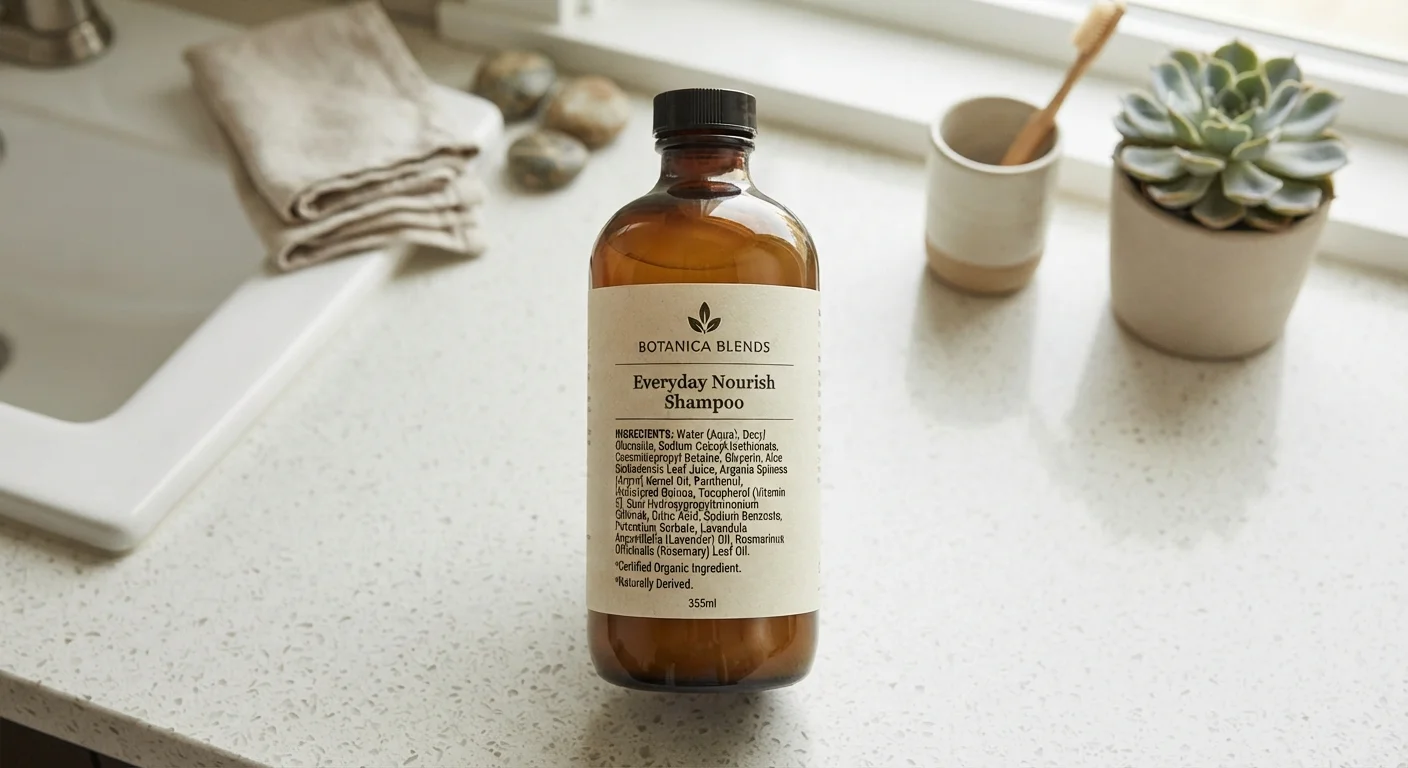
The single most useful rule is ingredient order. By U.S. law, ingredients must be listed from highest concentration to lowest. Whatever appears first is the dominant ingredient — usually water (listed as Aqua). Whatever appears last is present in the tiniest amount. This is why 'argan oil' listed near the very bottom of a long formula contributes very little compared to the surfactants high on the list.
| Ingredient list order | Highest concentration to lowest (U.S. FDA cosmetic labeling regulations) |
| Typical number of shampoo ingredients | 10–30 ingredients per formula |
| Minimum ingredient concentration for listing | Below 1% — order may vary freely (U.S. FDA cosmetic labeling regulations) |
| Ingredient names used on labels | INCI (International Nomenclature of Cosmetic Ingredients) |
| Silicones — common label endings | '-cone', '-conol', '-xane' (e.g., dimethicone) |
| Parabens — common label endings | '-paraben' (e.g., methylparaben, propylparaben) |
Understanding label structure also helps when comparing products to find what works for your hair type and budget. It's a skill that translates to other products too — much like decoding sunscreen labels or reading a nutrition panel.
The Ingredient Categories You'll See Most Often
Most shampoo formulas draw from the same core categories of ingredients. Recognizing these groups makes the list far less overwhelming.
Surfactant
A cleansing agent that attracts both water and oil, allowing it to lift dirt and grease from your hair and scalp. Shampoos rely on surfactants as their primary cleaning ingredient.
Sulfate
A type of surfactant — such as sodium lauryl sulfate (SLS) or sodium laureth sulfate (SLES) — that produces a rich lather. Sulfates are effective cleansers but may strip natural oils from dry, color-treated, or sensitive scalps.
Paraben
A family of preservatives (methylparaben, propylparaben, butylparaben) added to extend shelf life by preventing mold and bacterial growth. Their safety profile is still debated among researchers.
Silicone
A smoothing ingredient (often ending in '-cone' or '-xane', e.g., dimethicone, cyclomethicone) that coats the hair shaft to reduce frizz. Build-up over time may weigh hair down unless removed with a clarifying shampoo.
Humectant
An ingredient that attracts moisture from the air into the hair shaft. Common examples include glycerin and panthenol (provitamin B5).
pH Balancer
Ingredients like citric acid or sodium citrate that adjust a formula's acidity level. Hair and scalp are naturally slightly acidic; a matched pH helps keep the cuticle (outer hair layer) smooth and sealed.
INCI Name
The International Nomenclature of Cosmetic Ingredients — the standardized, globally recognized scientific name for each cosmetic ingredient. This is why water is listed as 'Aqua' on most labels.
Fragrance (Parfum)
A catch-all term covering any scent blend, which can contain dozens of undisclosed individual chemicals. This broad labeling can be a concern for people with fragrance sensitivities or allergies.
Cleansers (surfactants): These come first on most labels and do the heavy lifting. Sulfate-based surfactants like sodium lauryl sulfate (SLS) are powerful and foamy. Milder alternatives — cocamidopropyl betaine, sodium cocoyl isethionate — appear in formulas marketed as 'gentle' or 'sulfate-free.' Neither type is universally better; it depends on your scalp and hair texture.
Conditioning agents: Look for ingredients like cetyl alcohol (a fatty alcohol, not drying despite the name), hydrolyzed proteins, and panthenol. These help restore moisture and reduce breakage after cleansing.
Preservatives: Parabens are the most recognized, but brands also use phenoxyethanol, sodium benzoate, or potassium sorbate as alternatives. Without preservatives, water-based products would grow bacteria quickly — so some form of preservation is necessary for safety.
Functional additives: Fragrance, colorants, and pH adjusters round out most formulas. These often appear toward the bottom of the list, meaning they're present in small concentrations.
Labels Don't Tell the Whole Story
U.S. cosmetic regulations do not require brands to disclose the individual components hiding inside the word 'fragrance' (or 'parfum'). If your family has sensitive skin or known allergies, this single ingredient entry can conceal dozens of chemical compounds. For a deeper look at what fragrance-free versus unscented labels actually signal, see our companion piece: Fragrance-Free vs. Unscented: They're Not the Same Thing.
If you want to make the most of whatever formula works for you, our guide on stretching personal care products further has practical tips for getting every last drop's worth.