
What Is Envelope Budgeting?
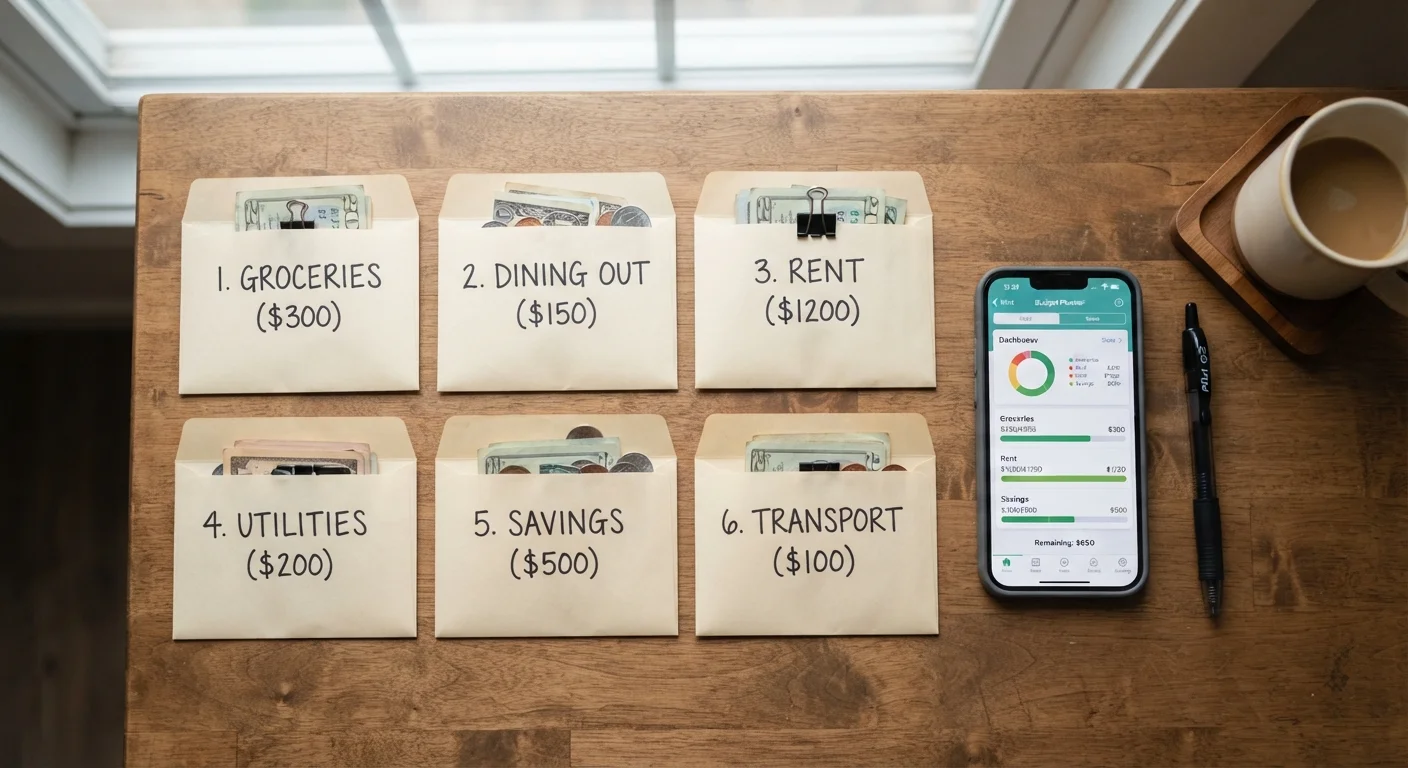
The envelope budgeting method is a cash-based system where you divide your monthly take-home pay into spending categories — groceries, gas, dining out, entertainment — and place the allotted cash into a labeled envelope for each. Once an envelope is empty, spending in that category stops until the next budget period.
The logic is straightforward: physical cash creates a hard boundary. You can't accidentally overspend on groceries if there's literally no money left in the envelope. For many households, this tangibility is the system's greatest strength.
This approach is often associated with zero-based budgeting, where every dollar of income is assigned a job. If you're weighing different budget philosophies, see our comparison of zero-based budgeting and the envelope method for a side-by-side look.
Creates firm, category-level spending limits
Each envelope functions as a hard cap. This prevents the common habit of mentally pooling all available money and overspending in one area while underfunding another.
Makes abstract budgets tangible and visible
Physically handling cash — and watching an envelope empty — gives many people a more visceral sense of spending than watching a number decrease on a screen.
Reduces impulse spending for variable categories
Research consistently shows that people spend more freely when using cards than cash. The envelope method leverages this by keeping discretionary spending tied to physical limits.
Simple enough to start without technical skills
All you need is labeled envelopes and cash. There's no app to learn, no spreadsheet to maintain, and no recurring login — making it genuinely beginner-friendly.
Adaptable to digital tools and apps
Virtual envelope systems bring category-based control into the digital world, letting you shop online while still maintaining spending boundaries per category.
Where the Envelope Method Falls Short
Despite its simplicity, the traditional cash system has real friction points in a world built around digital payments. Subscriptions, online shopping, and card-only retailers make carrying and spending physical cash inconvenient — and sometimes impossible.
There's also a security concern: keeping large amounts of cash at home carries risk if the money is lost or stolen. Unlike a bank account, there's no FDIC protection on a kitchen drawer full of envelopes.
Difficult to use for online or card-only purchases
A growing share of everyday spending — from streaming subscriptions to online groceries — cannot be paid in cash, which breaks the system's core mechanism.
Carrying large amounts of cash poses security risks
Unlike money in an FDIC-insured bank account, cash stored at home or carried daily has no protection against loss, theft, or fire.
Time-consuming to set up and maintain each month
Withdrawing cash, counting it into categories, and reconciling envelopes after each shopping trip adds meaningful administrative effort to an already busy household routine.
Less effective for fixed, recurring expenses
Mortgage payments, insurance premiums, and utility auto-drafts don't benefit from envelope allocation because they leave no room for daily spending decisions.
Coordination challenges for multi-person households
When two or more people share finances and spending responsibilities, a single set of physical envelopes can create confusion, miscommunication, or accidental double-spending.
Couples or households with shared finances may also find the method cumbersome — coordinating two people's spending across physical envelopes requires deliberate communication. For a broader look at how different tracking formats compare, our guide on budgeting on paper, spreadsheets, and apps covers the trade-offs honestly.
Digital Envelope Budgeting: A Modern Workaround
Several budgeting apps and tools now replicate the envelope system digitally — assigning virtual "envelopes" or categories to your bank account balance. You set a monthly limit per category, and the app tracks spending in real time against each allocation.
Digital Envelopes Still Require Discipline
Virtual envelope apps track your category spending automatically, but they don't physically stop you from swiping your card when an envelope runs low. Unlike physical cash, digital systems rely on you to check your balances and consciously honor your own limits. Setting up app notifications for low-balance categories can help bridge this gap.
The core discipline of the original method — spending only what you've assigned — transfers well to digital formats. The main difference is that the psychological friction of handing over physical cash disappears. Some users find this makes digital envelopes slightly less effective at curbing impulse spending than the physical version.
~1 in 3
Americans who say they follow a monthly budget
According to Gallup polling data, roughly one-third of U.S. adults report maintaining a detailed household budget — suggesting most families are budgeting informally or not at all.
12–18%
More spent when paying by card vs. cash
Multiple consumer behavior studies, including work cited by MIT researchers, suggest people tend to spend noticeably more when using cards compared to physical cash.
If you're still deciding how hands-on your budgeting approach should be, it helps to understand the full range of options. Our overview of paper budgeting vs. spreadsheets vs. budgeting apps can help you match a format to your household's habits.
Is It Right for Your Household?
Envelope budgeting — in either form — tends to work best for variable, discretionary expenses: groceries, clothing, entertainment, dining out. Fixed costs like rent or mortgage payments and automatic utility bills don't benefit much from the envelope structure because they don't fluctuate with daily decisions.
If you've struggled with budgeting methods that feel abstract — spreadsheets that never get updated, or apps you forget to check — the envelope system's category-first structure may provide the clarity you need. It forces you to make spending decisions before the month begins, not after the damage is done.
Families dealing with common budgeting misconceptions may also find this method refreshingly concrete. Our article on budgeting myths that keep families stuck addresses some of the hesitations that prevent households from starting at all.
The envelope method is a tool, not a guarantee. Like any budgeting approach, its effectiveness depends entirely on consistency and honest tracking. For additional strategies on reducing debt and growing savings alongside your budget, explore our Saving & Debt Tips resources.
This article is for general informational and educational purposes only and does not constitute personalised financial advice. Please consult a qualified financial professional for guidance tailored to your individual circumstances.